Stem Cell Research Oversight Committee
UB and Roswell Park Comprehensive Cancer Center created a Stem Cell Research Oversight (SCRO) Committee to assist with the process of reviewing and approving research and training materials related to the derivation and use of pHSCs, including human embryonic stem cells (hESC) and pluripotent stem cells produced from non-embryonic human sources.
If you are a UB investigator planning to use or derive pHSCs, including induced pluripotent stem cells, learn more about the process here.


SCRO Committee responsibilities
The SCRO Committee is a joint UB/Roswell Park advisory body reporting to UB's Senior Vice President for Research, Innovation and Economic Development, and the Roswell Park deputy director. Every three years, an ad hoc panel—appointed by UB’s president and Roswell Park’s CEO—will audit the committee’s actions and operations. Both UB and Roswell Park will receive the audit results.
Responsibilities of the SCRO Committee include:
- Providing initial review and approval of the ethical acceptability and scientific merit of pHSC research protocols;
- Recording, tracking and verifying compliance for ongoing pHSC research;
- Referring unresolved issues to the appropriate individual or committee for resolution;
- Maintaining a public registry of pHSC lines maintained at UB and Roswell Park;
- Developing policies, procedures and guidelines for the Senior Vice President for Research, Innovation and Economic Development / deputy director to ensure that pHSC research and training at both institutions comply with regulations and meet ethical guidelines;
- Facilitating education regarding stem cell research policies/regulations and provides ethics training for investigators involved in human stem cell research.
Who is part of the SCRO Committee?
The SCRO Committee consists of eight faculty/staff members—four per institution—appointed jointly by the UB Senior Vice President for Research, Innovation and Economic Development. Each member serves renewable three-year terms.
In addition, the committee includes at least one community member having no employment or business relationship with either institution. Collectively the committee must incorporate expertise in stem cell research, ethics and community perspective and input. Committee membership may be adjusted as necessary to meet changes in federal regulations and other nationally accepted guidelines. Committee distribution as follows:
- Co-chairpersons (one from UB, one from Roswell Park);
- Public member(s) not employed by or having a business relationship with UB or Roswell Park;
- Administrator or researcher experienced in the regulation and/or oversight of human subjects research;
- Expert in medical ethics and/or legal matters; and
- Research faculty with terminal degrees and expertise related to pHSC research drawn from such disciplines as developmental biology, stem cell research, molecular biology, regenerative medicine and assisted reproduction.
Contact the Stem Cell Research Oversight Committee
UB, 516 Capen Hall, Buffalo, NY 14260
Phone: (716) 645-3321
Fax: (716) 645-6792
Email
Office Hours:
8:30am–5:00pm; Monday-Friday
Conflict of interest
UB/Roswell Park SCRO Committee policy prohibits committee members from reviewing, discussing or voting on any research protocol for which he/she serves as principal investigator or co-investigator, or which is sponsored by a company in which the committee member holds a financial interest.
This is defined as anything of monetary value, including, but not limited to, salary or other payments for services (e.g., consulting fees or honoraria); equity interests (e.g., stocks, stock options or other ownership interests); and intellectual property rights (e.g., patents, copyrights and royalties from such rights). Uncompensated relationships giving rise to a conflict of interest, such as board of directors or other executive service, would similarly disqualify a member. Additional conflicts may include:
- Involvement in the design, conduct or reporting of the research
- Involvement of immediate family members in the design, conduct or reporting of the research
SCRO committee members with a conflict of interest may provide information about the protocol as requested by the SCRO Committee, then shall recuse themselves from the meeting during the discussion and vote on all such studies.
Other committees and review boards related to stem cell research


The Institutional Review Boards
The Institutional Review Boards (IRBs) at the respective institutions operate under the auspices of the federal Office of Human Research Protections (OHRP) and are responsible for review and approval of clinical research protocols including those where pHSC are administered to human subjects.

The Institutional Animal Care and Use Committee
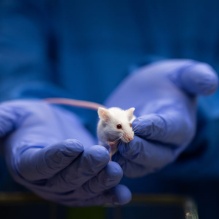
The Institutional Animal Care and Use Committees (IACUC) at the respective institutions operate under the auspices of the federal Office of Laboratory Animal Welfare (OLAW). They will review and approve research protocols involving animal subjects, including those using pHSC.


The Institutional Biosafety Committee
The Institutional Biosafety Committees (IBC) at the respective institutions operate under the auspices of the NIH Recombinant DNA Advisory Committee and will review and approve research protocols involving hazardous biological agents, gene therapy and/or recombinant DNA, including protocols utilizing pHSC.
Pluripotent human stem cell research at UB
UB is committed to maintaining the highest ethical standards while permitting qualified investigators to engage in research or training using human pluripotent stem cells (pHSC).
Investigators must comply with applicable regulations, federal funding restrictions and relevant institutional policies and procedures. All policies are based on the best available information, including embryonic stem cell research guidelines from the National Academies of Science (NAS), the International Society for Stem Cell Research (ISSCR) and the Empire State Stem Cell Board Strategic Plan.
What is included under this policy?
These guidelines apply to any research or training use of any culture-derived, pHSC population that can:
- Sustain propagation in culture; and
- Self-renew to produce daughter cells capable of differentiation into mesoderm, ectoderm and endoderm.
This definition includes both embryonic and non-embryonic human stem cell lines regardless of the tissue of origin.
- Induced pluripotent stem cells (iPSC)
- Cells produced through somatic nuclear transfer (SCNT)
- Altered Nuclear Transfer (ANT)
It does NOT include accepted medical treatment practices using adult stem cells, human cord blood or transplantation of non-pluripotential stem cells.
Prohibited activities related to human stem cell research
No UB/Roswell Park personnel shall engage in nor use UB/Roswell Park facilities, equipment for any of the following activities:
- Human reproductive cloning
- Research in which pHSCs are introduced into non-human primate blastocysts, or in which any embryonic stem cells are introduced into human blastocysts.
- In vitro culture of an intact human embryo for more than 14 days of development or until formation of the primitive streak, whichever occurs first;
- The breeding of animals into which pHSCs have been introduced at any stage of development;
- Payment to a donor, beyond reimbursement for direct costs incurred as a result of the procedure, for the purpose of creating a human embryo to be used in pHSC research;
- Using federal funds to engage in pHSC research deemed ineligible by the NIH.
Requirements before conducting research using pHSC
For all research or educational projects using pHSC—both federally and non-federally funded—a proposal must be submitted to the Stem Cell Research Oversight (SCRO) Committee created by UB and Roswell Park Comprehensive Cancer Institute.
What types of research needs to be reviewed?
Click each to learn more about the types of research that are exempt from and subject to review by the SCRO committee.
The following research activities are exempt from review by the SCRO Committee:
- Research involving the use of adult stem cells; (may still require IRB review)
- Use of human cord blood; (may still require IRB review)
- Research involving transplantation of non-pluripotent stem cells as part of a recognized and accepted medical treatment
- Research involving the use of pHSCs, including iPSCs, in purely in vitro experiments as long as the experiments are not designed or expected to yield gametes.
- This type of research is permitted if the SCRO office receives a completed application form that documents the provenance of the cell lines including:
- Use of an acceptable informed consent process that was approved by an IRB for their derivation, and
- Compliance with any additional review required by committees with jurisdiction over biosafety, radiation, etc.
- Listing of the pHSC line on the NIH-approved list is acceptable for (i) and (ii). For non-listed cell lines other documentation must be presented.
Check the NIH-approved cell lines
Your pHSC proposals might be eligible for expedited review with a SCRO Committee designated reviewer
- After you have documented provenance of the pHSC including IRB approval for the derivation:
- Research involving transplantation of pHSC into postnatal animals with no likelihood of contributing to the central nervous system or germ line including transplantation of pHSC lines for the purpose of raising antibodies or validation of pluripotency (requires IACUC review).
pHSC proposals to be reviewed by the full SCRO Committee, unless otherwise noted, include:
- Human Subject research using pHSC;
- Research in which personally identifiable information about the donor of pHSC is readily ascertainable or may become known;
- Research involving creation of new pHSC lines derived from human blastocysts (hESC), somatic cell nuclear transfer (SCNT) or altered nuclear transfer (ANT).
- Introduction of pHSC into non-human animals for purposes other than raising antibodies or validation of pluripotency.
Application process for pHSC proposals
Once determined that you must submit a pHSC proposal, the following steps must take place. Proposals exempt from full or expedited review still need SCRO office notification.


1. The investigator initiates a review by completing a proposal application. The SCRO Committee review precedes all others by required standing committees such as SRC, IRB and the IACUC.


2. Approval letters are valid for three years. However, investigators must complete and submit an annual continuation form for each project.


3. Investigators also must reapply for project approval at least 60 days prior to the expiration of the initial three-year period by using the proposal application form.
Review and approval process
The SCRO Committee must review all proposals and may request additional documentation during the review, which must be completed prior to review by other committees. The SCRO Committee determines whether the proposed pHSC project is scientifically meritorious, of sound design and ethically acceptable.
The SCRO Committee can grant full approval (subject to obtaining other review committee approvals), conditional approval (subject to conditions, limitations or changes) or disapproval.
Award acceptance
For proposals supported by extramural grants, UB’s Sponsored Projects Services or Roswell Park’s Grants Office will verify that the SCRO Committee and all other required committees have approved the proposal prior to acceptance of the award.
For UB projects with other funding sources, the department and investigator must obtain SCRO Committee and IRB review/approval before beginning the project
Receipt and transfer of materials
When receiving pHSC materials, you must secure Material Transfer Agreements (MTA) or other authorizations in compliance with the respective research administrative offices (UB Sponsored Projects Services or Roswell Park Office of General Counsel). When purchasing materials, rely on the institutional purchasing policies. You also may need documentation proving that the cell lines have been acceptably derived (e.g. IRB approved), with appropriate consent and in compliance with the legal requirements of the relevant jurisdiction.
Transfer of pHSC materials out of the respective institutions as follows:
- For UB: Work with the Science, Technology Transfer, and Economic Outreach (STOR) office for an MTA or license agreement when generating or modifying pHSC materials to be transferred off campus for others to use.
- For Roswell Park: Work with the Office of Technology Transfer for an MTA or license agreement re Roswell Park generated or modified pHSC materials to be transferred off site for use by others.
- These offices will comply with SCRO requirements for prior approval and tracking of such transactions.
Information/Training
You must comply with institutional environmental, health and safety requirements when receiving, using and disposing of pHSC.
Everyone involved with research using pHSC will receive information and be trained in stem cell research, policy and ethics. Following training, you will need to sign a form stating that you have read and understood the National Academy of Sciences Guidelines for Human Embryonic Stem Cell research.
Record Keeping
The UB office of the Senior Vice President for Research, Innovation and Economic Development maintains all records related to SCRO applications submitted by UB investigators for all active projects and for three years after the project ends. The Roswell Park office of Corporate Ethics and Research Subjects Protection maintains all similar records for Roswell Park investigators in the same manner.
The records include SCRO applications, meeting minutes, approval and disapproval letters, correspondence with funding agencies, regulatory compliance documents, training documents and current state, national and international guidance on the ethical conduct of stem cell research.