News & information from UB, New York's flagship university
UB ontologists named to major NIH immunology research team


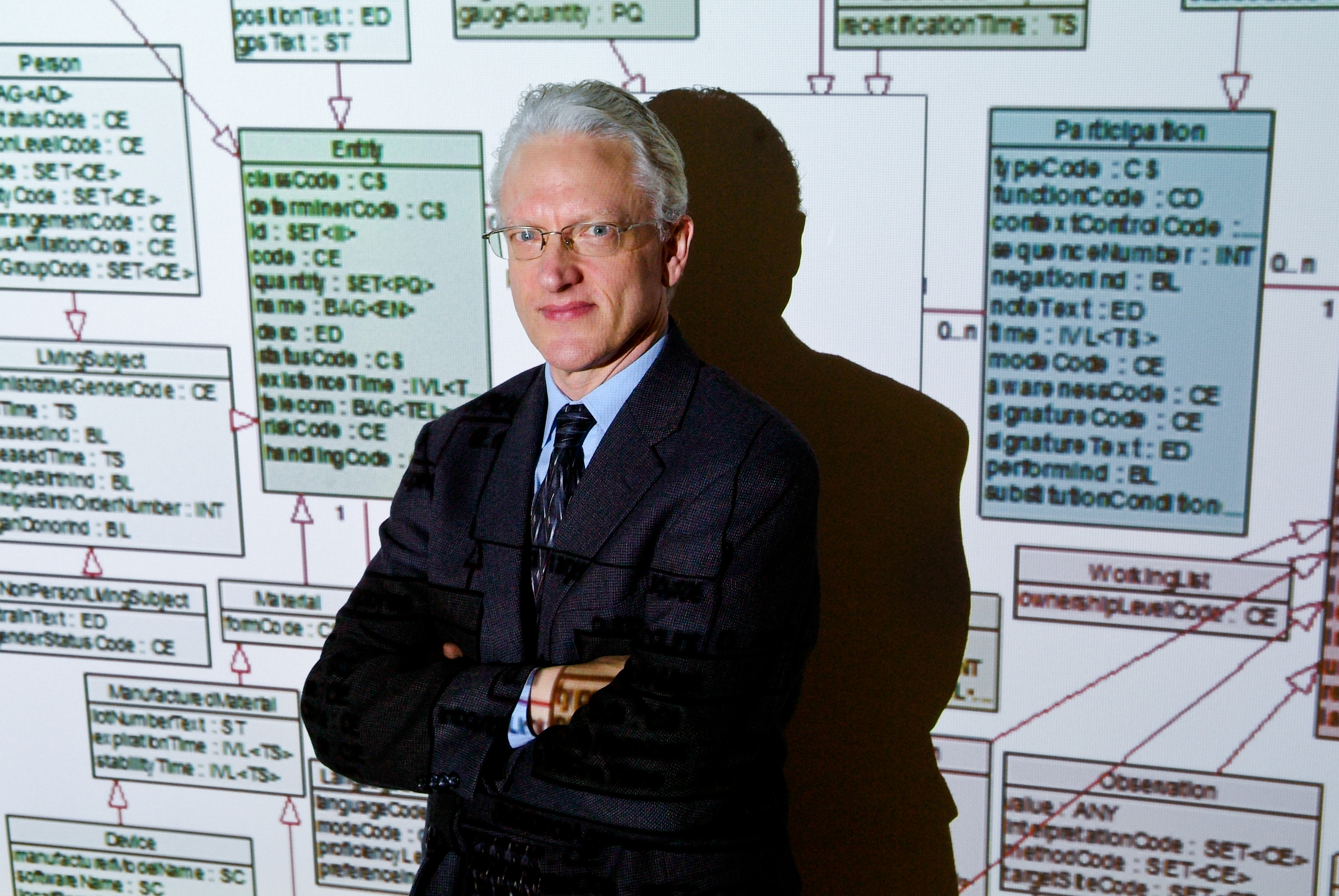
Barry Smith will lead a team of UB researchers to develop and disseminate ontologies for immunology and infectious disease, and train researchers in their use.
Team to help inform, support and integrate work of immune disease researchers
Release Date: February 14, 2013 This content is archived.
BUFFALO, N.Y. – A team of University at Buffalo researchers has been selected by the National Institutes of Health (NIH) to support the collection, analysis and exchange of scientific data for scientists investigating immunology and immune-mediated diseases.
They will work within the framework of the Bioinformatics Integration Support Contract (BISC) (No. HHSN272201200028C), which was awarded to a multinational and multidisciplinary team of researchers by the NIH’s Division of Allergy and Infectious Diseases (DAID).
The UB group will be responsible for the ontological aspects of the project. The team will be led by Barry Smith, PhD, Julian Park Professor of Philosophy, adjunct professor of neurology and computer science at UB, and director of the National Center for Ontological Research.
“There is no universal standard terminology in medical and related fields,” Smith explains. “The way a term is used may be particular to a research area or even a specific research group. This makes it difficult for scientists to communicate with one another and share and find, or compare, data.
“Ontologies are complex systems that describe the meanings of terms in a shared vocabulary and their relationships to one another,” he says. “They make it possible for scientists from different fields and different places to speak the same language.
“The UB team will develop and disseminate ontologies for immunology and infectious disease, and train NIAID-funded researchers in their use,” Smith says.
The five-year, BISC contract, which has a maximum potential value of $30 million, is designed to enable scientists to easily access and exchange complex, interoperable data sets to accelerate scientific discovery.
The BISC is led by Atul Butte, MD, PhD, chief of the Division of Systems Medicine, Department of Pediatrics, Stanford University, and a member of the External Advisory Board for the NIH Center for Human Immunology. It includes as partners Northrop Grumman Information Technology, as well as scientists from the Technion Israel Institute of Technology, the University of California, Berkeley, and the University of Vermont.
The centerpiece of their work is the ImmPort, the Immunology Database and Analysis Portal (https://immport.niaid.nih.gov/) that provides advanced information technology support in the production, analysis, archiving and exchange of scientific data for the large and heterogeneous community of life science researchers supported by NIAID/DAID.
“The ontologies we produce will contribute to the realization of the goals of ImmPort: to accelerate a more collaborative and coordinated research environment, create an integrated database that broadens the usefulness of scientific data and advances hypothesis-driven and hypothesis-generating research, and develop optimal methods for data collection, storage, exchange and interoperability,” Smith says.
UB team members include Alan H. Ruttenberg, director of clinical and translational data exchange, Department of Oral Diagnostic Sciences, UB School of Dental Medicine, and Alexander D. Diehl, PhD, assistant professor, Department of Neurology, UB School of Medicine and Biomedical Sciences.
Ruttenberg will work in particular on the development of ontology-based computational tools and strategies that can advance sharing and reuse of data through the use of open ontology standards, an effort to create controlled vocabularies for shared use across different biological and medical domains.
Diehl’s expertise includes the development and application of ontologies in the fields of immunology, with special reference to the gene, protein, cell and sequence ontologies.
Related story: http://www.buffalo.edu/news/releases/2009/01/9857.html
Media Contact Information
Patricia Donovan has retired from University Communications. To contact UB's media relations staff, call 716-645-6969 or visit our list of current university media contacts. Sorry for the inconvenience.