News & information from UB, New York's flagship university
To Fight Infectious Disease, Medical Research Turns To Philosophy -- and Buffalo
UB ontology experts help clinicians and researchers speak the same "language"
Release Date: January 14, 2009 This content is archived.


BUFFALO, N.Y. -- To tackle an increasing global infectious disease burden and rising rates of drug-resistant infections, University at Buffalo philosophers are working with medical researchers to develop the first-ever infectious disease ontology.
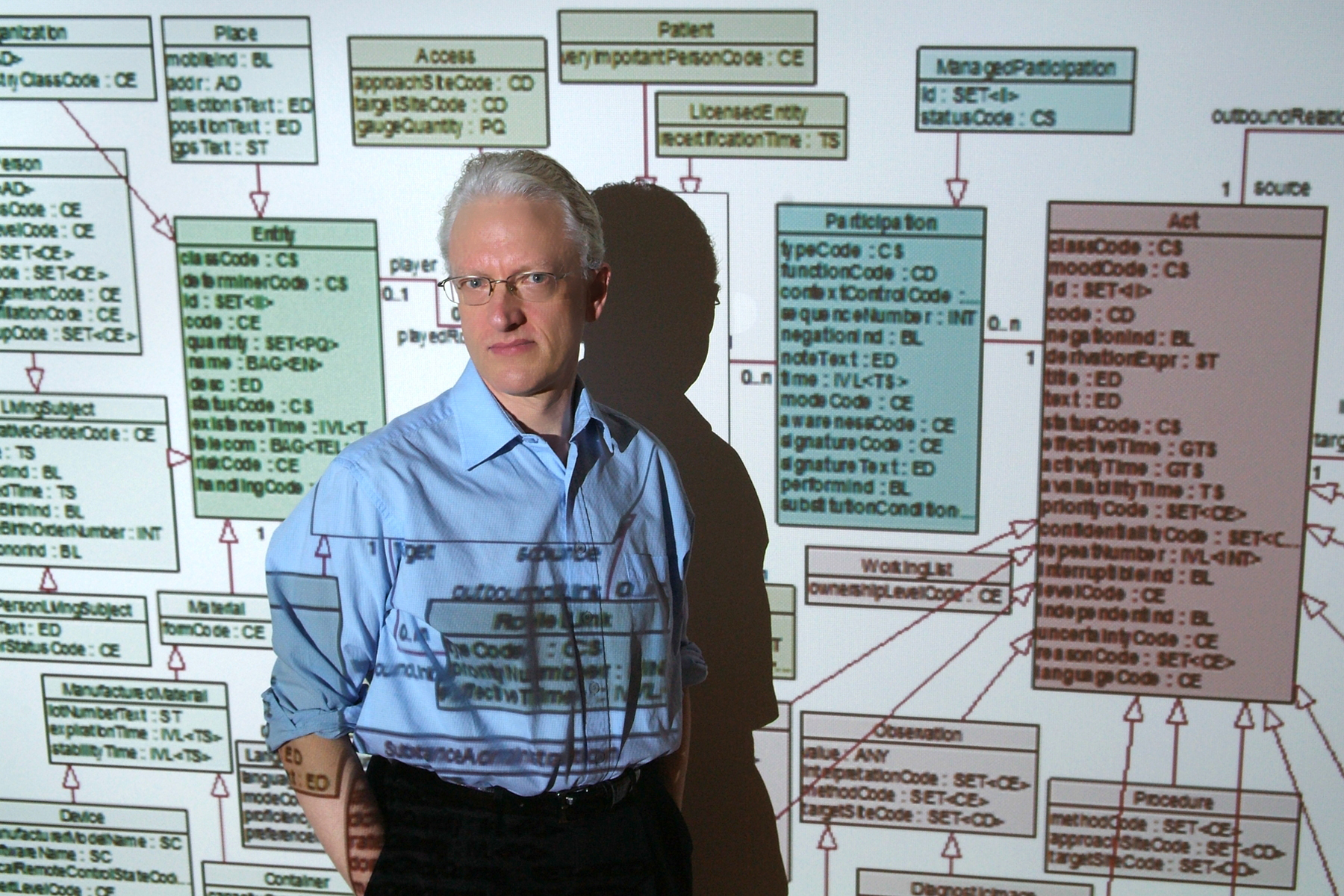
Ontology is the science of how things are classified and the relationships between them. When researchers in biology and medicine use ontology classifications, they are able to speak the same "language."
By allowing geneticists, scientists and clinicians to easily share and compare many different types of data about pathogens, patients and disease processes, the ontology being developed by UB philosophers and their colleagues will expedite the development of new methods of diagnosis and treatment.
"Currently, the infectious disease data being collected by hospitals and research centers lack a common framework to enable integration and comparison of results," explained Barry Smith, Ph.D., SUNY Distinguished Professor, Julian Park Professor of Philosophy at UB and a pioneer of biomedical ontology. "The Infectious Disease Ontology, which is being developed by ontology experts at UB and startup firms in Buffalo, together with immunologists and infectious disease researchers throughout the world, will provide that common framework."
According to Smith, the need for an infectious disease ontology has become more imperative as the incidence of infectious diseases has increased, treatment has become more difficult and researchers have responded by generating more data in the search for better ways to diagnose and treat them.
Now, with a $1.25 million research grant from the National Institute of Allergies and Infectious Diseases and $70,000 in pilot funding from the Burroughs-Wellcome Fund, UB's Smith and Lindsay Cowell of the Duke University Medical Center have initiated the Infectious Disease Ontology, (IDO). They will test the IDO using data from Staphylococcus aureus, (S.a.), one of the most common and potentially deadly human infections in the U.S. and Western Europe.
Such interest has spurred not just the development of UB as an international center of ontology, it also is beginning to attract to Buffalo information technology firms eager to collaborate in this vibrant and emerging field. Most recently, a satellite office of Blue Highway, a wholly owned subsidiary of medical device manufacturer Welch Allyn, has moved into UB's New York State Center of Excellence in Bioinformatics and Life Sciences, to develop with UB researchers new software and hardware technologies that take advantage of biomedical ontology.
Also located in UB's Center of Excellence on the Buffalo Niagara Medical Campus is the Ontology Research Group, which Smith co-directs with Werner Ceusters, M.D., UB professor of psychiatry, and Louis J. Goldberg, D.D.S., Ph.D., UB dean emeritus of the School of Dental Medicine.
For the past four years, Smith has been working with the developers of bio-ontologies, including the Gene Ontology, to demonstrate how the lessons learned in philosophy and logic -- for example, the proper use of definitions and classifications -- can lead to improvements, which in turn can bring real benefits to biological and clinical research.
"The use of ontologies by clinical researchers reflects recognition of the need for common frameworks for integrating data across biological and clinical disciplines," said Smith. "It also reflects increasing efforts by the National Institutes of Health and other bodies to encourage clinical researchers to make their data more easily available to wider groups of researchers.
"The new approach to ontology, which we pioneered at UB, makes it easier to build good quality ontologies in a consistent fashion and to reason with the associated data in a way that is designed to be easily extendible to new diseases and new pathogens," he explained.
Other diseases being studied under the IDO Consortium established by Smith and Cowell include malaria and other vector-borne diseases, tuberculosis, infective endocarditis, influenza and dengue fever.
Information on the initiative is available at http://infectiousdiseaseontology.org.
The four-year grant from NIAID, in which UB works as a subcontractor to the Duke University Medical School with $250,000 in funding, will support the creation, application and testing of an S.a. ontology as part of IDO.
"Our goal is to create the ontology and to apply it to predict disease genes, testing our predictions against the large collection of patient data that is being collected by the Duke Staphylococcus aureus Bacteremia Group, led by Vance Fowler, with whom we will collaborate in drawing consequences for developing new sorts of patient-centered diagnosis and treatment," explained Smith.
At the same time, the UB ontologists are strengthening their relationships with companies like Blue Highway and others located in or working with the Center of Excellence.
"Blue Highway researchers are addressing the problems that arise when integrating heterogeneous sorts of data -- in this case, the real-time data collected through the use of new medical technologies to support early detection, diagnosis and aggregation of data for comprehensive clinical support," said Smith. "The collaboration between Blue Highway and UB's Ontology Research Group will allow rapid and focused testing of ontological ideas in contexts of real-world, practical applications. We believe that this will bring improvements to both sides, both in ontologies and in the technologies that use them to collect and reason with diagnostic data."
Albert Goldfain, Ph.D., a Blue Highway researcher and recent UB graduate who works in in the UB Center of Excellence, noted that Infectious Disease Ontology research will be among the first efforts to integrate ontology data across many different scales, an important and difficult issue for biomedical applications.
"While some research has been done on individual genes, for example, and other ontology work has been done on whole organisms, these data have all been developed in separate information silos," he said. "The Infectious Disease Ontology will cross-cut ontologies developed by others at different scales; it will draw and map relationships at the level of individual molecules, cells, organs, organisms and populations, and ultimately a way to speed diagnosis and treatment."
In addition to their research on IDO, researchers from UB and Blue Highway will collaborate on other areas of joint research: these include technologies with potential applications in alarm management and data aggregation. Additional areas of potential collaboration include communications protocols for military applications, power management, materials science and battery technology, as well as biosensors and lab-on-a-chip technologies.
"Blue Highway has a working relationship with UB and is exploring technologies of interest in the area of health care," said Jack Rudnick, senior vice president of legal and government affairs at Blue Highway. "Blue Highway is occupying space in UB's downtown Center of Excellence to facilitate the relevant research and leverage the excellent working opportunities with students, researchers and staff. We look forward to realizing some of the exciting opportunities that collaboration with UB provides."
The University at Buffalo is a premier research-intensive public university, a flagship institution in the State University of New York system and its largest and most comprehensive campus. UB's more than 28,000 students pursue their academic interests through more than 300 undergraduate, graduate and professional degree programs. Founded in 1846, the University at Buffalo is a member of the Association of American Universities.
Media Contact Information
Ellen Goldbaum
News Content Manager
Medicine
Tel: 716-645-4605
goldbaum@buffalo.edu