News & information from UB, New York's flagship university
Rare Collection of Robert Frost Materials Emerges, Could Shed Light on Poet’s Religious Views


Photograph by Jonathan Reichert of Robert Frost and Victor E. Reichert at the Reicherts’ home in Cincinnati, Ohio, ca. 1960. Courtesy of the Poetry Collection.
Release Date: January 18, 2013 This content is archived.


BUFFALO, N.Y. -- A rare collection of letters, audio files, photographs and other materials that could illuminate the personal beliefs of Robert Frost is being made available to the public for the first time.
The collection chronicles a 24-year friendship between the beloved American poet and Victor Reichert, a Cincinnati rabbi who summered with Frost in Vermont. It was kept in the Buffalo home of the rabbi’s son, Jonathan Reichert, University at Buffalo professor emeritus of physics.
Scholars say the materials – officially called the Victor E. Reichert Robert Frost Collection -- could provide an important, missing link between Frost’s poetry and his view of religion, which has been the subject of debate for decades.
Of note:
- This year is the 50th anniversary of Frost’s death. He died Jan. 29, 1963, in Boston, Mass., at 88.
- Frost won four Pulitzer Prizes for Poetry
- While visiting UB in 1927, Frost advised students against a career in poetry. He suggested they write novels or essays, according to university archives.
Importance of collection:
Frost kept regular correspondence with many, but Victor Reichert (1897-1990) was among a dozen or so people in his inner circle, said Carole Thompson, founder and director of the Robert Frost Stone House Museum in Shaftsbury, Vt.
The two met in 1939, when Victor’s wife, Louise, insisted they attend a Frost reading in Cincinnati. Frost invited the Reichert family to Ripton, Vt., but it would several years before they made the trip, a delay caused by World War II.
Upon arriving in Ripton, Frost and Victor “took the first of what would be many rambling walks through the woods of the Green Mountains and stayed up late discussing the Bible,” according to Cincinnati magazine, which profiled their relationship in December 2003.
Frost never made his beliefs clear, prompting biographers and others to theorize he was, among others, an atheist, a Unitarian, an agnostic and a follower of Swedenborgianism, his mother’s religion. Their views were colored by Frost’s personal life, which was marred by family loss.
In a Christian Science Monitor review of Andrew R. Marks’ 1994 book, “The Rabbi and the Poet,” which examines the relationship between Frost and Reichert, Robert Marquand wrote that Frost “did have a dark side. He faced personal tragedy. His father died early; his sister became insane; his son committed suicide, and two other children died young. The rabbi says Frost wept about this in his presence.”
Reichert wrote in the 1980s that there “is not the slightest doubt in my mind about the deep, deep religious nature of Robert Frost.”
Dissecting Frost’s religious views is important, said Michael Basinski, curator of The Poetry Collection of the University Libraries, University at Buffalo, because Frost is perhaps America’s most well-known and lauded 20th century poet. Essentially, his poetry represented America’s voice, Basinski said, and Frost’s thoughts offer a view into the nation’s broader consciousness at the time.
About the donor:
As a child and, later, younger man, Jonathan Reichert spent countless hours with Frost in the poet’s Ripton home. To get past Frost’s secretary, Reichert would catch trout in a nearby stream and bring them to the poet. A lengthy conversation usually ensued.
“I was very lucky in life to have known Robert Frost. I would visit him and we’d have these long discussions. But you didn’t argue with him. With Frost, he did 95 percent of the talking,” Reichert said.
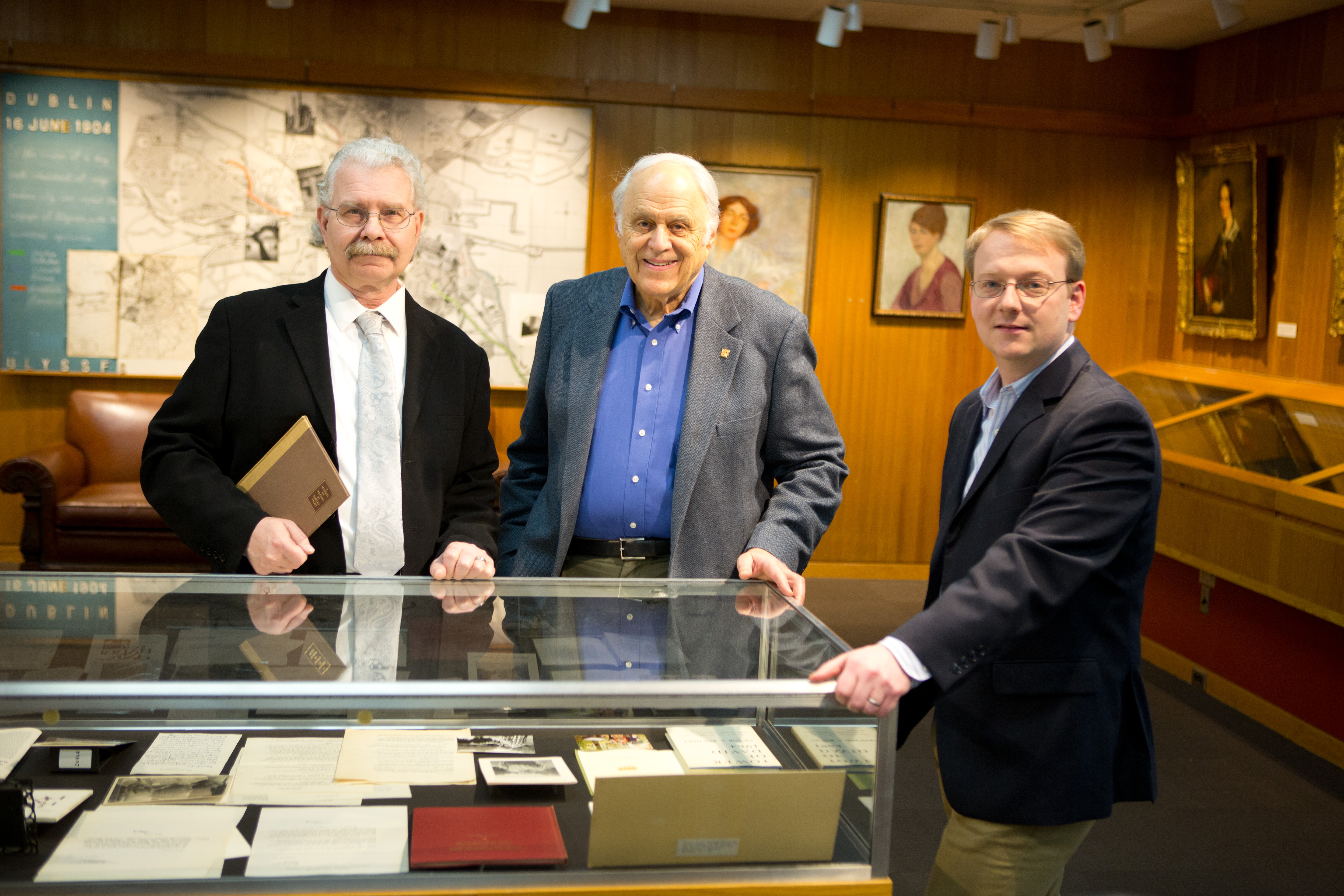
UB will display the collection on the fifth floor of Capen Hall on the UB North Campus from 9 a.m. to 5 p.m., Monday through Friday, from Jan. 31 until March 29.
Additional features of the collection:
- A recording of a sermon Frost gave in 1946 at Rockdale Avenue Temple in Cincinnati, at the request of Reichert.
- Rare first-edition signed books from Frost.
- Christmas cards from Frost to Reichert.
Media Contact Information
Cory Nealon
Director of Media Relations
Engineering, Computer Science
Tel: 716-645-4614
cmnealon@buffalo.edu