
Research Forum Showcases 85 Medical Student Projects
By Dirk Hoffman
Published March 2, 2026
Eighty-five original research projects from aspiring physician-scientists were on display at the 2026 Medical Student Research Forum at the Jacobs School of Medicine and Biomedical Sciences.
The medical students showcased projects they conducted at the University at Buffalo, its partner health care agencies and institutions throughout the nation.
They shared their work with faculty members and peers in detailed poster presentations.
A faculty panel of judges selected three outstanding projects for special recognition during the event, which took place Feb. 23 in the second-floor atrium of the Jacobs School building.
Students Urged to Value Impact of Research
Marc Halterman, MD, PhD, senior associate dean and professor of neurology in the Jacobs School, announced the winners and gave closing remarks.
“This endeavor that you are engaged in is a win-win-win,” he told the medical students.
“For trainees, research builds disciplined expertise in a focused area that you carry forward into residency interviews and your future career. It gives you the opportunity to speak with depth about work you are genuinely passionate about,” Hatlerman said. “More importantly, it teaches you how to design a study, understand complex methodologies, and evaluate data in a rigorous way.”
“For the mentee and mentor, research forges professional relationships that often endure well beyond medical school,” he added. “Many careers are shaped by that first sustained scholarly partnership.”
“And, of course, for our patients. The impact of your work may not always be readily apparent, but it matters,” Halterman said. “In some cases, the advances are incremental. In others, you may find that your findings become the catalyst for larger programs of investigation or lay the groundwork for broader clinical impact.”
“Do not underestimate the potential impact of your contributions,” he added, noting two historical examples of research projects led by medical students that resulted in the meaningful discoveries of ether anesthesia and the now commonly used anticoagulant heparin.
“At a fundamental level, what you are doing by participating in today’s symposium matters because medicine advances through disciplined curiosity,” Halterman said. “As physicians and scientists, you will constantly be presented with consequential questions. You must answer those questions for your patients by examining the science carefully, recognizing where gaps exist and, when possible, working to close them.”
“Participation in research teaches us how to distinguish signal from noise and how to communicate scientific insight effectively — not only within our field, but to the broader community it ultimately serves.”

Poster winners, from left, medical students Gabrielle Orie (1st), Supriya Pandit (2nd), Daniela Falcone (2nd) and Joseph Latosky (3rd), with Marc Halterman, MD, PhD.
Winners Honored for Top Research Posters
First Place
Gabrielle Orie, Class of 2027
“Prolonged Interhemispheric Differences in the Electroencephalogram Alpha:Delta Ratio Precede Neurologic Injury During Neonatal Cardiac Surgery”
Brain injury is a known risk after surgery to repair the aortic arch in newborns. However, it is difficult to detect reduced blood flow to the brain during the operation.
The research noted that differences between the two sides of the brain in a specific EEG measurement (the Alpha:Delta ratio) can signal reduced brain blood flow during carotid artery surgery.
But how this EEG measurement changes during periods of no brain blood flow (Deep Hypothermic Circulatory Arrest, DHCA) or during selective blood flow to only the right side of the brain (Antegrade Cerebral Perfusion, ACP) in aortic arch surgery is not clearly understood.
The researchers compared EEG Alpha:Delta ratio patterns during DHCA and ACP, to see whether differences between the two sides of the brain occur before signs of brain injury appear.
Results found the Alpha:Delta ratios were much lower in the DHCA group, and loss of EEG signal happened more often during DHCA. Only long-lasting differences between the two sides of the brain were clearly linked to brain injury, highlighting the importance of monitoring EEG during surgery.
Second Place
Supriya Pandit, Class of 2027, and Daniela Falcone, Class of 2026
“Barriers and Facilitators to Treatment of Pain and Anxiety at Time of IUD Insertion: A Survey of Providers”
The research aimed to describe current practice patterns and identify barriers and facilitators to provider use of local anesthesia and oral anxiolytics during IUD insertion.
The researchers conducted a cross-sectional survey of U.S.-based physicians and advanced practice providers who perform IUD insertions.
Participants were recruited via listservs, social media, and convenience sampling. Survey items assessed frequency of local anesthesia and oral anxiolytic use, perceived barriers and facilitators, educational background, practice environments, and personal IUD use.
Among 446 respondents, 44% reported routine use of local anesthesia and 50% reported routine use of oral anxiolytics.
The researchers found use of local anesthesia and oral anxiolytics during IUD insertion is widely variable. High quality data supporting clinical benefit and improving provider confidence in management of adverse effects are promising targets to increase implementation of local anesthesia. Logistical barriers to use of oral anxiolytics are less amenable to intervention.
Third Place
Joseph Lotosky, Class of 2028
“Effects of Treponema Denticola-Treated Gingival Cell Extracellular Vesicles (EVs) on Endothelial Cells”
In this study, the researchers examined how exposure to Treponema denticola (TD) affects exosome production from human gum cells (gingival fibroblasts and gingival keratinocytes). They then tested how these vesicles influence inflammation and signaling in endothelial cells.
They found that endothelial cells treated with EVs from TD-exposed gum cells showed reduced overall serine/threonine phosphorylation (a key signaling process) and a tendency toward increased secretion of the inflammatory molecule IL-1β.
The findings suggest that exposure to Treponema denticola changes the content of extracellular vesicles in a way that alters endothelial cell signaling and promotes inflammation. This supports further research into how oral bacteria may contribute to blood vessel dysfunction, blood–brain barrier changes, and neuroinflammation.


Third-year medical student Adebo Addo explains her research on the descriptive epidemiology of obesity, diabetes and hypertension in the Wa Municipal area of Ghana.
Students Look to Hone Communication Skills
Third-year medical student Adebo Addo presented her research on the descriptive epidemiology of obesity, diabetes and hypertension in the Wa Municipal area of Ghana.
She said by participating in the research forum, she was looking to sharpen her oral communication skills and wanted to demonstrate that she could critically analyze data and get the information out.
“I have always had an interest in global health, and I am also a child of immigrant parents, so this is both professionally and personally meaningful to me, specifically being able to do research in Ghana,” Addo said.
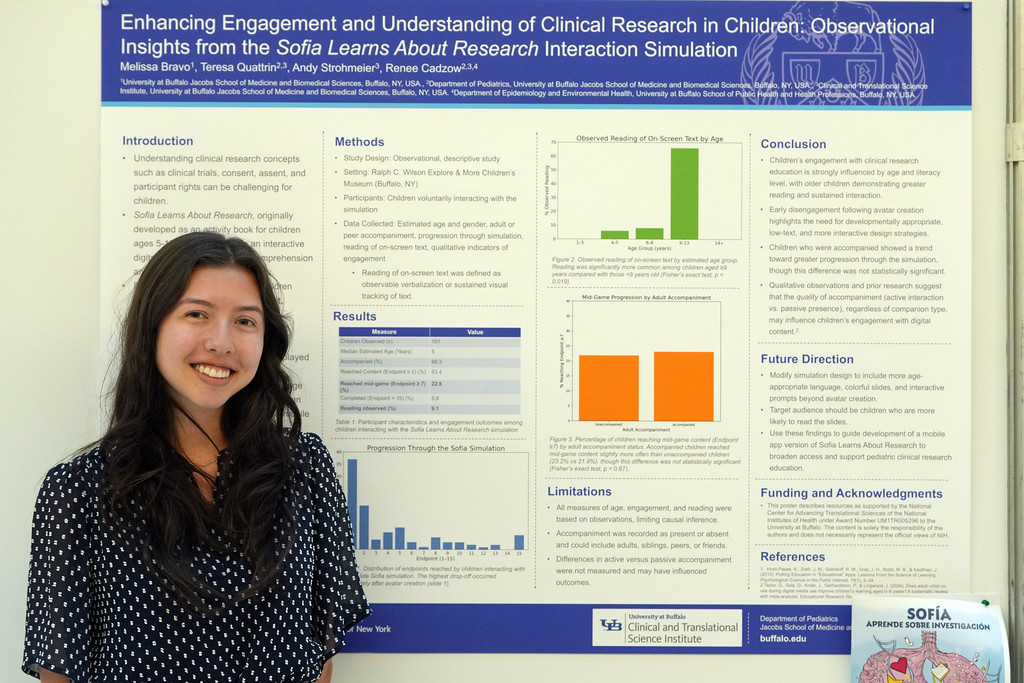
Melissa Bravo, a third-year medical student, presented research titled “Enhancing Engagement and Understanding of Clinical Research in Children: Observational Insights from the Sofia Learns About Research Interactive Simulation.”
Sofia Learns About Research was originally developed at the Jacobs School as an activity book, and has been adapted into a video game installment at the Ralph C. Wilson Explore & More Children’s Museum to teach about clinical trials, consent, assent, and participant rights.
The research aims to evaluate how children engage with and understand the simulation in a museum setting by observing completion patterns, attention to content, and engagement. The researchers also aim to identify factors such as interactivity, text burden and adult accompaniment to inform improvements for a mobile app version.
“I think data collection and data interpretation has been very useful,” Bravo said. “With my observational study I was kind of a fly on the wall. It was very interesting to observe all these children, collect that data and put it into a visual representation to help with our study.”
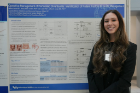
Second-year medical student Serena Larose who was a recipient of a Dean’s Fellowship, presented trauma surgery research titled “Operative Management of Perforated Diverticulitis: Identification of Patient Factors to Guide Management.”
“The Dean’s Fellowship was an excellent opportunity for me as a first-year medical student,” she said. “Anyone can apply, pending your project proposal, which was actually the first proposal I had ever written so that was a terrific educational opportunity.”
“I gained a couple of mentors, and it was just a really easy way to get into research. I also found a project that I’m pretty sure I am going to be working on through all four years of medical school.”
Wide Array of Studies Among Topics
Participants researched many important areas in their projects:
| Student(s) | Project |
Adobea Addo | Descriptive Epidemiology of Obesity, Diabetes, and Hypertension in the Wa Municipal Area of Ghana |
Daniyal Atiq | The Right Drug for the Bug: Evaluating Monotherapy Antifungals Against Drug-Resistant Candida Auris |
Parveen Attai | Shoes or No Shoes at the Robotic Console: Surgeon Preferences and Cultural Quirks |
Amanda Baanante | Mouth Closure During Drug Induced Sleep Endoscopy Improves the Airway in Children |
Taner Bay | Outcomes of Bilateral Femur Fractures |
Melissa Bravo | Enhancing Engagement and Understanding of Clinical Research in Children: Observational Insights from the Sofia Learns About Research Interactive Simulation |
Ryan Burns | The Potential Role of Immune Pathways in Fuchs Endothelial Corneal Dystrophy |
Ion Carata | Understanding Urologists’ Perceptions of Prostate Artery Embolization in the Management of Benign Prostatic Hyperplasia |
Alaina Carman | Defining the Relationship Between Papule Size and Histopathological Outcomes in the SKH-1 Mouse Model of UV Photocarcinogenesis |
Margarita Chekhova and Katie M. Carbajal | Dynamic Changes in Frailty as Predictors of Outcomes After Transcatheter Aortic Valve Replacement |
Albert Chen | A New Approach To Overcome Echinocandin Resistance in Candida Auris: It Takes Two to Tango |
Madison Clague | The Most Incredible Privilege of My Life — The Shares Motivations of Abortion and Gender-Affirming Care Providers |
Chase Clark | Psoas Muscle Index as a Risk Stratification Tool in Autologous Breast Reconstruction |
Alexandra Corbin | Juvenile-Onset Recurrent Respiratory Papillomatosis and Human Papillomavirus Vaccine Uptake: A 19-Year Retrospective Study |
John Cummins | Development of an HIV Vaccine Based on 2C6, an Antibody Targeting a Conformational Gp41 Epitope With Cross-Clade Recognition and Robust Antibody-Dependent Cell Cytotoxicity |
Joseph Current | Direct vs. Video Laryngoscopy and Its Impact on Postoperative Nausea and Vomiting: A Retrospective Review |
Murilo de Santana Hager | Hearing Loss in Hyperthyroid Patients Treated with Tepezza |
Ryan Dewan | Intracapsular Tonsillectomy vs Extracapsular Tonsillectomy — Factors Influencing Decision Making in Parents |
Kira Dewey | Agreement in Frequency of Asthma Symptoms between Provider Interviews and Electronic Surveys |
Elaye Ekiyor | Nonsurgical Versus Surgical Facial Feminization Procedures: A Scoping Review |
Aidan Eldridge | Diagnostic Accuracy of CT/CTA versus CT/LP for Detecting Subarachnoid Hemorrhage in Emergency Department Patients with Headache |
Nnaeto Emechebe | Use of RIG-I Agonist as a Potential Treatment for Influenza |
Sinan Ersan and Yousef Yousef | The Mental and Behavioral Health Benefits of Strabismus Surgery in Children and Adolescents |
Sarah Fischer | Investigating Migratory Mechanisms of Dendritic Cells in Myelodysplastic Neoplasms |
Nathaniel Foster | Recovery Outcomes in Athletes With Sport-related Concussion Who Reported Loss of Consciousness or Altered Mental State |
Brendan Fox | High-Precision AI Segmentation and Laser Map Generation for Standardized Panretinal Photocoagulation |
Nicholas Frappa | Interpreting Cutibacterium Acnes in Shoulder Periprosthetic Joint Infection: Phenotype Testing and Classification |
Anna Fretz and Jacob Herron | Signet Ring Cell Adenocarcinoma Masquerading as Esophageal Achalasia: A Case Report |
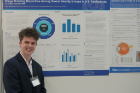
James Galligan | Binge Drinking Disparities Among Sexual Identity Groups in U.S. Adolescents: An Analysis of the 2021 YRBS |
Rita Glazer | Data-Driven Characterization of Corneal Endothelial Guttae to Identify Early Risk of Fuchs Endothelial Corneal Dystrophy |
Meaghan Gleason | Gender-Based Disparities in Academic Orthopedic Surgery: A Nationally Benchmarked Analysis of Compensation Across Subspecialties and Academic Ranks |
Maya Gold, Camryn Imperiale and Victoria Hoffman | Low Visibility, Limited Inclusion: Lactation Support and Language on U.S. Residency Websites |
Paula Valeria Guerra Navarro | Otologic Sequelae of Turner Syndrome in Pediatric Patients |
Mikaela Hastings | Does Resident Research Matter in Consideration for Orthopaedic Fellowship Match? |
Alexa Ibrahim | The Oura Ring Versus Medical-Grade Sleep Studies: A Systematic Review and Meta-Analysis |
Camryn Imperiale | Shining a Light on Patient Awareness of UV Safety Measures at the Lighthouse Free Medical Clinic |
Ethan Kaiser | Cervical Pedicle Screws vs. Lateral Mass Screws in Postoperative Sagittal Alignment and Complications |
Nicholas Kemmis | A Cross-Ancestry Analysis Identifies Two Protective Loci for Glaucoma in the Timorese of Oceana |
Alexandria Kemp | Multidisciplinary Development of Adaptive Care Plans for Patients with Disabilities to Improve Healthcare Equity |
Noah Kim | Developing a Spontaneous Nanoliposome Antigen Particle (Snap) Vaccine Against Severe Fever With Thrombocytopenia Syndrome Virus (SFTSV) |
Yakov Klugman | Does Cytoreductive Nephrectomy (CN) Confer Survival Benefit in the Era of Immuno-Oncology (IO) Therapy |
Lia Lamonica and Eoin Devoy | Pre-Existing Mental Health Diagnosis and Outcomes After Anterior Cruciate Ligament Surgery |
Serena Larose | Operative Management of Perforated Diverticulitis: Identification of Patient Factors to Guide Management |
Joseph Lotosky | Effects of Treponema Denticola-Treated Gingival Cell Extracellular Vesicles (EVs) on Endothelial Cells |
Caleigh Loughran | Postpartum Lactation Support Among Patients Prescribed Buprenorphine During Pregnancy |
Eric Lovett Jr. | Characterization of Corneal Endothelial Changes in SLC4A11 Knockout Mice Using Hyperion Imaging Mass Cytometry |
Madelyn Lux | Hypertension Management: A QiI Project Aimed Towards Developing a Standardized Hypertension Protocol in a Med-Peds Primary Care Setting |
Grace Maley | Adverse Events in Cryoablation and Radioablation Treatment of Chronic Rhinosinusitis: A MAUDE Database Comparative Analysis |
Erinn Mangona | Preoperative CRP And ESR With Prior COVID-19 as Predictors of Vascular Inflammation and Outcomes in Microsurgical Breast Reconstruction |
Nicole McGrath and Eliz Arnavut | Development of a Cost-Effective, Anatomically Realistic Skin Biopsy Training Model Using Photogrammetry and 3D Printing |
Joel Merriman | Multifactorial Dyspnea in a Medically Complex Patient: A Case Study Highlighting Diagnostic Uncertainty |
Gabriela Miletsky, Sarah Lewis and Jessica Mastrolonardo | Medicine for Tomorrow: Inspiring Underrepresented Youth to Pursue Careers in Medicine |
Gordon (Reid) Minier | Bridging the Gap: National Patterns of Telehealth Utilization in Urology |
Morgan Mitchell | Detecting Cannabis Intoxication and Impairment Using Wearable Sensors |
Jose Montero | Impact of Universal Screening on Management of Blunt Cerebrovascular Injury at a Level I Trauma Center |
Kaitlyn Mullin and Taylor Campbell | Self-Reported Compliance of Chlamydia Treatment Based on New CDC STI Treatment Guidelines Among Adolescent and Young Adult Patients |
Faizan Munir | Validation of the Risk of Delayed Recovery (RDR) Score in Predicting Persisting Symptoms After Concussion in the Outpatient Setting |
Cynthia Nguyen | Celiac Plexus Neurolysis vs Opioid Initiation as First-Line Therapy in Unresectable Pancreatic Cancer: Comparing Opioid-Induced Respiratory Failure and Symptom Burden |
Jeremy Nguyen, Kristina Morris and Cynthia Mercedes | Importance of Follow-Up Calls on Social Determinants of Health in Student-Run Free Clinics |
Jenna Onetto | Varying Fusion Criteria for Anterior Cervical Discectomy and Fusion: Is a 1-mm or 2-mm Interspinous Motion Threshold Associated With More Favorable Patient-Reported Outcomes? A Systematic Review and Meta-Analysis |
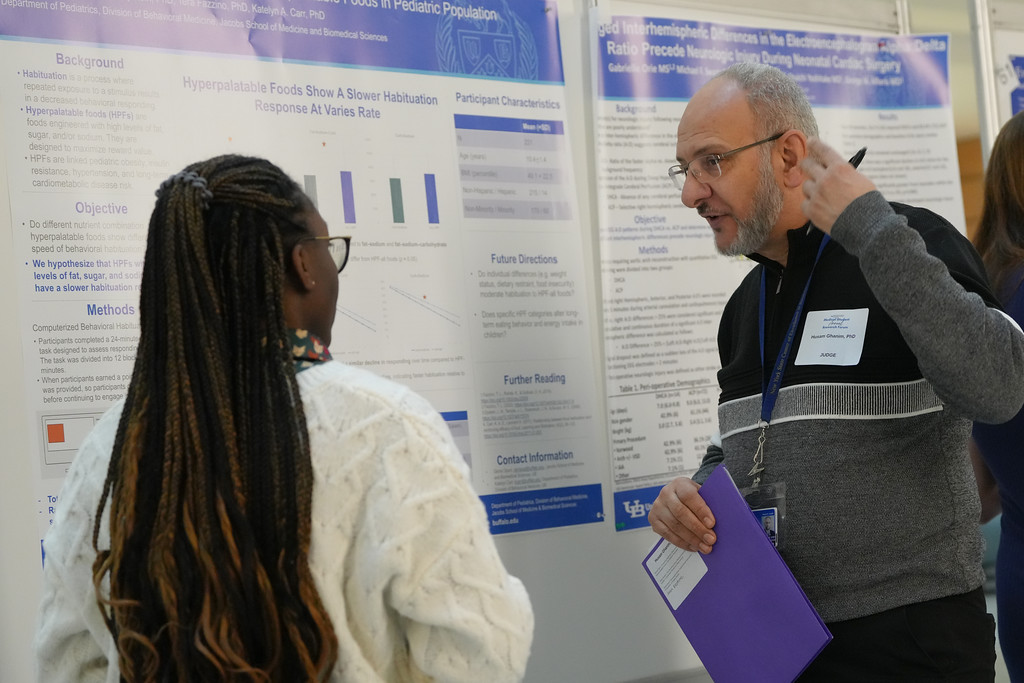
Gloria Opuni | Comparing Habituation Responses to Hyperpalatable Foods in the Pediatric Population |
Gabrielle Orie | Prolonged Interhemispheric Differences in the Electroencephalogram Alpha:Delta Ratio Precede Neurologic Injury During Neonatal Cardiac Surgery |
Rachel Pak | Evaluating Patient Understanding of the Labor Induction Process |
Supriya Pandit and Daniela Falcone | Barriers and Facilitators to Treatment of Pain and Anxiety at Time of IUD Insertion: A Survey of Providers |
Olivia Persia and Isabella Cardamone | Mental Health and Social Risk Factors in Patients Undergoing Arthroscopic Partial Meniscectomy |
Marissa Rackwitz | Characterization of Lipid Biosynthetic Genes in Gut Parabacteroides That Increase Tolerance to Bile Acids |
Joseph Ricottone | Does Body Mass Index Predict Complication Rate After Surgery for Buried Penis? A Surprising Retrospective Review of Patient-Specific Risk Factors |
Sanjida Riea | A Novel Modified-SITE Score for Enhanced Prediction of Surgical Candidacy in Spinal Infections |
Berkley Sawester | “Having People to Rely on Makes All the Difference”: Supporting Providers of Abortion and Gender-Affirming Care |
Carla Schwarz | Subtyping Ovarian Cancer Based on mRNA Seq Suggests Prognostic and Treatment Directives |
Benjamin Semegran | Oral Mucositis After Hematopoietic Stem Cell Transplantation: A Systematic Review and Meta-Analysis of Outcomes and Risk Factors |
Shashwat Shah | Impact of Publication Count and Characteristics on Neurological Surgery Residency Match Results |
Nuuh Sidali, Laurun Scott and Khawla Fentis | Analysis of Provider Monthly Averaged Length of Stay and 30-Day Readmission Rates at Two Different Hospital Settings in Buffalo, NY |
Andrew Sopchak, Alicia Loui and Abraham Kassem | Association Between Recent Otorrhea and Persistent Tympanic Membrane Perforation After Tympanoplasty |
Emily Spitz | Investigating the Mechanism of Air Pollutant-Mediated Lung Cancer |
Alyssa Stathopoulos | Therapeutic Potential of a Transmembrane Protein 97 (TMEM97) Modulator in Age-Related Macular Degeneration (AMD) |
Isabelle Stockman | Long-Term Incidence of Distal Junctional Kyphosis and Failure Following Cervical Deformity Surgery: A Systematic Review and Meta-Analysis |
Michael Sturniolo and Samuel Testani | Cadaveric Meniscal Cartilage for Ear Reconstruction: A Novel Reconstruction Case |
Kenny Suen | The Characterization of Phage Activity Against Acinetobacter Species Using Biofilm Analysis, Growth Curves, and Plaque Assays |
Rafay Tariq | Effect of Neoadjuvant Chemotherapy Before Robot Assisted Radical Cystectomy on the Development of Uretero-Intestinal Strictures: Results from the International Radical Cystectomy Consortium (IRCC) |
Heather Williams | Death by Triglycerides: A Multifaceted Case of Dyslipidemia, Obesity, and PCOS Resulting In Lethal Acute Pancreatitis |
Avery Williams | Enhancing Photodynamic Therapy Response for Actinic Keratoses: A Systematic Review of Physical Pre-Treatment Modalities |
Dylan Wong | Surgical Management of a Pediatric Brachial Plexus Lipoma |
Yousef Yousef | Cross-Population Analysis of Primary Open-Angle Glaucoma Identifies Nine Protective Loci in the Mayan Population from Guatemala |
Alexander Yunke | Social Risk Factors and Advanced CKM Syndrome by Sex, Race/Ethnicity: NHANES 2005-2018 |