News & information from UB, New York's flagship university
UB's School of Social Work Adopts Trauma-Informed Care as a Guiding Principle
Release Date: August 20, 2012 This content is archived.


BUFFALO, N Y. -- Like many powerful ideas, the essence is simple. Those dealing with people who have a mental illness or addiction problem have to start asking what has happened to the person that may be causing the issue, not just focus on what the person did and what went wrong.
And for at least one Western New York family court judge, taking this approach led to dramatically better results.
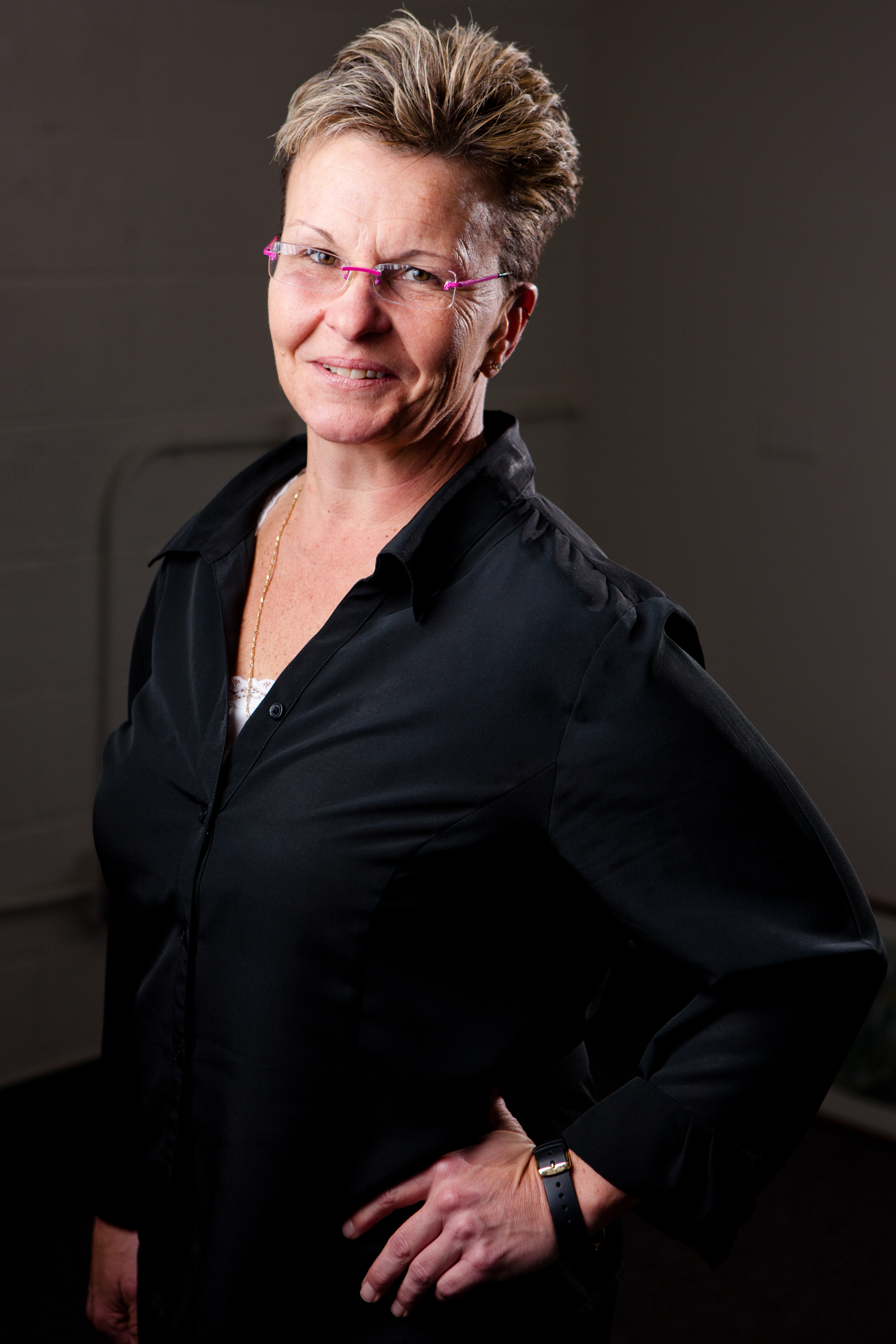
It happened in the last few months, says Susan A. Green, clinical associate professor within the University at Buffalo's School of Social Work and co-director of the university's new Institute on Trauma and Trauma-informed Care. The judge, who had trained with UB's trauma-informed care program, presided over a case involving a man who she had seen several times in court, who had often had to be removed from the courtroom because of his unruly behavior.
This time, Green says, the judge changed the way she and other court officials dealt with him. Still mindful to keep the court in order, the judge decided to soften some of the rules of procedure that did not have a direct effect on the case.
"She made a point of looking at the whole picture and where he was coming from," says Green. "She engaged him in a different way than before. She approached him according to what happened to this man versus what was wrong with him. This allowed her to shift her engagement style and approach in a way she believed made a difference in the outcome."
The approach allowed the man to retain more of his sense of personal power, rather than relive the antagonistic history of previous courtroom encounters. One detail stands out in Green's account: The judge allowed the man to keep his hat on.
That's a trademark of the trauma-informed system that has social workers so excited and interested. It works, and its results are often quick and clear. With this in mind, UB's Trauma-Informed Care Institute – or ITTIC – will hold its latest training session, this time for local law enforcement officers. Funded by a grant from Substance Abuse and Mental Health Services Administration Center for Behavioral Health and Justice Transformation, the Western New York community will receive the available "How Being Trauma-Informed Improves Criminal Justice System Responses" training of trainers (TOT) event.
The two-day training will take place 9 a.m. to 4:30 p.m. Tuesday, Aug. 21, and 8:30 a.m. to 4 p.m. Wednesday, Aug. 22, in Room 216, Paczesny Hall at Hilbert College, South Park Avenue, Hamburg.
One of the few sites in the country to receive this award, UB's institute will work with Hilbert College's Institute of Law and Justice and Martin Floss, chairman of the Graduate Program in Criminal Justice Administration, to organize the training for 25 to 30 local professionals. The training will be the beginning of establishing a core group of local Western New York trainers, specifically, individuals from law enforcement, mental health and addiction systems of care who will train others on becoming trauma-informed within the criminal justice system.
"Individuals and systems are paying attention to the reality that trauma really does exist in people's lives," says Green, who is co-director of UB's ITTIC with Thomas H. Nochajski, also associate professor in UB's School of Social Work.
"Being in a position at the institute and being able to assist professionals in infusing trauma-informed care into their existing workplace is a privilege," she says.
UB's institute began in the fall of 2011, aided by strong support from Nancy J. Smyth, dean of the UB School of Social Work, and further endorsements from Catherine N. Dulmus, associate dean for research and director of the Buffalo Center for Social Research.
"We started with an idea, created a website, invited experts in the field of trauma and trauma-informed care to sit on our expert advisory panel," says Green. "And the work began."
This week's training is the latest in a series conducted by the institute. Other organizations involved in evaluation, consultation and training include: local child welfare, addiction and mental health agencies, and three different school districts.
The ITTIC is also joining forces on grant proposals with other agencies and units at UB, including UB's Department of Family Medicine, UB School of Nursing, UB's School of Public Health and Health Professions and SUNY Albany. Green's group also has worked with immigrant and refugee populations on both the East and West sides of Buffalo, as well as veterans' groups.
Trauma-informed care has been a common thread of instruction in the UB School of Social Work. Recent graduating students have created the "Trauma Institute Think Tank" gathering three times to report on volunteer projects they worked on through ITTIC, including research, video-taping for online continuing education trauma courses and direct work with individuals in the community impacted by trauma.
"Learning about trauma and trauma-informed care makes social work 'click' for me,' says Katie McClain-Meeder, a master's student intern from the institute who just finished eight months of work.
Over and over, the simple but profound message of the approach kept resonating, according to Green. "We as providers need to start asking what has happened to this person," she says, "rather than what's the matter with this person, or what is wrong."
And of course, as part of the trauma-informed approach, this principle applies not only to the people being treated, but also to the social workers and other government or agency officials who are supposed to treat them.
Trauma-informed treatment sees what the person has gone through as part of the bigger story. And if that's true for those in need of help, it's also true of those professionals whose job it is to provide that help.
"Social workers in the field, have their own trauma experiences," says Green. "You not only need to consider the clients, but you also need to consider the staff. A true trauma approach does that. It recognizes that if you don't treat the staff in a trauma-informed way, how are you going to treat the clients?"
Media Contact Information
Charles Anzalone
News Content Manager
Educational Opportunity Center, Law,
Nursing, Honors College, Student Activities
Tel: 716-645-4600
anzalon@buffalo.edu