News & information from UB, New York's flagship university
'Hitler at Home'-- A Study in the Politics of Domestic Aesthetics
His design sense, used for propaganda purposes, also revealed the inner Fuhrer, UB researcher says
Release Date: July 30, 2012 This content is archived.


BUFFALO, N.Y. -- Architectural historian Despina Stratigakos, an award-winning scholar of modern German architecture, is at work on the first in-depth study of the aesthetic and ideological constructions of the "domestic" Adolf Hitler and the uses to which they were put by propagandists of the Third Reich.
She has received a prestigious two-year Marie Curie Fellowship from Germany's Gerda Henkel Foundation, to support her ongoing research and writing of the book, "Hitler at Home" (forthcoming from Yale University Press).
Stratigakos, PhD, an associate professor in the department of architecture at the University at Buffalo, says "Hitler at Home" will span the fields of architectural history, social history and politics and explore how the Fuhrer's domestic spaces -- which reveal a great deal about his self-conception -- became a part of the national cultural imagination and were used to launder his image in Germany and abroad.
"My goal with this book is to demonstrate how power can manifest itself in seemingly innocuous architecture and how Hitler transformed his domestic space into an instrument of political influence," says Stratigakos.
"Through the design of his homes we see how Hitler imagined his private life, and how he positioned this self in relation to his public identity," Stratigakos says, "as well as how intricately and expertly the artists and propagandists of the regime interwove these facets into a seductive whole.
"I am investigating the many ways in which Hitler's domestic spaces were packaged to sell the Third Reich to the German people and international audiences," she says.
Stratigakos says Hitler's homes were the result of his complex, long-term collaboration with his designers and his image-makers.
"Gerdy Troost could be called the interior decorator of the Third Reich," she says, "and Hitler worked closely with her. However, Hitler had a hand in every aspect of his home design and decor. He is credited with designing the architecture and approved the interior decoration, from the choice of fabric to the color schemes and furniture." He also selected the art works from his personal collection.
The elaborate, aggressive public theatrics of the massive Nazi rallies held at the Nuremberg party grounds designed by Albert Speer were carefully conceived to leave a distinct and lasting impression of the Reich and Fuhrer as the all-powerful, threatening, and untouchable leader of the German people.
"The staging of Hitler's domestic life, however, aimed to leave an impression of Europe's worst nightmare as familiar, respectable, and one of the people.
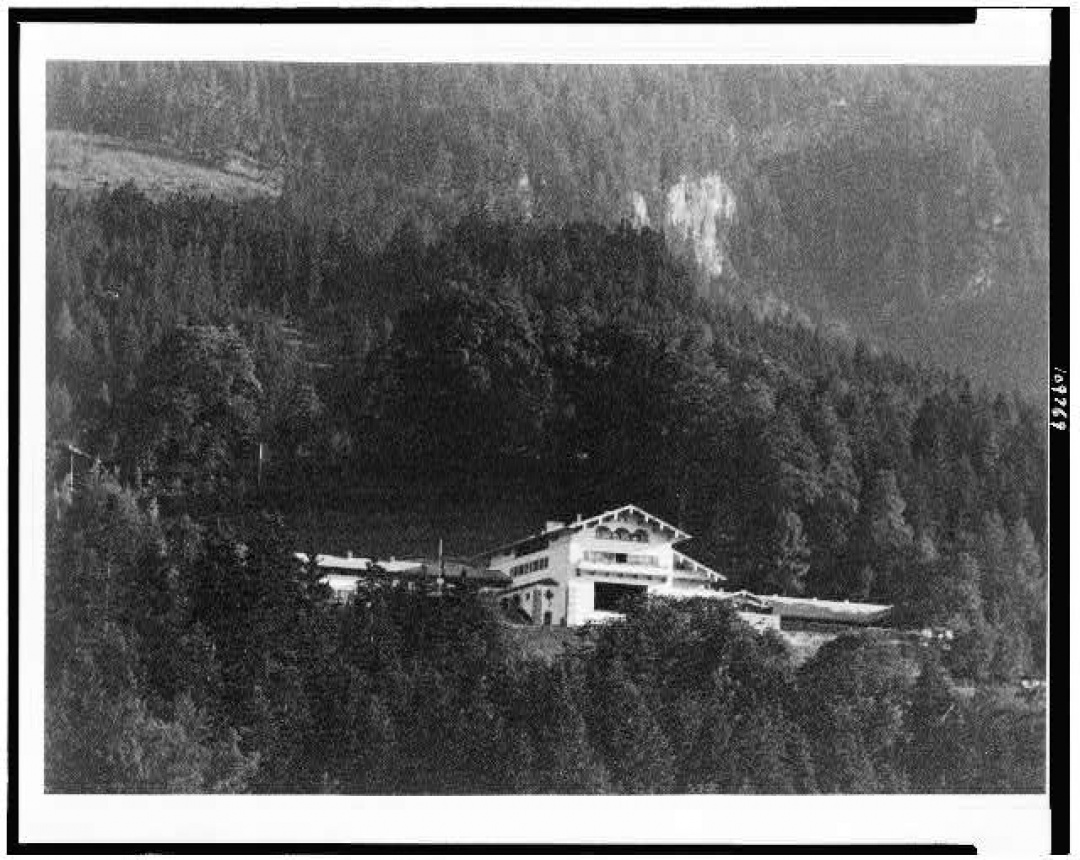
Stratigakos will focus on two domiciles: his luxury Munich apartment, which was a private home sometimes used to impress visitors but never seen by the public, and the Berghof, an Alpine estate in the Obersalzberg crafted as the idealized German home writ large -- a reflection of its principal inhabitant and his racial fantasies.
The Berghof was a public stage upon which the domestic Hitler lived amidst what was described as "soft greenery and snow white cascades." Its rooms were famously said to be full of music, bowls of fresh flowers, softly twittering Harz mountain canaries and watercolor sketches by the Fuhrer himself.
"This presentation of a deer-petting, dog-loving, child-friendly, country gentleman of artistic taste and gentle demeanor," says Stratigakos, "was useful because it appeared to contradict the accounts of violence and persecution coming out of Germany. It was employed by Nazi propagandists in the 1930s to disarm critics at home and abroad."
One way in which this was done, she said, was by promoting Hitler in reassuring magazine and newspaper spreads published in Germany and around the world. A testament to the Nazi PR effort, these appeared long after Hitler's intentions toward world domination were painfully obvious.
Stratigakos cites a notoriously obsequious article in a 1938 issue of Britain's Home and Gardens. Titled "Hitler's Mountain Home," it described the Berghof in fawning detail as an elegant paradise whose many charms reflected those of its creator, the Fuhrer himself. Indeed, as late as October 1939 a Life magazine spread on Hitler's artistic and design ambitions admired his "tasteful" home.
It didn't end there, however.
Dozens of pastoral images of the beloved Berghof appeared on contemporary postcards and were mailed by the thousands throughout the world by Germans proud of the Fuhrer and his home. Many of the postcards survive today, relics of the normalizing propaganda of the Reich.
Publicity photos and newsreels showed Hitler entertaining heads of state, international stars, diplomats and his own people at the Berghof, backed by the startling Alpine landscape.
"So powerful was the propaganda surrounding Hitler at home," Stratigakos says, "that both the Berghof and the Munich apartment were sites of fascination and public pilgrimage during Hitler's lifetime and well beyond."
In fact, after the war, she says the West German government was able to stop tourists or followers seeking out the apartment -- which the public had never even seen -- only by turning the entire building into a police headquarters.
The charisma of the Berghof was another thing entirely.
"Thousands trekked to the Berghof during the 1930s to see the place and catch a glimpse of Hitler and his cronies, some of whom had homes on the estate," Stratigakos says, "and they continued to come long after the estate was bombed, burned and virtually destroyed through the efforts of the Allied forces and the post-war German government."
Stratigakos says all of this testifies to the frightening power and success of the Nazi campaign -- and Hitler's personal effort -- to represent this place and its principal inhabitant as the benevolent heart of a new order.
Stratigakos is the author of the book "A Women's Berlin: Building the Modern City," a history of a forgotten female metropolis, which won the 2009 German Studies Association Book Prize. She also has published extensively on issues of diversity in the building industry, the public image of women architects, connections between architectural and sexual discourses in Weimar Germany, and exiled Jewish women architects in the United States. She received her Ph.D. from Bryn Mawr College and taught at Harvard University and the University of Michigan before joining the faculty at UB.
Media Contact Information
Patricia Donovan has retired from University Communications. To contact UB's media relations staff, call 716-645-6969 or visit our list of current university media contacts. Sorry for the inconvenience.