News & information from UB, New York's flagship university
Cadmium Selenide Quantum Dots Degrade in Soil, Releasing Their Toxic Guts, Study Finds
Release Date: July 18, 2011 This content is archived.


BUFFALO, N.Y. -- Quantum dots made from cadmium and selenium degrade in soil, unleashing toxic cadmium and selenium ions into their surroundings, a University at Buffalo study has found.
The research, accepted for publication in the journal Environmental Science and Technology, demonstrates the importance of learning more about how quantum dots -- and other nanomaterials -- interact with the environment after disposal, said Diana Aga, the chemistry professor who led the study.
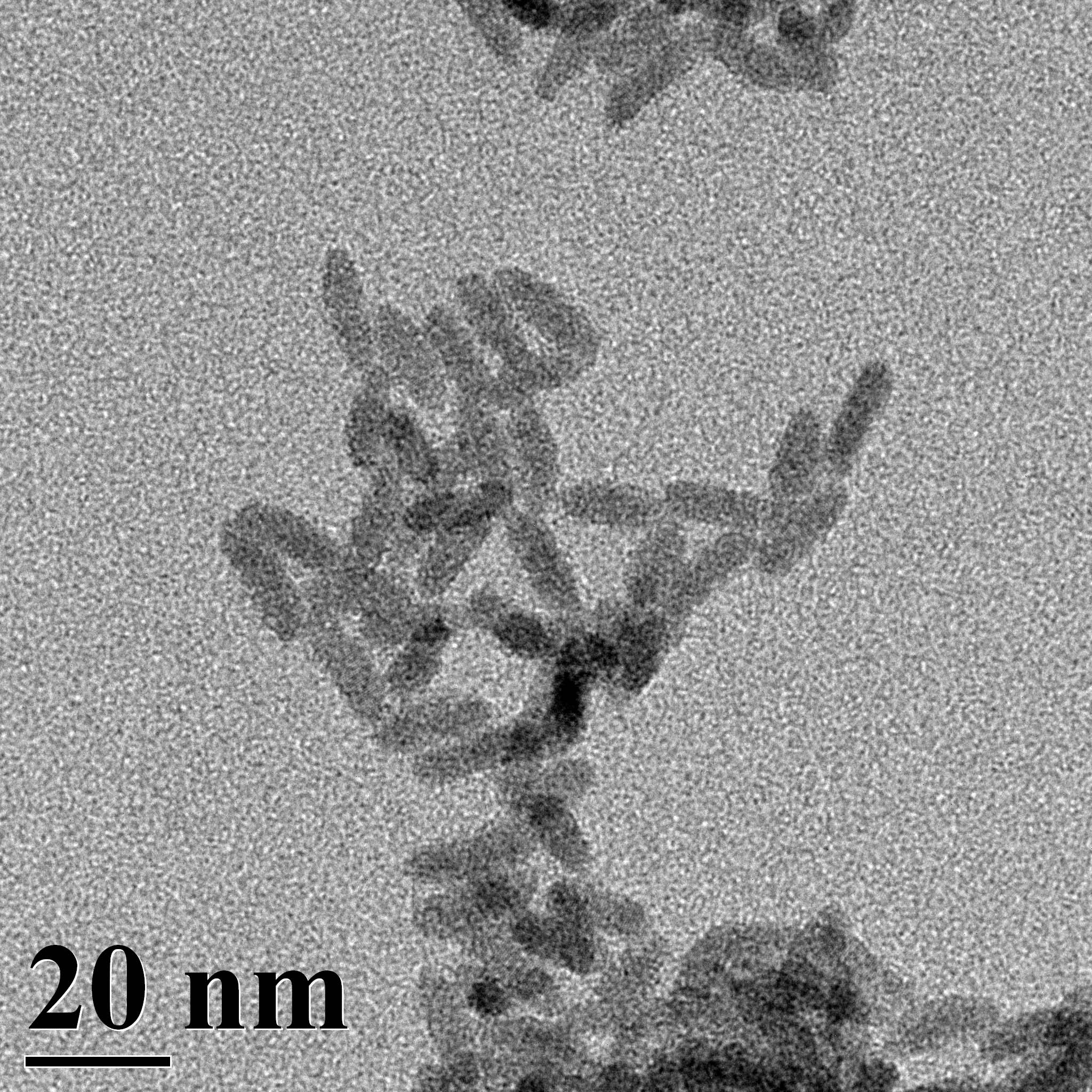
Quantum dots are semiconductor nanocrystals with diameters of about 2 to 100 nanometers. Though quantum dots are not yet commonly used in consumer products, scientists are exploring the particles' applications in technologies ranging from solar panels to biomedical imaging.
"Quantum dots are not yet used widely, but they have a lot of potential and we can anticipate that the use of this nanomaterial will increase," said Aga, who presented the findings in late June at a National Science Foundation-funded workshop on nanomaterials in the environment. "We can also anticipate that their occurrence in the environment will also increase, and we need to be proactive and learn more about whether these materials will be a problem when they enter the environment."
"We can conclude from our research that there is potential for some negative impacts, since the quantum dots biodegrade. But there is also a possibility to modify the chemistry, the surface of the nanomaterials, to prevent degradation in the future," she said.
Aga's research into the afterlife of quantum dots is funded by a $400,000 Environmental Protection Agency grant to investigate the environmental transport, biodegradation and bioaccumulation of quantum dots and oxide nanoparticles.
Her collaborators on the new study in Environmental Science and Technology include PhD student Divina Navarro, Assistant Professor Sarbajit Banerjee and Associate Professor David Watson, all of the UB Department of Chemistry.
Working in the laboratory, the team tested two kinds of quantum dots: Cadmium selenide quantum dots, and cadmium-selenide quantum dots with a protective, zinc-sulfide shell. Though the shelled quantum dots are known in scientific literature to be more stable, Aga's team found that both varieties of quantum dot leaked toxic elements within 15 days of entering soil.
In a related experiment designed to predict the likelihood that discarded quantum dots would leach into groundwater, the scientists placed a sample of each type of quantum dot at the top of a narrow soil column. The researchers then added calcium chloride solution to mimic rain.
What they observed: Almost all the cadmium and selenium detected in each of the two columns -- more than 90 percent of that in the column holding unshelled quantum dots, and more than 70 percent of that in the column holding shelled quantum dots - -remained in the top 1.5 centimeters of the soil.
But how the nanomaterials moved depended on what else was in the soil. When the team added ethylenediaminetetraacetic acid (EDTA) to test columns instead of calcium chloride, the quantum dots traveled through the soil more quickly. EDTA is a chelating agent, similar to the citric acid often found in soaps and laundry detergents.
The data suggest that under normal circumstances, quantum dots resting in top soil are unlikely to burrow their way down into underground water tables, unless chelating agents such as EDTA are introduced on purpose, or naturally-occurring organic acids (such as plant exudates) are present.
Aga said that even if the quantum dots remain in top soil, without contaminating underground aquifers, the particles' degradation still poses a risk to the environment.
In a separate study submitted for publication in a different journal, she and her colleagues tested the reaction of Arabidopsis plants to quantum dots with zinc sulfide shells. The team found that while the plants did not absorb the nanocrystals into their root systems, the plants still displayed a typical phytotoxic reaction upon coming into contact with the foreign matter; in other words, the plants treated the quantum dots as a poison.
The University at Buffalo is a premier research-intensive public university, a flagship institution in the State University of New York system and its largest and most comprehensive campus. UB's more than 28,000 students pursue their academic interests through more than 300 undergraduate, graduate and professional degree programs. Founded in 1846, the University at Buffalo is a member of the Association of American Universities.
Media Contact Information
Charlotte Hsu is a former staff writer in University Communications. To contact UB's media relations staff, email ub-news@buffalo.edu or visit our list of current university media contacts.