News & information from UB, New York's flagship university
A Reformed Social Security Can Help Families and Economic Growth
Release Date: March 10, 2005 This content is archived.


BUFFALO, N.Y. -- Policymakers and citizens pondering the merits of Social Security reform should consider new evidence showing that "social security" adversely affects decisions to marry and have children.
A new University at Buffalo study, examining the experience of 57 countries over a 32-year period, concludes that in the U.S. and other countries where social security is instituted as a defined-benefits, pay-as-you-go system, marriage and fertility rates fell sharply over time -- partly as a result of social security itself.
Those declines were not found in countries utilizing government-managed personal savings accounts or privatized pension funds as a basis of their social security system.
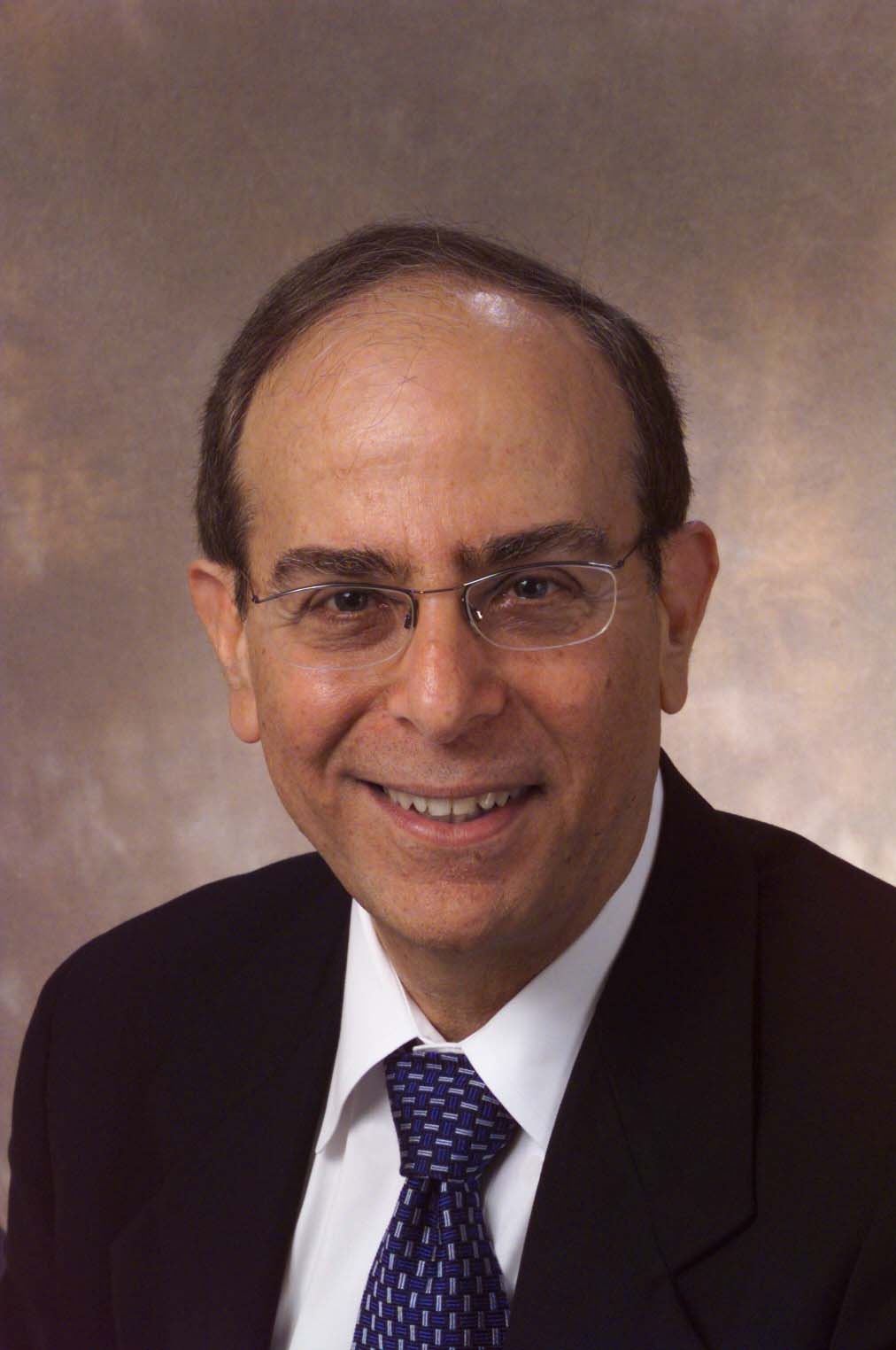
The study, led by renowned economist Isaac Ehrlich, chair of the UB Department of Economics, also supports previous research showing that pay-as-you-go social security has contributed to a slowdown in the rates of savings and economic growth.
"Current Social Security systems in the U.S. and elsewhere have some unintended consequences, which include disincentives to form families and have children," explains Ehrlich, who also is Melvin H. Baker Professor of American Enterprise in UB School of Management.
"I'm not ascribing the reduction in family formation entirely to social security -- there are many other contributing factors, such as greater opportunities for women in the workforce – but, on the margin, social security has had an adverse effect on the choices we make regarding family: whether to marry, to have children or even whether to save for our children's future."
This trend, Ehrlich says, has contributed to the projected growing imbalance between the number of U.S. retirees who will collect Social Security benefits and numbers of workers who pay into Social Security.
Ehrlich's study, with co-researcher Jinyoung Kim, UB assistant professor of economics, is posted on the Web site of the National Bureau of Economic Research (NBER): at http://www.nber.org/papers/w11121.
The study found that among the 54 countries studied with pay-as-you-go social security programs, the average annual marriage rate (net-of-divorce) fell from 9.72 per 1,000 people in 1960 to 6.40 in 1990, and the average total fertility rate (the average number of children born to an average woman during her reproductive years) fell from 3.82 in 1965 to 2.07 in 1989. In the U.S., the marriage rate fell from 9.17 in 1960 to 6.39 in 1990, and the fertility rate fell from 2.9 in 1965 to 2.0 in 1989.
According to the study, declines in marriage and fertility rates that are attributable to the specific impact of social security were not observed on average among the subset of countries (Singapore, Malaysia, and the Philippines) in the international sample that utilize government-managed personal saving accounts or privatized pension funds (Chile) as a basis of their social security system, rather than our type of pay-as-you-go social security.
Ehrlich, who supports the principle of social security as a means to secure old-age pension benefits, attributes declines in U.S. marriage and fertility rates partly to a Social Security system that does not strongly link the defined benefits with contributions that are supposed to fund the system.
Prior to the establishment of current form of Social Security in the U.S., the family was the main form of social security, Ehrlich points out. "Working children took care of retired parents as they aged, and so there was an incentive for parents to have large families," he says.
A pay-as-you-go system is, in principle, financially sound if it behaves like a large family where the entire generation of retirees is supported by the succeeding generation of workers, Ehrlich says. "In reality, however," he adds, "the pay-as-you-go system does not provide strong incentives for the system to remain financially sound.
"Today, your Social Security benefits are entirely independent of what your children put into the system or whether you have any children at all. And yet the entire concept of our current Social Security system is based on the present generation of retirees being financed by the next generation of workers, their children.
"There is an obvious disconnect between the financial needs of the system and the needs of the family," he concludes. "The structure of our Social Security system is sowing the seeds of its own financial vulnerability, if not ultimate demise."
The solution, Ehrlich suggests, is to reform Social Security by making it fully funded by individual contributions (thus, also independent of inter-generational support) by allowing people to manage some portion of their contribution through government-regulated, properly balanced pension funds. Americans also should be given the option of bequeathing these annuities to their children, he says.
This, Ehrlich says, would provide people with more incentive to adequately plan for retirement. Moreover, contributions to privately managed pension funds, channeled to productive private investments, also will promote higher economic growth, he says.
"If people want Social Security to provide a nest egg, they will know they have the opportunity to manage their contributions and see the payoff," he says. "And because generational contributions would become less of an issue, the financial solvency of Social Security would no longer be as vulnerable to the aging of the population."
Under our pay-as-you-go system, benefits are guaranteed by how many workers contribute to the system relative to the number of retirees. According to Ehrlich, the "support" ratio was 16 to 1 when the system started paying benefits in 1940. Right now, the ratio is 3.3 to 1 and falling. The aging of the population -- more people living longer and fewer babies being born -- "is threatening the current level of benefits and lowering the return people should receive on their contributions," he says.
"Under a fully funded social security system, in contrast, people fund their own retirement by the amounts they actually contribute to their personal accounts," Ehrlich says. "If mandated savings are not excessive, this system does not distort the incentive to retire early, to save or to form families."
According to Ehrlich, the Bush Social Security plan may therefore be on the right path, but he would like it to provide oversight for contributions managed by the private sector and linked to the financial markets.
"The government should provide some guarantees for these investments by insisting on a diversified portfolio of stocks, bonds and government securities, monitoring closely the investment returns and offering clearer assurances that Social Security would continue to be a safety net for the needy," Ehrlich says.
"We should structure Social Security investment vehicles so people get a choice, and the government has regulatory responsibility," he adds. "There have to be safety valves to protect the needy and to protect people from making overly risky choices."
The University at Buffalo is a premier research-intensive public university, the largest and most comprehensive campus in the State University of New York.
Media Contact Information
John Della Contrada
Vice President for University Communications
521 Capen Hall
Buffalo, NY 14260
Tel: 716-645-4094 (mobile: 716-361-3006)
dellacon@buffalo.edu
www.linkedin.com/in/john-dellacontrada