News & information from UB, New York's flagship university
Noted Election Forecaster Predicts Long, Heated Republican Struggle, Odds Shift to Gingrich
Super PAC funding, hot contest between Republican establishment and conservative base fuels battle
Release Date: January 23, 2012 This content is archived.


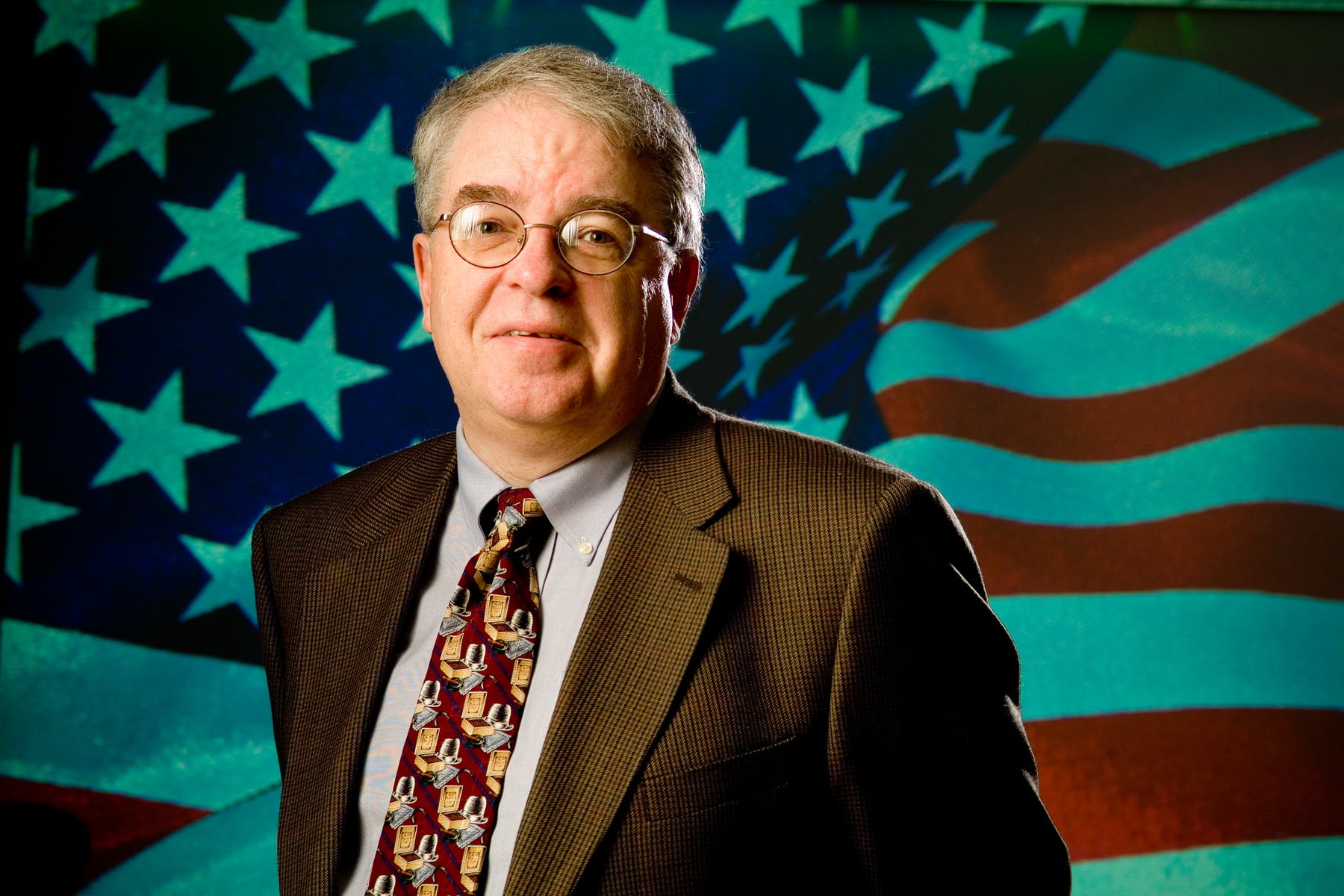
BUFFALO, N.Y. -- As they head into the Florida primary, noted presidential election scholar and forecaster James Campbell says the battle between Republican hopefuls Newt Gingrich and Mitt Romney is likely to intensify and become even more negative.
"I think a Gingrich victory is more likely than not, but whoever wins, victory will come at the end of a highly charged and raucous battle," says Campbell, UB Distinguished Professor, Chair of the Department of Political Science at the University at Buffalo, and author of "The American Campaign: U.S. Presidential Campaigns and the National Vote" (2nd edition, Texas A&M University, 2008).
The results of the South Carolina Republican presidential primary, Campbell says, suggests that the struggle between the party's establishment, which generally supports former Massachusetts Governor Mitt Romney, and the party's conservative base, which has been searching for a more conservative standard-bearer, will continue for some time.
"Gingrich's double-digit victory over Romney in South Carolina, despite being outspent, put a big dent in what many were coming to regard as the inevitability of a Romney nomination," Campbell says.
"In fact," he says, "it was a big step toward making Gingrich the single conservative alternative to Romney."
Former Senator Rick Santorum is still vying with Gingrich for the role of the conservative choice, but Campbell says his prospects were set back quite a bit by South Carolina primary voters.
"My guess is that Santorum's candidacy may not survive beyond Florida's primary," he says, "but that Ron Paul will continue in the race as a distant third place candidate because of his strong appeal to libertarian Republicans."
Campbell says he expects the race to intensify and possibly become even more negative fueled by campaign finance laws that prevent large direct contributions to candidates, but permit large sums of money to flow into the unaccountable "Super PACs" that are not restrained by the possibility of a backlash from being excessively negative about the opposition.
"With the establishment committed to the well-funded Romney candidacy and the conservative base far more enthusiastic about Gingrich and quite clearly very reluctant to accept Romney as the GOP candidate, a protracted struggle is likely," Campbell says.
"Although it is impossible to determine with any certainty whether the establishment or the base will 'cry uncle' first," Campbell says, "overall, I would say the odds are in Gingrich's favor -- though Romney remains a good bet to win in the next primary in Florida.
"The conservative base has the votes to determine the nomination in a primary dominated system and it appears so far that Romney is an exceptionally hard sell with them. As the Gallup Polls have shown for some time now, Gingrich generates enthusiasm among Republicans and Romney does not."
Campbell is past President of Pi Sigma Alpha, The National Political Science Honor Society, and Chair of the Political Forecasting Group, a Related Group of the American Political Science Association (APSA). He is a former APSA Congressional Fellow and a program director at the National Science Foundation. He has served on six editorial boards of political science journals, seven executive councils of political science organizations and has published four books and more than sixty book chapters and articles in political science journals.
The University at Buffalo is a premier research-intensive public university, the largest and most comprehensive campus in the State University of New York. UB's more than 28,000 students pursue their academic interests through more than 300 undergraduate, graduate and professional degree programs. Founded in 1846, the University at Buffalo is a member of the Association of American Universities.
Media Contact Information
Patricia Donovan has retired from University Communications. To contact UB's media relations staff, call 716-645-6969 or visit our list of current university media contacts. Sorry for the inconvenience.