News & information from UB, New York's flagship university
Book Examines Celebrity and Serial Killers
"Idols of destruction" as popular as Mickey Mouse
Release Date: August 26, 2005 This content is archived.



BUFFALO, N.Y. -- If you log on to eBay or http://www.murderauction.com these days, you will find a variety of "murderabilia" on sale for anywhere from $5 (a lock of Charlie Manson's hair) to $10,000 (one of John Wayne Gacy's clown paintings). If you're broke, but stuck on Gacy, you can pick up a bag of dirt from his infamous crawl space for $10.
This might seem ghoulishly commercial, but it is just one manifestation of America's century-long obsession with serial killers.
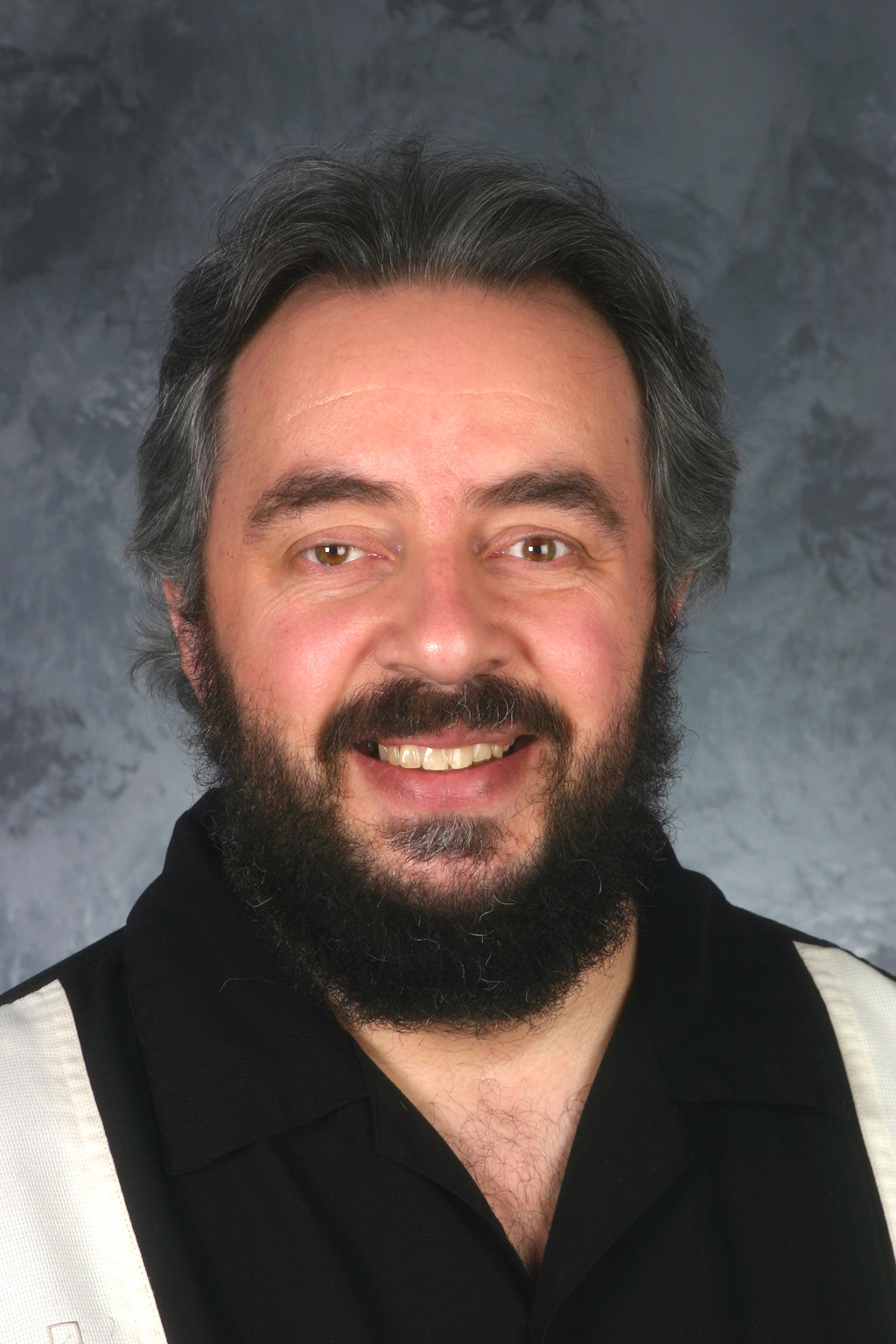
This compulsive preoccupation and its use in American culture is the subject of a new book by David Schmid, Ph.D., associate professor of English at the University at Buffalo.
"Natural Born Celebrities: Serial Killers in American Culture" (University of Chicago Press, August 2005) is unlike the plethora of books, films and television shows that examine who these people are, why they kill and how.
"The answers to those questions are deeply colored by the psychosocial needs of both author and audience," Schmid says, "and often tell us more about those needs than about the subject in question."
"Natural Born Celebrities," in contrast, is an in-depth study of how our construction and lionization of the serial killer as a cultural figure reflects Americans' unconscious, but deeply held, fears about human nature, power and sexuality.
Schmid points out that despite the fact that this country produces 85 percent of the world's serial killers, Americans consistently represent them as "other" than themselves -- as loathsome, monstrous, utterly alien creatures.
At the same time, he says, we treat them as icons, celebrity performers and fetish figures. Entire industries revolve around them; they entertain us in a variety of ways while providing a handsome living for the FBI, true-crime writers, novelists, filmmakers and television producers, not to mention John Walsh.
"We can hardly deny it," Schmid says. "We collect their nail clippings, photos and dirty clothes. We watch their trials and listen to their victims on the morning news. We compete online for serial-killer board games and action figures; gobble up endless hours of cable programming and films featuring their lives and deeds, and read hundreds of best-selling books about one serial killer after another, even though we know the outcome before we open them.
"We do it all because we are compelled to resist the idea that these characters, so familiar, so endemic to America, are at all like the rest of us," Schmid says.
By emphasizing their "creepiness," he adds, we can deny that they share many of our values and obsessions and, except for the fact that they act out the worst of them, frequently live unremarkable lives among us.
"Even when our serial killers appear remarkably ordinary, the 'serial killer industry' reassures us that they are not."
Despite American's denial, Schmid says their fantasies and compulsions represent values embedded in our culture, values that permeate our institutions and entertainments: the utter and often brutal supremacy of the white patriarchal system; misogyny; deep ambiguity and anxiety about the body, sex and sexual orientation; a relish for violence; fear of powerlessness and loss of control, and obsession with celebrity.
"One way that true-crime narratives deny the similarities between them and us," says Schmid, "is through the popular image of the so-called 'mask of sanity.' It is a device that turns the killer's apparent ordinariness into the most compelling sign of evil by depicting it as a façade hiding the 'truth' of the serial killer's identity.
"This is not enough to undermine and demonize their apparent normality, however. One of the more recent innovations in true crime narratives is the search for, and presentation of, signs of deviance in the killer's childhood, however spurious.
"The consumer of true crime takes great comfort in the deterministic logic that binds these children to their evil fate from their very earliest days," Schmid says. "It distances our 'good families' from these products of 'bad families,' again allowing us to deny that we or society at large is implicated in their behavior."
To describe the manner and means to which Americans have used our serial killers over the past century, Schmid extricates the interrelated strands of a complex cultural tapestry and examines each individually and in relation to one another. Among the topics he covers are:
* The Victorian origins of the American serial killer as a cultural icon
* The FBI's historical and disturbing use of serial killers as a promotional tool
* The enmeshment of serial killers in the Hollywood star system
* How and why we perpetuate myths about these killers
* The purpose of conflating aliens, devils and serial killers in television crime dramas
* Where you can pick up Ted Bundy's autopsy and burn photographs for a song
* The historical relationship between media technologies, fame and violence
* The dialectic between normality and monstrosity in true crime narratives (demon spawn vs. an especially roguish example of the ladies' man)
* The queering of serial murder in true crime -- Jeffrey Dahmer, John Wayne Gacy, Aileen Wournos
* Serial killing and terrorism inside the U.S. before and after 9/11
Schmid notes that since 9/11, Americans have developed a new obsession with actual and fictional terrorists of many stripes. He argues, however, that despite the fresh flow of popular culture dedicated to terrorism, "The celebrity serial killer will continue to be durable and highly visible in American popular culture.
"This is because, paradoxically, and thanks to the figure's long-standing presence on the American scene, the serial killer has a familiar and even comforting quality compared with the radical "otherness" of the terrorist," Schmid says.
"After all, however we appear to despise the idea, serial killers are us."
As a faculty member in Department of English in the UB College of Arts and Sciences, David Schmid teaches classes in 20th-century British and American fiction, popular culture and cultural studies. He has published articles on a variety of subjects, including Dracula, crime fiction and African-American literature anthologies, and currently is working on a book-length project, "Mean Streets: Space in Detective Fiction."
The University at Buffalo is a premier research-intensive public university, the largest and most comprehensive campus in the State University of New York.
Media Contact Information
Patricia Donovan has retired from University Communications. To contact UB's media relations staff, call 716-645-6969 or visit our list of current university media contacts. Sorry for the inconvenience.