2026 Inclusive Excellence and the Buffalo Law Review Symposium
Academic Freedom and the First Amendment in Higher Education
Date: Friday, October 16, 2026, 9:45am - 3:45pm
Location: Center for Tomorrow - University at Buffalo (125 Service Center Rd, Buffalo, NY 14221)
Intended Audience: UB Community (registration required)
Registration Deadline: Monday, October 12, 2026
- See below for speaker information and symposium program.
The Office of Inclusive Excellence and the Buffalo Law Review are pleased to host a symposium exploring Academic Freedom and the First Amendment in Higher Education on October 16, 2026. These matters carry deep historical significance and a direct connection to the University at Buffalo, tracing back to the U.S. Supreme Court’s landmark decision in Keyishian v. Board of Regents (1967), in which two UB professors refused to comply with a New York State law requiring faculty to sign loyalty oaths as a condition of employment. Recently, questions about the boundaries of academic freedom and speech rights have moved to the forefront of public debate, with several institutions across the nation facing scrutiny over their response to student and faculty expression. At the same time, there is growing anticipation that the U.S. Supreme Court may soon revisit Keyishian, raising the possibility that this landmark protection for academic freedom could be narrowed or overturned. Please join the Office of Inclusive Excellence, the Buffalo Law Review, and legal scholars from across the country as we discuss these critical questions.
Welcome Remarks


Seval Yildirim is Vice Provost for Inclusive Excellence and Professor of Law at the University at Buffalo (UB), and affiliate faculty in UB’s Gender Institute and the Jaeckle Center for Law, Democracy and Governance. An expert in individual rights, Professor Yildirim's scholarship focuses on secularism, religion and state relations, and individual rights in liberal democracies. Prior to UB, Professor Yildirim was Vice President for Diversity Initiatives and Professor of Interdisciplinary Studies and Law at the University of Nevada, Las Vegas and Associate Provost for Faculty Affairs and Development and Professor of Global Studies at California State University, San Bernardino. She has held visiting faculty positions at Harvard Law School, UC Berkeley School of Law, Villanova University School of Law, and New York University. In addition to her work in higher education, Professor Yildirim has served as pro bono counsel and legal consultant on individual rights cases across the United States.
Professor Yildirim holds a J.D. and LL.M. from New York University School of Law, an MA in international affairs from George Washington University and a BA in politics and women’s studies from Randolph-Macon Woman's College.
Panelists

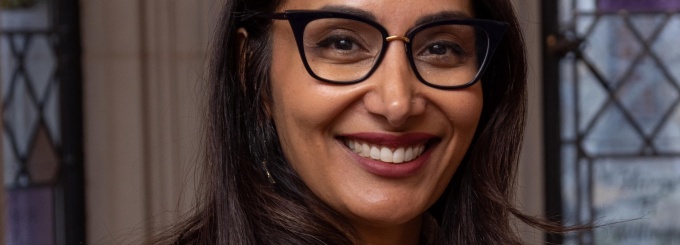
Veena Dubal is a leading scholar of law, technology, and labor whose work examines inequality and the conditions of precarious workers. She is a Professor of Law at the University of California, Irvine School of Law, with a joint courtesy appointment in Anthropology. Combining legal and empirical analysis, her research explores how digital technologies and evolving regulatory regimes reshape work, identity, and collective organizing.
Her scholarship, published in top law and social science journals, has been cited internationally, including by the California Supreme Court, and her expertise is widely sought by policymakers, courts, and labor organizations. She has been described by TechCrunch as an “unlikely star in the tech world,” and is the author of a forthcoming book based on a decade of ethnographic research on taxi and ride-hail workers.
Professor Dubal holds a B.A. from Stanford University and J.D. and Ph.D. degrees from the University of California, Berkeley. A former public interest attorney, she is the recipient of numerous honors, including a Fulbright. She currently serves as General Counsel of the American Association of University Professors.

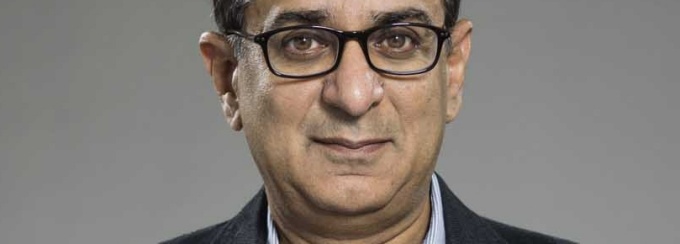
Anil Kalhan is a Professor of Law at Drexel University and a Professor (by courtesy) at the Drexel University Center for Science, Technology, and Society. He also is a Distinguished Fellow with the Center on Privacy and Technology at the Georgetown University Law Center and an Affiliated Fellow with the Yale Law School Information Society Project. For the 2024-25 academic year, he was a Fellow with the University of California National Center for Free Speech and Civic Engagement.
He has written and taught in areas including immigration law, constitutional law, legislation and regulation, privacy and surveillance, and international human rights, and he has worked extensively on academic freedom issues in a variety of capacities. In 2024, Professor Kalhan was appointed Special Master in Hamama v. Adducci, a class action lawsuit settlement involving immigration detention issues in the U.S. District Court for the Eastern District of Michigan. Since 2020, he has served as a member of Committee A on Academic Freedom and Tenure at the American Association of University Professors (AAUP), and he actively contributed to AAUP’s Special Committee on Academic Freedom in Florida, which investigated and published two reports in 2023 examining the politically motivated attacks on academic freedom and shared governance in the state’s public higher education system.


Barbara A. Lee is an attorney and a Distinguished University Professor Emerita at Rutgers University, where she has served as dean, associate provost, center director, and most recently as the Senior Vice President for Academic Affairs. She has taught employment law and higher education law at Rutgers since 1982. She is also of counsel to the law firm of Bond, Schoeneck & King, a New York firm with a substantial higher education and nonprofit organization practice.
Barbara Lee holds a Ph.D. in higher education administration from The Ohio State University and a J.D. from Georgetown University Law Center. She is the author or coauthor of over 100 books and scholarly articles on higher education and employment law. Her book, The Law of Higher Education (coauthored with W. Kaplin, N. Hutchens and J. Rooksby), is the leading treatise on higher education law in the United States.

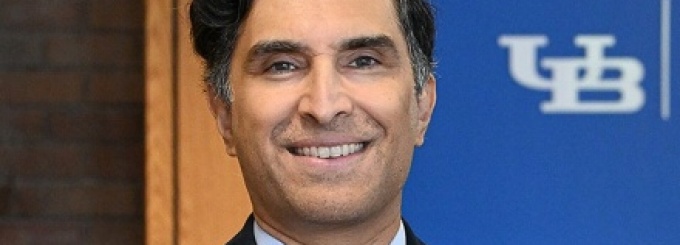
Manoj Mate is Professor of Law and Floyd H. and Hilda L. Hurst Faculty Scholar at the University at Buffalo School of Law, and Director of the Jaeckle Center for Law, Democracy and Governance. Professor Mate's research focuses on constitutional law, election law, comparative constitutional law and law and society. His current research focuses on the socio-legal and constitutional dimensions of electoral governance, constitutional rights and equality, and the role courts play in regulating and protecting democracy.
His scholarship has been published or is forthcoming in leading journals including Yale Journal of International Law, University of Pennsylvania Journal of Constitutional Law, Stanford Journal of Civil Rights and Civil Liberties, University of Chicago Legal Forum, Connecticut Law Review, Tulane Law Review, and in peer-reviewed volumes published by Oxford University Press and Cambridge University Press. Mate has held faculty and visiting appointments at the University of California, Berkeley, the University of California, Irvine, DePaul University, and the University of Windsor, where he was awarded a Canada Research Chair by the Canadian government, and also served as a Visiting Scholar at Harvard Law School. Professor Mate holds a J.D. from Harvard Law School, and a Ph.D. in Political Science from U.C. Berkeley.

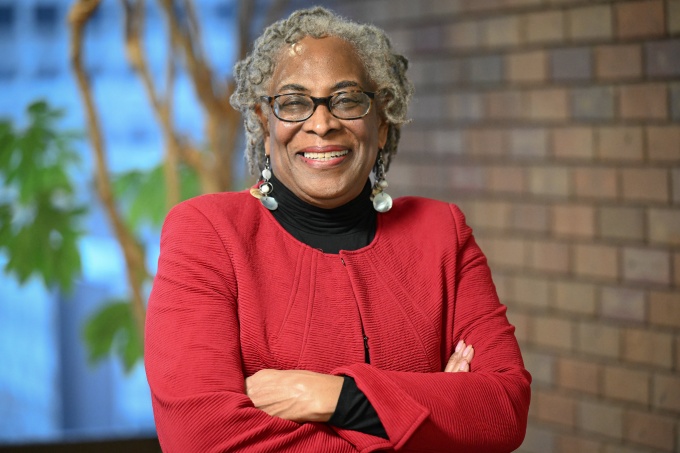
Athena D. Mutua is a Professor of Law and the Floyd H. and Hilda L. Hurst Faculty Scholar at the University at Buffalo School of Law. She specializes in civil rights and the critical analysis of the role of law in both facilitating and hindering justice across the intersections of race, class and gender. Professor Mutua teaches in the areas of business law, constitutional law and critical race theory. Her recent scholarship includes The Attack on Higher Education (with others, 2024) and An Exegesis of the Meaning of Dobbs (2024). Her edited collection on Progressive Black Masculinities (2006) received the UB Exceptional Scholars Young Investigator’s Award.
Professor Mutua is a founding member of the Critical Legal Collective, an organization meant to safeguard and advance critical studies in the wake of attacks on critical knowledge and multiracial democracy; and co-founder of ClassCrits, a network of scholars exploring issues of law and political economy. Professor Mutua has also served as vice chair to the New York Advisory Committee to the United States Commission on Civil Rights. In 2017, she received the Jacob D. Hyman Award for her work with students of color. She holds law degrees from Harvard Law School and The American University, Washington College of Law.

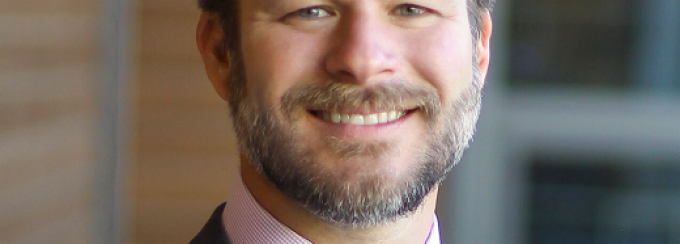
Brian Soucek is the Martin Luther King, Jr. Professor of Law at UC Davis School of Law. He is a constitutional law scholar and philosopher of art whose work ranges from equality and free speech law, to topics at the intersection of law and aesthetics. His work has been cited by the U.S. Supreme Court and the Sixth, Seventh, and Ninth Circuits, referenced and excerpted in leading casebooks in Civil Procedure, Sexual Orientation Law, and Immigration Law, discussed by the New York Times and Wall Street Journal, and honored with the Dukeminier Award from UCLA’s Williams Institute for the year’s best article on sexual orientation and gender identity law. He is a current member of Committee A on Academic Freedom and Tenure at the American Association of University Professors and a former chair of the University of California’s systemwide Committee on Academic Freedom. His book, The Opinionated University: Academic Freedom, Diversity, and the Myth of Neutrality in American Higher Education, was published by the University of Chicago Press earlier this year.
Professor Soucek graduated from Boston College (B.A., Philosophy and Economics); Columbia University (Ph.D., Philosophy), where he was awarded the Core Preceptor Prize for his teaching; and Yale Law School (J.D.), where he was Comments Editor for the Yale Law Journal, a Coker Fellow in Procedure, and winner of the Munson Prize for his work in the school’s immigration clinic.


David M. Rabban is Distinguished Teaching Professor and Dahr Jamail, Randall Hage Jamail, and Robert Lee Jamail Regents Chair in Law at the University of Texas (UT) at Austin School of Law. Before joining the UT Austin faculty in 1983, Professor Rabban served as counsel to the American Association of University Professors (AAUP) for several years. He served as General Counsel of the AAUP from 1998 to 2006 and Chair of its Committee on Academic Freedom and Tenure from 2006 to 2012.
His teaching and research focus on free speech, academic freedom, higher education and the law, and American legal history. He is the author of Free Speech in Its Forgotten Years, 1870-1920 (Cambridge,1997), which received the Forkosch Prize from the Journal of the History of Ideas for "the best book in intellectual history published in 1997." His many articles have appeared in Yale Law Journal, Stanford Law Review, University of Chicago Law Review, Cambridge Law Journal, and elsewhere. He was a fellow of the John Simon Guggenheim Foundation in 2016 and of the Program in Law and Public Affairs at Princeton University in 2016-17. His most recent book, Academic Freedom: From Professional Norm to First Amendment Right, was published in 2024.
Moderators

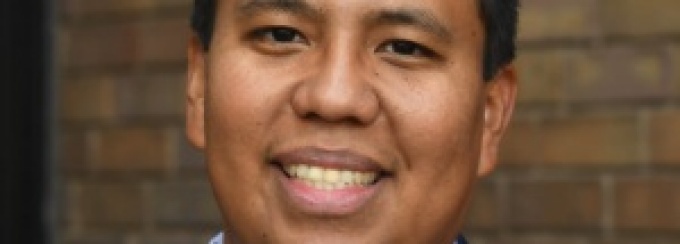
Jorge Luis Fabra-Zamora is an Associate Professor at the University of Buffalo School of Law. His research and teaching interests focus on legal and political philosophy, torts, and international human rights. His current project develops a unified theory capable of different forms of state, indigenous, customary, international, transnational, supra-national, and global law. His work also explores the problems of state liability at the intersection between torts, administrative law, human rights, and political philosophy.
His academic work in these areas has appeared in McGill Law Review, the Canadian Journal of Law and Society, Transnational Legal Theory, and some leading Latin American reviews. He is also the editor of several academic volumes, including one about Colombia’s innovative peace process with FARC (Routledge, 2021), one volume about jurisprudence’s transformation in globalization (Elgar, 2020), and a multi-volume encyclopedia of legal philosophy in Spanish (UNAM, 2015).
Born and raised in Colombia, Fabra-Zamora earned an LL.B. from the Universidad de Cartagena and then a M.A. and Ph.D. in Philosophy from McMaster University, Canada. Prior to joining the law school, he was a Provost Postdoctoral Fellow at the University of Toronto Faculty of Law and Adjunct Professor at Osgoode Hall Law School, York University.


Lucinda M. Finley is the Frank G. Raichle Professor of Trial and Appellate Advocacy and Director of Appellate Advocacy at the University at Buffalo (UB) School of Law. Her research and teaching areas include tort law, women and the law, reproductive rights, employment discrimination, and First Amendment and equal protection law.
She is the author of numerous law review articles and book chapters on tort law and women and the law, and is the co-author of a leading casebook, Tort Law & Practice (Lexis Publications, third edition 2006). Her recent research focuses on tort reform caps on non-economic damages, and analyzes how caps disparately affect women, the elderly and children. Professor Finley is also active as a litigator and appellate advocate in the federal courts, and has testified before the U.S. Congress and state legislative committees. She was the first female lawyer from Western New York to argue a case before the U.S. Supreme Court.
She is a Phi Beta Kappa graduate of Barnard College and an honors graduate of Columbia University Law School. She served as law clerk to Judge Arlin Adams on the U.S. Court of Appeals for the Third Circuit, and then practiced law with the Washington, D.C. firm Shea and Gardner. Prior to joining the UB School of Law faculty, she taught at Yale Law School.

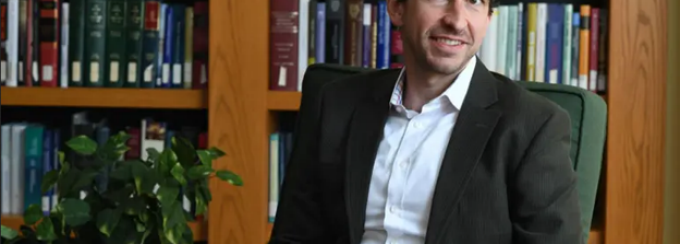
Anthony O’Rourke is the Joseph W. Belluck and Laura L. Aswad Professor of Civil Justice at the University at Buffalo (UB) School of Law. He teaches and writes on the intersections of criminal law and procedure, legislation, constitutional law, and legal theory. His scholarship draws on work in the social sciences and legal philosophy to identify links between legal doctrine and the institutional arrangements that structure legal decision-making and criminal legal systems. His writings have been published in the Columbia Law Review, Michigan Law Review, the Wisconsin Law Review, the Georgia Law Review, the William & Mary Law Review, the Journal of Criminal Law and Criminology, and other specialty journals. From 2017 to 2019, Professor O'Rourke was an Assistant Federal Defender for the Federal Defenders of New York while on leave of absence from the law school. He continues to litigate pro bono cases at the trial and appellate levels.
Professor O’Rourke received his B.A. with high honors from the University of Michigan and his J.D. from Columbia Law School, where he was a James Kent Scholar. He clerked for Judge Raymond C. Fisher of the Ninth Circuit Court of Appeals, and Judge Louis H. Pollak of the U.S. District Court for the Eastern District of Pennsylvania. Prior to joining the UB School of Law faculty, O’Rourke also worked as an associate at Paul, Weiss, Rifkind, Wharton & Garrison, LLP, and as an associate-in-law at Columbia Law School. Before law school, he worked at the International Monetary Fund.
2026 Inclusive Excellence and the Buffalo Law Review Symposium Program
ACADEMIC FREEDOM AND THE FIRST AMENDMENT IN HIGHER EDUCATION
- Friday, October 16, 2026, 9:45am-3:45pm
- University at Buffalo, Center for Tomorrow, 125 Service Center Rd. Buffalo, NY 14228
| 9:45-10:05am | Registration |
| 10:05-10:15am | Welcome Remarks
Seval Yildirim Vice Provost for Inclusive Excellence Professor of Law University at Buffalo |
| 10:15-11:45am | Panel I: Conceptions of Academic Freedom
Panelists:
Veena Dubal Professor of Law University of California Irvine School of Law General Counsel, AAUP
Manoj Mate Professor of Law & Floyd H. & Hilda L. Hurst Faculty Scholar Director, Jaeckle Center for Law, Democracy and Governance University at Buffalo School of Law
David M. Rabban Distinguished Teaching Professor Dahr Jamail, Randall Hage Jamail, and Robert Lee Jamail Regents Chair in Law The Graves, Dougherty, Hearon & Moody Centennial Faculty Fellowship in Law University of Texas at Austin School of Law
Brian Soucek Martin Luther King Jr. Professor of Law University of California Davis School of Law
Moderator:
Jorge Luis Fabra-Zamora Associate Professor of Law University at Buffalo School of Law |
| 11:45am-1:00pm | Lunch |
| 1:00-2:30pm | Panel II: Academic Freedom and the First Amendment
Panelists:
Anil Kalhan Professor of Law Drexel University Thomas R. Kline School of Law
Barbara Lee University Professor Rutgers Law School
Athena D. Mutua Professor of Law & Floyd H. & Hilda L. Hurst Faculty Scholar University at Buffalo School of Law
Moderator:
Lucinda M. Finley Frank G. Raichle Professor of Trial and Appellate Advocacy University at Buffalo School of Law |
| 2:30-2:45pm | Break |
| 2:45-3:45pm | Round Table Discussion: Academic Freedom in Times of Political Uncertainty
All Panelists
Moderator:
Anthony O’Rourke Joseph W. Belluck and Laura L. Aswad Professor of Civil Justice University at Buffalo School of Law |
| 3:45pm | Closing Remarks |