Buffalo Glycoscience Interest Group (GIG)
On this page:
Glycomics Research Spotlight

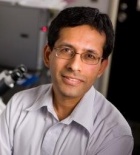
Sriram Neelamegham, PhD, Professor, Department of Chemical and Biological Engineering, School of Engineering and Applied Sciences
My laboratory performs investigations in the fields of Molecular & Cellular Bioengineering, Systems Glycobiology, and Thrombosis & Hemostasis. In particular, we are interested in applying quantitative experimental and computational techniques to discover new mechanisms that control the cell adhesion properties of blood leukocytes and platelets during human inflammatory and thrombotic disorders. Many of the projects in my laboratory assess the roles of fluid/hydrodynamic forces, biochemical reaction networks and cell adhesion molecule binding properties on blood cell adhesion mechanics during inflammation, thrombosis & hemostasis, and cancer. A long term goal is to apply our knowledge of these regulatory pathways to identify new targets for drug development.
Faculty
Howard Faden, MD; Professor of Pediatric infectious disease, Department of Pediatrics, Jacobs School of Medicine & Biomedical Sciences
Email: hfaden@upa.chob.edu
Keywords: pediatrics, gut, microbiota secretors and nonsecretors, viral diarrhea, C. difficile diarrhea, diet, bile acid metabolism and short chain fatty acids.
Publications:
1. Hao H, Lixin Z, Faden H: The milk-based diet of infancy. Gastroenterology Report 7(4):246-249, 2019
2. Yichen Li, Howard S. Faden, Lixin Zhu: The gut microbiome’s response to dietary changes in the second year of life. Front Pharmacol 11: 334 Published online Mar 17, 2020, doi: 10.3389/fphar.2020.00334
3. Y Wan, J Li, Shen, Y Zou, L Hou, *Lixin Zhu, H Faden, Z Tang, M Shi, N Jiao, Y Li, S Cheng, Y Huang, D Wu, Z Xu, L Pan, J Zhu, G Yan, R Zhu, P Lan: Enteric involvement in hospitalized patients with COVID-19 outside Wuhan. Lancet Gastroenterology and Hepatology Published online April 15, 2020 https://doi.org/10.1016/S2468-1253 (20)30118-7


Rudiyanto Gunawan, Associate Professor, Chemical and Biological Engineering
Website: http://www.cabselab.com. Email: rgunawan@buffalo.edu
Keywords: Systems Biology, Bioinformatics, Metabolic Networks, Gene Networks, Glycosylation
Research Summary:
Research in the Gunawan lab spans the areas of computational systems biology, bioprocess engineering, and bioinformatics. Our domain expertise includes mathematical modeling of biological networks, parameter estimation, systems analysis, bioprocess optimization, and design of experiments. The group’s research mission is to create enabling and innovative technology for the extraction of mechanistic and actionable insights from biological data, based on rigorous mathematical underpinnings, systems modeling and analysis, and advanced computational algorithms. In one of our projects, we are developing computational methodologies to analyze intracellular glycosylation networks and how such networks are affected and eventually can be controlled by various bioprocess parameters in the production of monoclonal antibody drugs.
Publications:
1. S. Hutter, M. Wolf, N. Papili Gao, D. Lepori, T. Schweigler, M. Morbidelli and R. Gunawan. Glycosylation flux analysis of immunoglobulin G in Chinese hamster ovary perfusion cell culture. Processes, 6:1756, 2018.
2. S. Hutter, T. K. Villiger, D. Bruhlmann, M. Stettler, H. Broly, M. Soos and R. Gunawan. Glycosylation flux analysis reveals dynamic changes of intracellular glycosylation flux distribution in chinese hamster ovary fed-batch cultures, Metabolic Engineering, 43(A):9-20, 2017


Sriram Neelamegham, PhD, Professor, Department of Chemical and Biological Engineering, School of Engineering and Applied Sciences
Website: cbe.buffalo.edu/neelamegham Email: neel@buffalo.edu
Recommended Resources: www.virtualglycome.org; https://www.ncbi.nlm.nih.gov/glycans/snfg.html
Keywords: Systems glycobiology, protein-carbohydrate binding, human diseases, translational glycosciences
Research Summary:
My laboratory is interested in studies related to Cell and Molecular Bioengineering, particularly as it relates to the impact of glycosylation on human diseases and translational research. To this end, we develop high-throughput genomics, glycomics and glycoproteomics based methods to characterize the glycome. Such data are integrated into computer models in order to define key steps regulating human physiology and disease processes, for example the impact of glycosylation on cancer development. We are also interested in identifying novel molecular players regulating leukocyte-endothelial cell adhesion interactions in the context of inflammatory diseases, developing small molecule carbohydrates that regulate cell function and protein circulation half-life, and also new technologies to target stem cells to specific sites in vivo. Additionally, I lead the development of the Symbol Nomenclature for Glycans (SNFG) in collaboration with a number of investigators, worldwide.
Publications:
1. Robustness in glycosylation systems: effect of modified monosaccharides, acceptor decoys and azido sugars on cellular nucleotide-sugar levels and pattern of N-linked glycosylation. Del Solar V, Gupta R, Zhou Y, Pawlowski G, Matta KL, Neelamegham S.Mol Omics. 2020 Apr 30. doi: 10.1039/d0mo00023j. Online ahead of print.
2. Doxycycline-Dependent Self-Inactivation of CRISPR-Cas9 to Temporally Regulate On- and Off-Target Editing. Kelkar A, Zhu Y, Groth T, Stolfa G, Stablewski AB, Singhi N, Nemeth M, Neelamegham S.Mol Ther. 2020 Jan 8;28(1):29-41. doi: 10.1016/j.ymthe.2019.09.006. Epub 2019 Sep 12.PMID: 31601489
3. A GlycoGene CRISPR-Cas9 lentiviral library to study lectin binding and human glycan biosynthesis pathways Zhu Y, Groth T, Kelkar A, Zhou Y, Neelamegham S, Glycobiology, 2020 (accepted)


Kate Rittenhouse-Olson, President, CSO, For-Robin Inc.; Emeritus Professor, Biotechnical and Clinical Laboratory Sciences, UB.
Website: https://for-robin.com/. Email: krolson@buffalo.edu
Keywords: Thomsen-Friedenreich antigen, TF-Ag, JAA-F11 antibody, breast and lung cancer, immunotherapy of cancer, imaging of cancer, translational glycosciences
Research Summary:
For Robin’s mission is to make a difference for cancer patients. Our patented humanized IgG1 antibody (hJAA-F11) is under development for 1) specific and effective treatment of cancers with an unmet need, including difficult to treat: triple negative breast cancer, squamous non-small cell lung cancer (NSCLC) and small cell lung cancer (SCLC), and for 2) differential imaging diagnostic applications in lung cancer.
Building on results of STTR and SBIR funding from the NCI, For-Robin was chosen to join the highly selective NCI NExT program. NCI has provided third party validation of hJAA-F11 human tumor targeting ability in xenograft models. This milestone driven partnership between For-Robin and NCI scientists will leverage the equivalent of ~$4 million in NCI resources to: produce large quantities of cGMP-qualified antibody, conduct preclinical safety studies and assist in filing an investigational new drug application (IND) with the U.S. FDA to bring hJAA-F11 to clinical trial stage.
Publications:
1. Tati S, Fisk JC, Abdullah J, Karacosta L, Chrisikos T, Philbin P, Morey S, Ghazal D, Zazala F, Jessee J et al: Humanization of JAA-F11, a Highly Specific Anti-Thomsen-Friedenreich Pancarcinoma Antibody and In Vitro Efficacy Analysis. Neoplasia 2017, 19(9):716-733. PMCID: PMC556533 http://www.sciencedirect.com/science/article/pii/S1476558617302270
2. Karacosta LG, Fisk JC, Jessee J, Tati S, Turner B, Ghazal D, Ludwig R, Johnson H, Adams J, Sajjad M et al: Preclinical Analysis of JAA-F11, a Specific Anti-Thomsen-Friedenreich Antibody via Immunohistochemistry and In Vivo Imaging. Translational Oncology 2018, 11(2):450-466. https://www.ncbi.nlm.nih.gov/pmc/articles/PMC5834658/
3. Zhe Sun, Leike Xie, Zhongkui Hong, Nicola Brown, Olga Glinskii, Kate Rittenhouse-Olson, Gerald Meininger, Vladislav Glinskii Temporal and molecular dynamics of human metastatic breast carcinoma cell adhesive interactions with human bone marrow endothelium analyzed by single-cell force spectroscopy PLOS One Sept. 20, 2018 https://journals.plos.org/plosone/article?id=10.1371/journal.pone.0204418


Stefan Ruhl, Professor, Department of Oral Biology, School of Dental Medicine
Website: https://www.ruhl-lab.org/ Email: shruhl@buffalo.edu Twitter: @Ruhl_Lab
Keywords: Oral biology, glycan-mediated microbial adhesion, saliva, host defense.
Research Summary:
All biological systems are characterized by a dense and complex array of cell surface and secreted sugar chains (glycans). Glycan recognition plays an important role for bacterial adhesion to host surfaces and for inter-bacterial aggregation within microbial biofilms. My laboratory studies glycan recognition in the oral microbiome which comprises one of the most diverse biofilm communities in mammalian hosts. We investigate the extensive network of glycan-mediated interactions between the saliva glycome and the oral microbiome, as well as among members of the multi-species biofilms in the oral cavity. Understanding the mechanisms of glycan recognition by oral microbes and systemic pathogens traversing the mouth environment will help to reveal how oral and systemic health are connected and may lead to future promising therapies.
Publications:
1. Walz A, Odenbreit S, Stühler K, Wattenberg A, Meyer HE, Mahdavi J, Borén T, Ruhl S (2009) Identification of glycoprotein receptors within the human salivary proteome for the lectin-like BabA and SabA adhesins of Helicobacter pylori by fluorescence-based 2-D bacterial overlay. Proteomics 9: 1582-1592.
2. Cross B, Ruhl S. (2018) Glycan recognition at the saliva – oral microbiome interface. Cell. Immunol. 333:19-33. PMCID: PMCID: PMC6296888; DOI: 10.1016/j.cellimm.2018.08.008.
3. Thamadilok S, Choi KS, Ruhl L, Schulte F, Reddy MS, Kazim AL, Hardt M, Gokcumen O, Ruhl S. (2020) Human and non-human lineage-specific footprints in the salivary proteome. Mol. Biol. Evol. 37: 395–405. PMCID: PMC6993864 DOI: 10.1093/molbev/msz223
Full list of publications: https://www.ncbi.nlm.nih.gov/myncbi/collections/mybibliography/
Sarah Zhang, MD, Professor, Department of Ophthalmology, Jacobs School of Medicine & Biomedical Sciences
Website: http://medicine.buffalo.edu/content/medicine/faculty/profile.html?ubit=xzhang38 Email: xzhang38@buffalo.edu
Events
Buffalo Glycoscience Symposium
The goal of the Buffalo Glycoscience Symposium is to stimulate discussions on how glycans may play a role in various biological contexts, help initiate collaborations that push the field, and also highlight local resources that are available to the community of scientists.