The RENEW Institute - A Multidisciplinary Initiative
Joint Event:
Annual Arctic Workshop and Catalyzing Conversations
Richard Alley
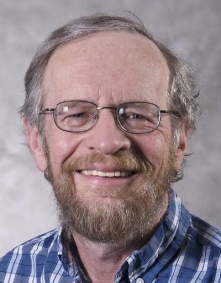
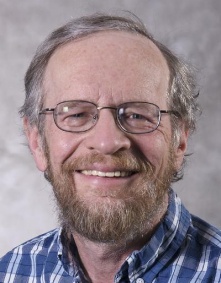
A special joint session of the Annual International Arctic Workshop, the Northeast Glaciology Meeting and Catalyzing Conversations.
National Academy of Sciences member and co-recipient of the 2007 Nobel Peace Prize, Dr. Alley is the Evan Pugh University Professor of Geosciences at Penn State. He studies the great ice sheets to help predict future changes in climate and sea level, and has been honored for research, including Foreign Membership in the Royal Society, teaching, and service.
Richard Alley participated in the UN Intergovernmental Panel on Climate Change (co-recipient of the 2007 Nobel Peace Prize), and has provided requested advice to numerous government officials in multiple administrations from both major political parties including a US Vice President, multiple Presidental Science Advisors, and committees and individual members of the US Senate and House of Representatives.
He has authored or coauthored over 300 refereed scientific papers. He was presenter for the PBS TV miniseries on climate and energy Earth: The Operators’ Manual, and author of the book. His popular account of climate change and ice cores, The Two-Mile Time Machine, was Phi Beta Kappa’s science book of the year.
Please visit https://www.psice.psu.edu/ for current research projects.
>>> Learn more
UBNow story: Medal of Science recipient, climate expert Richard Alley to keynote joint Arctic, glaciology conference at UB
"Sea level, circulation, surprises, and a better future: The immense value of what you do"
Abstract: Sea level is rising at an accelerating rate, mostly because of warming-induced ice melt, with large regional variability and very large uncertainties about future trends. Costs of damages rise faster than sea level. The Nobel Prize in Economics was awarded for work showing that society would be better off to invest more in reducing warming. Contrary to some public statements, natural variability and scientific uncertainty motivate even greater effort to reduce warming, and to conduct research to characterize the variability and reduce the uncertainty. Fortunately, the sustainable energy system motivated by this research can provide more energy at less cost, helping society economically as well as environmentally and ethically.
Event Details
- Host Department: Earth Sciences
- Date:
Thursday, March 19, 2026 - Location:
Jacobs School of Medicine and Biomedical Sciences
955 Main St.
Room 2220 - Time:
5:00-6:00 pm Reception
6:00 pm Talk