The RENEW Institute - A Multidisciplinary Initiative
AEESP Distinguished Lecture and Catalyzing Conversations
David Sedlak
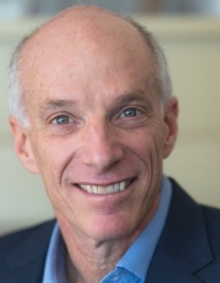
David Sedlak is the Plato Malozemoff Distinguished Professor in the Department of Civil & Environmental Engineering and the Director of the Berkeley Water Center at UC-Berkeley.
The Association of Environmental Engineering and Science Professors (AEESP) annually selects a Distinguished Lecturer in recognition of their excellence as both a researcher, an educator and ability to give engaging oral presentations.
Learn more about the lecture series.
His research focuses on the fate of chemical contaminants, with the long-term goal of developing cost-effective, safe, and sustainable systems to manage water resources. He is particularly interested in the development of local sources of water, including water reuse - the practice of using municipal wastewater effluent to sustain aquatic ecosystems and augment water supplies - as well as the treatment and use of urban runoff and groundwater from contaminated industrial sites. Dr. Sedlak is a member of the US National Academy of Engineering, chair of its Water Science & Technology Board and recipient of numerous awards including the Paul Busch Award for Innovation in Applied Water Quality Research and the Clarke Prize for Excellence in Water Research. He is also the author of "Water 4.0: The Past, Present and Future of the World's Most Vital Resource" and "Water for All: Global Solutions for a Changing Climate."
>>> Learn more
"Using Nature-Based treatment to Solve Some of the World's Water Crises"
Abstract: The creation of treatment systems capable of removing contaminants from water has been one of the most impactful achievements of environmental engineers. Because regulations usually assume uniform temporal performance and water infrastructure tends to be built in places where space is limited, the technologies used in modern treatment plants usually consist of mechanical devices (i.e., unit processes) for which conditions are rigorously controlled. In contrast, nature-based treatment systems employ physical, chemical and biological processes to improve water quality in larger spaces. They also exhibit temporal fluctuations in performance. If environmental engineers can develop the ability to predict, manipulate and enhance the performance of nature-based treatment systems, it may be possible to reduce the costs of this approach while simultaneously providing co-benefits that are increasingly important to decision makers and members of the public. To illustrate the potential for making nature-based treatment systems a more attractive option, this talk examines the treatment of effluent-dominated surface waters and reverse osmosis concentrate from water recycling projects with two new types of constructed wetlands. By understanding the mechanisms of contaminant removal, quantifying co-benefits and realistically articulating the tradeoffs associated with these systems, environmental engineers may be able to address some of the world's greatest water challenges.
Event Details
- Host Department:
Civil, Structural and Environmental Engineering - Date:
Monday, April 20, 2026 - TALK: 4:15 p.m.
201 Natural Sciences Complex, North Campus - RECEPTION: 5:30 p.m.
Bansal Atrium, Davis Hall, North Campus