Supporting Inclusion for all
Religious Accommodations

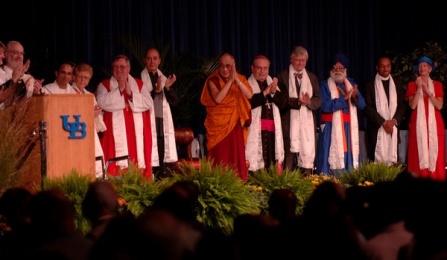
The UB community is represented by a diversity of religious backgrounds, including Baha’i, Buddhist, Christian, Jewish, and Muslim. The Office of Campus Ministries offers many programs and opportunities for learning and interaction.
UB’s Religious Accommodation and Expression Policy supports your right to classroom and workplace accommodations based on religion. It also upholds UB’s commitment to the free expression of religion on campus.
On this page:
Common Religious Accommodations
Religious Accommodations commonly include:
- Time away from the classroom or workplace to pray, or for religious holidays.
- Alternative times for examinations or work shifts.
- Permitting religious expression that does not interfere with the classroom or work environment.
- Ensuring that rules and policies regarding dress and grooming requirements allow reasonable religious-based exceptions.
Students with questions or concerns about religious accommodation can contact the Office of Equity, Diversity and Inclusion (EDI). Undergraduate students are encouraged to consult the Attendance on Religious Holy Days policy in the Undergraduate Degree and Course Catalog, and graduate students should refer to the policy Attendance on Religious Holy Days located in the Graduate School's policies and procedures.
If a student/employee requires a different name or image to reflect a change regarding their religious identity after receiving their initial UB Card, UB's Office of Equity, Diversity and Inclusion (EDI) will cover the cost of a replacement UB Card to match their religious identity. Contact EDI to request approval to obtain a new UB card at no cost.
Faculty, staff and other members of the University community can contact EDI.
Religious Accommodations Webinar for Students Transcript 9/11/25 at 3:30 pm
[Edits have been applied for clarity.]
SHARON NOLAN-WEISS:
My name is Sharon Nolan-Weiss. I'm the director of UB's Office of Equity, Diversity and Inclusion, and I'm happy to talk to you today about religious accommodations, some guidance that we have for UB who are joining us today.
EDI, just so you know, is the office that is responsible for any issues involving discrimination and harassment. And we are required to provide accommodations as part of making sure that we don't discriminate or, you know, and that we're complying with those laws.
So, feel welcome to contact us - I'll have contact information at the end - if there's any issue, question, thing that you're worried about. If we're not the right office, we'll get you to the right office. But we want people to feel welcome reaching out to us.
So, you know, first let's talk about why. Why are we having this webinar today? Why is this topic important? And, you know, we know that we have a diverse campus, right? UB students come from all backgrounds, all traditions, have a variety of beliefs. And our academic calendar doesn't always accommodate those very well, right.
So, we don't want anybody to be in a position where they have to choose between doing well academically in a class and honoring their religious traditions and observances. So, students may need academic accommodations to make sure that you can do that and not suffer negative academic consequences.
We also may have, may need, accommodations in terms of our living environment or even the foods that we eat. So, we really understand that providing those accommodations is essential to making sure that all of our students can feel welcome here, and that everybody can succeed.
So, what I'm going to be talking about today are UB policies, your rights as a student under those policies and New York State law, how you can request accommodations in a number of different areas, so academic accommodations, employment accommodations if you have a job here on campus, and also housing and dining.
And then if you run into problems who you can contact.
So, you do have a right to religious accommodations. This is part of UB policy. And so I'll go through these. The UB Religious Accommodation and Expression Policy says the university will provide reasonable religious accommodations unless it poses an undue hardship.
So, the policies of Religious Accommodation and Expression Policy says that the university will provide reasonable religious accommodations unless it poses an undue hardship, and I'm going to talk about what that means in a moment.
And our class attendance policies, students who belong to religious faiths that require observance during work or school days will be excused from class without penalty if they provided advance instructor notification.
The New York State Education Law says any student in an institution of higher education, who is unable because of his or her religious beliefs to attend class on a particular day or days, shall, because of absences, be excused from any examination or any study or work requirements. So, you know, these are rights that every UB student has.
And so, one of the accommodations that we commonly see, this is the biggest one, excusing missed classes for religious observances. Not all classes mandate attendance, but a lot do, and so if somebody, if a professor says, you know, you only have two unexcused absences, your missed absences for religious observances shouldn't count against those, right? So, it's excusing those missed classes.
Making up exams or work that you may have missed during the time when you were out; extending a deadline for a paper or project that falls on a religious holiday. It could be taking an exam at a different time of day, or being able to take a break to eat during an exam. Those, these two are very common during Ramadan, where people are fasting during the day, and so it may be better for them to, you know, slightly alter the time or be able to take a break.
And then we also have housing and dietary accommodations as well.
So, how do you request a religious accommodation for your classes, your labs, other academic work? You should be in touch with your course instructor. If you have an on-campus job, contact your supervisor. For student athletes, be in touch with your coach.
Housing accommodations, we have a housing portal where you can submit a request for that.
And dietary restrictions and needs, we do have a NetNutrition website that I'll show you in a moment that shows some options in terms of dietary, dietary options for you.
So, for when you're requesting an academic accommodation, I can't stress this enough, please get your accommodation request in early. If you make the request after the class has passed, after the exam is over, your professor does not need to accommodate you. That could be an issue, so please do it ahead of time. And this is especially true when some kind of make-up work or additional, you know, like project extension may be required.
What I recommend doing, you know right now, open your course syllabi, check them, check the dates where you need to be out and look for any conflicts right away. Doing that ahead of time is really good planning.
Also, place the request in writing. I recommend using your UB email account. If you go to your professor when the class is done, and maybe tell them verbally, they may not remember, right. They probably have a lot of things that they're doing. So, by placing that request in writing, even if you mention it verbally, follow up with an email: Hey, just wanted to follow up and, you know, let you know this is when I'm going to need to be out. Include the date of the classes that are going to be impacted, especially for missed classes, exams or assignments.
And, you know, let's say you do receive pushback or there are problems, you don't need to get into a back and forth. You always can contact EDI. You know, we could, you know, see if we can help work out whatever issue you're experiencing.
So, let's talk about undue hardship. I mentioned that earlier. It's in our policy. There may be some academic requirements that UB can't waive because these are essential. And so it's going to vary from class to class and program to program. So, we'll look at, you know, what's the nature of the class or activity? How does the request of religious accommodation impact participation? And is granting that accommodation going to alter the class, create an excessive workload for the instructor or for other students?
Even if we can't grant your requested accommodation, we will be talking with you to try to work it out, right. We want to make sure that we do our best to accommodate what you need.
Let's talk about attendance. So, you know, of course if there's a single day religious observance, we're going to excuse that. We're required to excuse those absences. If a religious belief requires an extended absence, that may impact essential requirements. So, we're going to be looking again. What's the nature of the class? Is attendance mandatory? What is the purpose that attendance serves?
So, I'll give an example of how this works. So, let's say a student contacts their instructor asking for three weeks away to observe the religion's period of mourning for a family member who's died. And we're going to have to look at that request individually. So, if it's a course where it's lecture format, attendance is not required, let's say the classes are recorded, that may not be a problem at all. The student, you know, may be able to do that, and we can grant that accommodation.
If there, if it's a lab, a small seminar, let's say student interactions are essential part of grading or instruction, this is more likely to impact those essential requirements. So, we're going to have to talk with you about are there alternatives possible? And it's really going to vary from case to case.
So, let's talk about employment accommodations. So, if you're working on campus, if you're a resident assistant, student assistant, graduate assistant, research assistant, teaching assistant, contact your supervisor or supervising course instructor to request that religious accommodation. Again, make it in a timely way just to make sure that your department can offer coverage and make arrangements. And again, if you have any issues, contact EDI.
For housing accommodations, Campus Living will consider your request. They do requests commonly for disability-related accommodations, but will also consider requests for religious accommodations and will grant those unless there's an undue hardship. But, you know, they may offer alternatives as well.
So, the example I give is, let's say a UB student wants a single room to be able to pray during the day. So, we may be designating an alternative prayer space instead of the single room. We just want to make sure that there's a way to have that accommodation.
And finally with dietary restrictions and needs, we do have the NetNutrition webpage, which allows you to filter to search for kosher, Halal, vegan, vegetarian options across the campuses. So, what you can do at the NetNutrition web page is, you know, I have a screenshot here of, you know, the different areas where you can filter and just click and then do a search for location, and that will show you where on campus there's food that you're going to be able to eat.
So, if you do encounter any issues, any problems, any concerns, feel very welcome to reach out to EDI. You can call us during business hours at 716-645-2266, by email at equity@buffalo.edu, or we're on the web at buffalo.edu/equity. We have a Contact form there. We are happy to talk with you.
For our faculty and staff who may be joining us today, and if you receive a religious accommodation request and you're quite not sure what to do with it, if it's kind of unusual, feel welcome again to get in touch with us, too, so we can consult.
And with that, I will see if we have questions.
PARTICIPANT QUESTION:
Hi, I just have a question. If, if someone is requesting a religious accommodation, is there a form or do they just simply make their request? And if they, if there is a form, does the form have to be signed by their religious, head of that religious affiliation?
SHARON NOLAN-WEISS:
There is no form required. Usually we just recommend that the person put the request in writing, to the, you know, to the instructor. And, you know, I again, I recommend UB email as the way to do that, or to the supervisor.
I know some areas, like I want to say Graduate Medical Education, they do have their own policy where, you know, people may need to have, you know, somebody sign off who's, you know, representing, you know, the, the religion.
In terms of UB's policy, we don't generally require that.
Most times, I'm going to tell you, you know, people are, they're sincere in what they're requesting. You know, if an instructor or somebody receiving that request does think, you know, maybe there's something a little off about it, you're welcome to contact EDI.
KIMBERLY BEHUN:
We're getting a couple of questions coming in via the Q&A session. Most of it is: are we going to have the video available for reference at a later time? And the answer is yes. We just need time to caption it, and then we will publish it to our website. And we will make sure we send out the link to both the PSS listserv, and we'll request this go back out on the Faculty Senate or the faculty listserv as well.
One question for you, Sharon. There's an anonymous question that asks, besides requests by students, is there anything faculty should be aware of or be sensitive to without requests from students having to be made? Maybe even language?
SHARON NOLAN-WEISS
That's a really good question. Can you repeat the question, actually?
KIMBERLY BEHUN:
Yes. Besides requests by students, is there anything faculty should be aware of or be sensitive to
without requests from students having to be made? Maybe language.
SHARON NOLAN-WEISS
I mean, just a couple of things I will, I will put in a plug for, we do have, and I sent something out on the faculty listserv, but EDI has an avoiding conflicts with religious holidays webpage.
It was kind of one of the most common accommodation requests. It's not exhaustive. It's definitely not all holidays and traditions, but that may be something that's just helpful to look at so that, you know, if you were planning a major deadline or an exam, just to avoid that date, that'll generally cut down on accommodation requests that you need to fulfill. So that's one thing to keep in mind.
You know, just in terms of language, I mean, you know, the other thing I will say is that everyone's traditions may vary a little bit, so even if you may be familiar with the tradition one way, a student may be observing in a different way. So, you know, just to be open minded, keep that in mind. And again, if there's any kind of issue or concern that you have, you know, rather than voicing that concern directly to the student, just tell them, you know what, you'll consider this and then get in touch with EDI.
KIMBERLY BEHUN:
Question from Maribeth Tamsen from SEAS: she wants to know that if we would be able to share the accommodation date list with the PSS listserv from our website, I assume, I'm assuming that's right.
SHARON NOLAN-WEISS:
Alright, we can do that.
KIMBERLY BEHUN:
Another anonymous question is: as an advisor, I have a student who asked that they not have classes on particular day of the week for religious reasons. I was able to accommodate this request this semester, but it is unlikely to happen in future semesters given the student's course of study and the course schedule. Would I direct the student to EDI if I were unable to make this work in the future semesters?
SHARON NOLAN-WEISS:
Yeah, I do think that's a good idea. I mean, we can talk about that. And I have had this issue, you know, where I have an observance that I need to do, say, every Friday, right. And then Friday is the day when the student has a regular religious observance. I think, you know, what we can do is, you know, help, talk to the student, you know, make sure that, and talk with you, make sure that we're exhausting all of our options. If we do exhaust those options, you know, there have been cases, unfortunately, where we've had to tell students, you know, because this is an ongoing, regular circumstance, and it conflicts with this, you know, this is the only time we can offer this class or clinic or, you know, we can't, or there isn't an easy way to provide, you know, an alternative or workable way to provide an alternative.
Sometimes we, unfortunately, do need to deny the request. I hate denying the request, but it happens. I think, you know, but it is good to get in touch with EDI at any point when you think you might have to deny a request.
KIMBERLY BEHUN:
One other anonymous question is: are there specific religions that are not recognized for accommodations?
SHARON NOLAN-WEISS:
No. We would recognize any sincerely held religious belief. That's the standard that's set in the law. And so that is that is the standard that we use.
But again, thank you for being here with us here today and feel welcome to reach out to us if you have any questions. Thank you also for everybody's efforts in accommodating students. We appreciate it.
Religious Expression at UB
Under UB's Religious Accommodation and Expression Policy, UB upholds the rights of our community members to practice their religious beliefs, or to choose not to practice any religious belief. We will not interfere with religious expression unless it creates an undue hardship, such as interfering with normal University operations, or if it creates a discriminatory hostile environment for someone else.
Reflection Rooms and Prayer Spaces
UB has several places on campus which may be used for prayer and meditation.
- North Campus: Student Union, rooms 376 and 377
- North Campus Ellicott Complex: 251 Spaulding – Building 6, level 2 (Campus residents have access to this restricted area. Non-residents may Contact EDI to request access)
- South Campus: 234 Diefendorf
- South Campus: Squire B15 *8am - 4pm upon front desk request
- Downtown Campus Meditation or Prayer Room Information