About Us
Science and Engineering Node Services (SENS) provides computer and related technical support, including the UBiquity distributed computing environment, for the School of Engineering and Applied Sciences, various campus research centers and groups, and peer IT and computing service organizations at the University at Buffalo.
UBiquity
UBiquity is a computing environment that provides a consistent, logical view of computing resources. It is designed to allow access to resources from different computing domains, and can be customized to meet the needs of each node while still insuring a common tool set across all of them. It attempts to present a familiar user interface on all computer systems, regardless of type, so that users can comfortably use different types of computers for different applications.
UBiquity is also designed to maximize system administration effectiveness by using the network as a tool to propagate software, shared resources, and operating system upgrades. Software can also be installed by users, without administration privileges, through the use of tools such as SCCM and JAMF.
We have minimized the number of operating systems on each platform, providing Microsoft Windows 11 for Windows users, macOS for Apple Macintosh Users, and Ubuntu Linux with the GNOME/Cinnamon user interface for Linux users. Individual users can tailor their environments, but "caveat hacker" rules apply. We will only actively support the "standard" environment, but will try to help these users if we can.
The SENS Quality Support Philosophy
SENS strives to integrate technology and software in such a manner as to make the common and universal components of IT available to the entire academic community. We promote both sharing and collective investment in IT across all areas of the university, and specifically within the node and its participant departments. We realize the importance of ownership and do not discriminate between private and distributed needs when called upon for service, support or consultation.

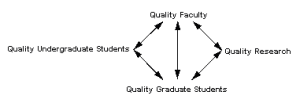
The SENS quality support philosophy is based upon a model similar to that of a major research university center, in that all components are interrelated and dependent upon each other. For example: Quality faculty do quality (funded) research, which requires quality graduate students. An institution that is known for this relationship will naturally draw quality undergraduate students who become a pool of prime candidates from which graduate students are drawn. This cycle nurtures the continued growth of the university and assures its status both within the academic marketplace and the community it serves.

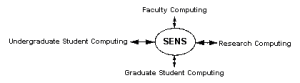
SENS recognizes the importance of all four components of the university academic and research infrastructure. SENS strives to integrate technology and software in such a manner as to make the common and universal components of IT available to the entire academic community. SENS strives to promote both sharing and collective investment in IT across all areas of the university, and specifically within the node and its participant departments. Finally, SENS realizes the importance of ownership and does not discriminate between private and distributed needs when called upon for service, support or consultation.
Our History
SENS has been in existence since 1997, but our legacy is far older. Our group was originally known as "Engineering Computing Services" (ECS), and was formed in 1987 by Corky Brunskill. The original support focus including maintaining a Prime system, a DEC VAX, and other hardware which has since disappeared. The group evolved over the years, gaining expertise in new areas and growing from a staff of about five to a dozen members today, plus our invaluable student staff.