SPOTLIGHT

Why Machines Will Never Rule The World — Artificial Intelligence Without Fear.

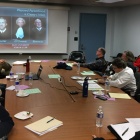
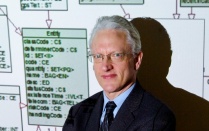
Barry Smith and Jobst Landgrebe are co-authors of Why Machines Will Never Rule The World — Artificial Intelligence Without Fear (Routledge 2022) The three questions central to this book are:
– What are the essential marks of human intelligence?
– What is it that researchers are trying to do when they talk of achieving ‘Artificial Intelligence’ (AI)?
– To what extent can AI be achieved?

The core argument is that an artificial intelligence with powers of a sort that would equal or exceed human intelligence is for mathematical reasons impossible. The reasons are that

1. intelligence of this sort is a capability of a complex dynamic system (your brain), and such systems cannot be modelled mathematically in a way that yields exact predictions;

2. but only what can be modeled mathematically in this way can be engineered to operate inside a computer.

There is a great deal which AI can achieve that will be of benefit to mankind; but it does not include the work that a human intelligence can do; it does not include AI systems more powerful than humans; and it does not include AI systems which are ‘evil’ in any sense of this word.

One consequence of our argument is that much of what is discussed in the wider world concerning the potential of AI to bring about radical changes in the very nature of human beings and of the human social order is founded on an unfortunate error.
Events

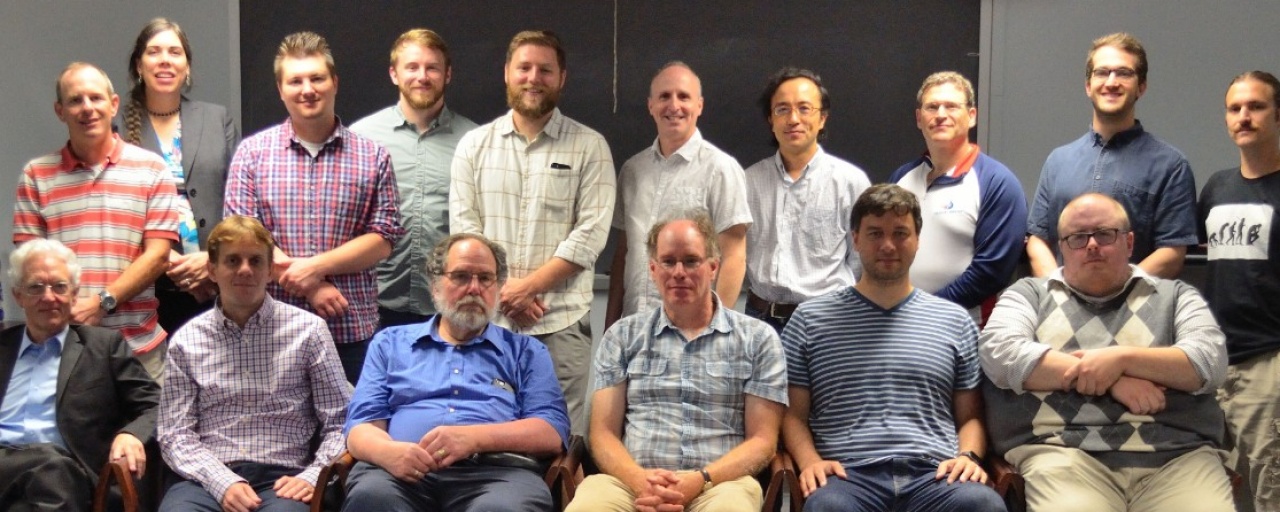
For further information about the Romanell Center events, contact David Hershenov, dh25@buffalo.edu 

Related News & Events

UB News Highlights

  • New Office of AI Innovation and Integration centralizes AI efforts at UB
    7/8/26

    The office will connect people and ideas, help guide projects from concept to implementation, and ensure responsible use of AI.

  • UB announces 2026-27 Distinguished Speakers Series lineup
    7/9/26

    This year’s Distinguished Speakers Series will feature Andrew Ross Sorkin, Liz Cheney, Moogega Cooper and Ella Al-Shamahi.

  • Applegarth to co-lead Grand Challenge to Promote Smart Decarceration
    7/9/26

    The initiative is one of 14 Grand Challenges, part of the American Academy of Social Work and Social Welfare efforts to bring together researchers and practitioners to tackle societal problems.

  • Quantum optics may turn this rare visual phenomenon into an eye test
    7/9/26

    Engineered light transforms Boehm’s brushes from a faint visual pattern into a much brighter one that could help catch retinal disease.

  • As local newspapers disappear, police accountability suffers
    7/9/26

    Study links newspaper closures to distorted crime reporting.

  • Trauma triage is challenging: A UB study assesses how AI might help improve accuracy
    7/10/26

    Researchers tested how artificial intelligence, specifically large language models, could be used to help improve the accuracy of initial emergency medical services information.

  • Blue lights and textbook chemistry could help create complex drugs in fewer steps
    7/10/26

    Surprisingly simple tools let chemists modify two carbon atoms in a single reaction.

  • Phages could be key to antibiotic-resistant infections in cystic fibrosis patients
    7/10/26

    UB pharmacy professor working with researchers at NIH-funded center at Stanford University.

  • UB trains future AI, cybersecurity and advanced manufacturing workforce
    7/10/26

    Programs are supported by two National Science Foundation grants totaling $950,000.

  • How school choice may sustain income segregation in U.S. classrooms
    7/15/26

    Parents tend to avoid classrooms populated by a large number of students from low-income families, according to the findings from an experimental study.