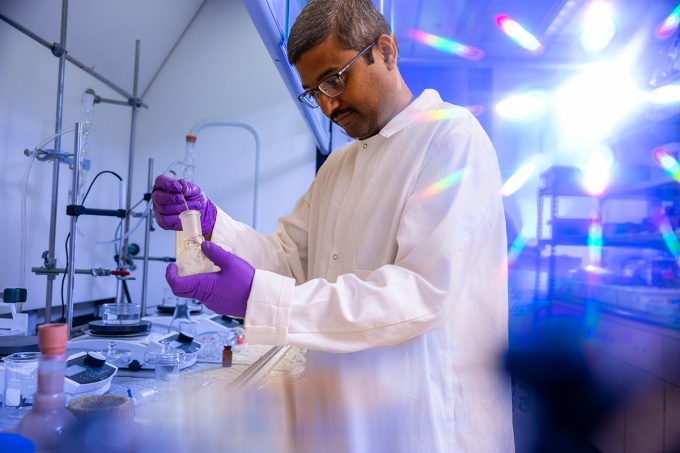
The device can change color and behavior on demand, technology that could change consumer products like e-readers and smart watches.
The first-of-its-kind satellite system will use lasers to make high-resolution observations to map Earth's ice sheets and ecosystems.
A setback in growing light-responsive crystals led UB chemist Jason Benedict and his team to a novel method for mapping molecular arrangements.
It's more than just freezing temperatures, UB engineer Xudong "Andrew" Fan says, and AI may help utilities anticipate future breaks.
A study suggests two Parkinson’s proteins can balance with each other to disrupt axonal transport.
The paper provides new insights into warfare’s lifelong health consequences, particularly for noncombatants.
The research led by oral biology professor Keith Kirkwood reveal that enhancing tristetraprolin can reduce frailty in mice.
With the Winter Olympics underway, faculty members John Leddy and M. Nadir Haider talk about what's known and not known about head injuries.
The UB epidemiologist has been awarded one of the highest honors from the American Society of Preventive Oncology.
A School of Management study links the social movement to changes in lender behavior.