News and views for the UB community
Campus News
UB to begin making COVID-19 face-covering masks
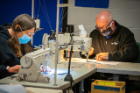
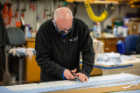
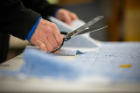
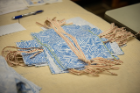
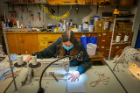
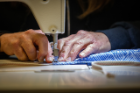
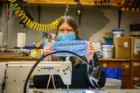

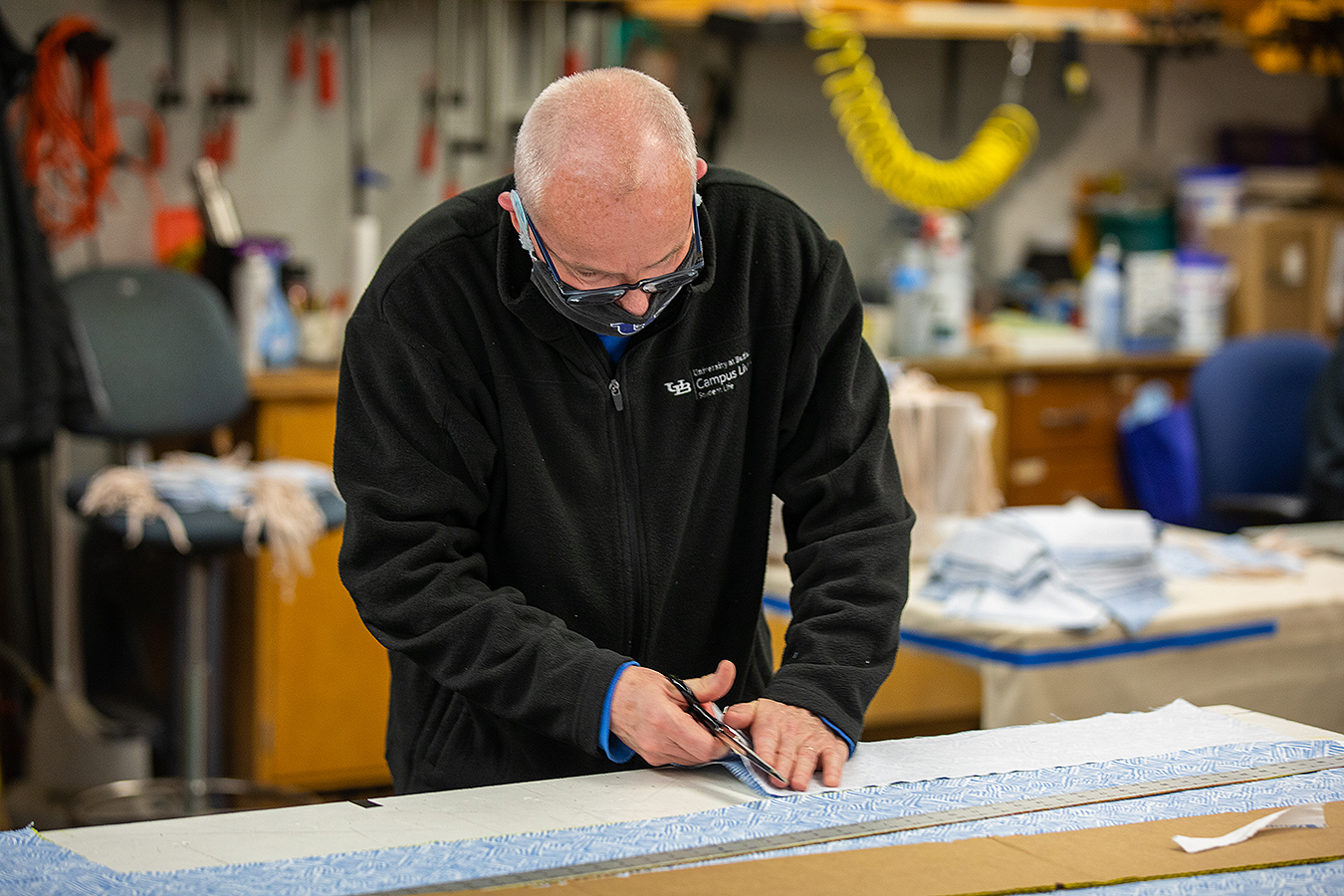
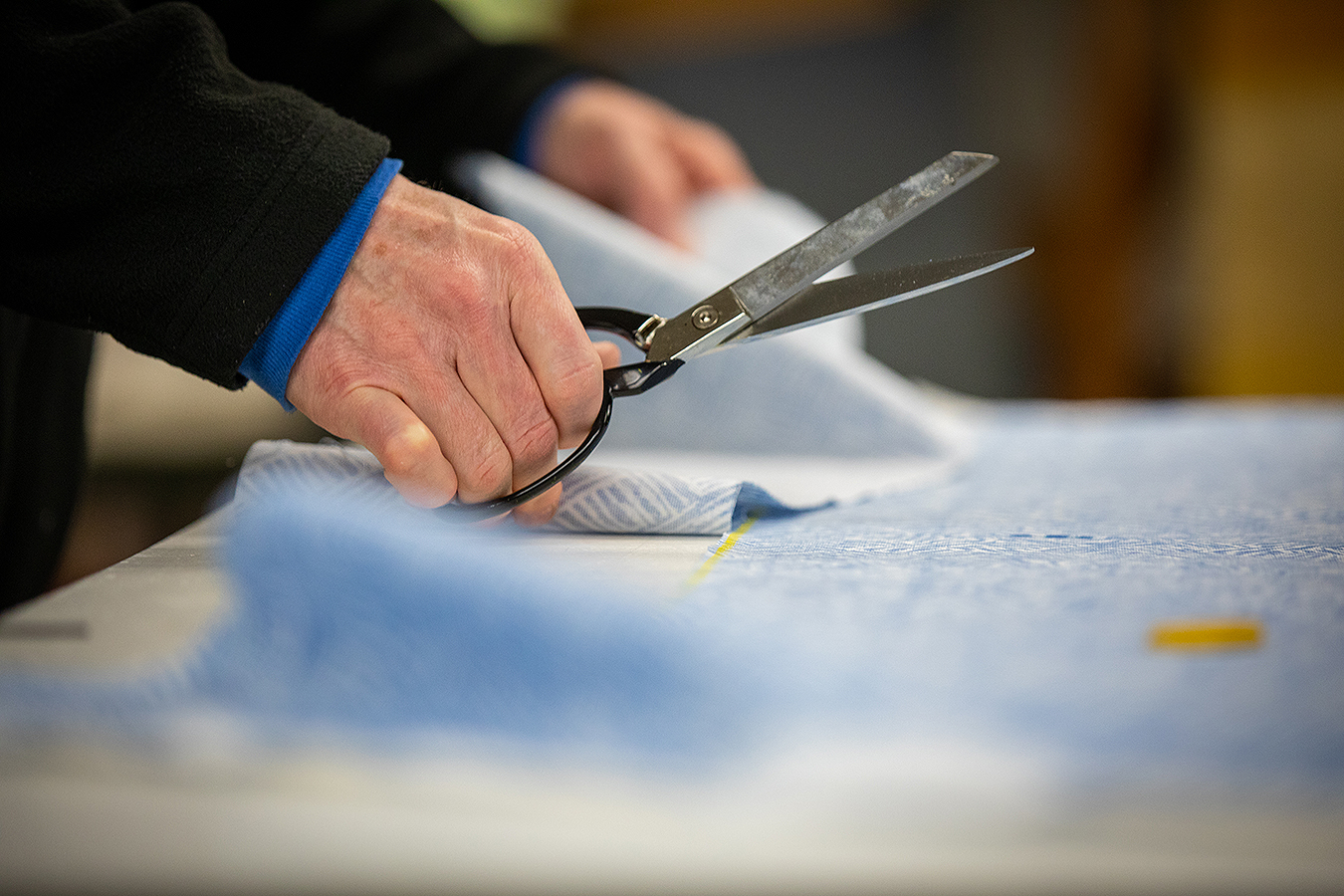

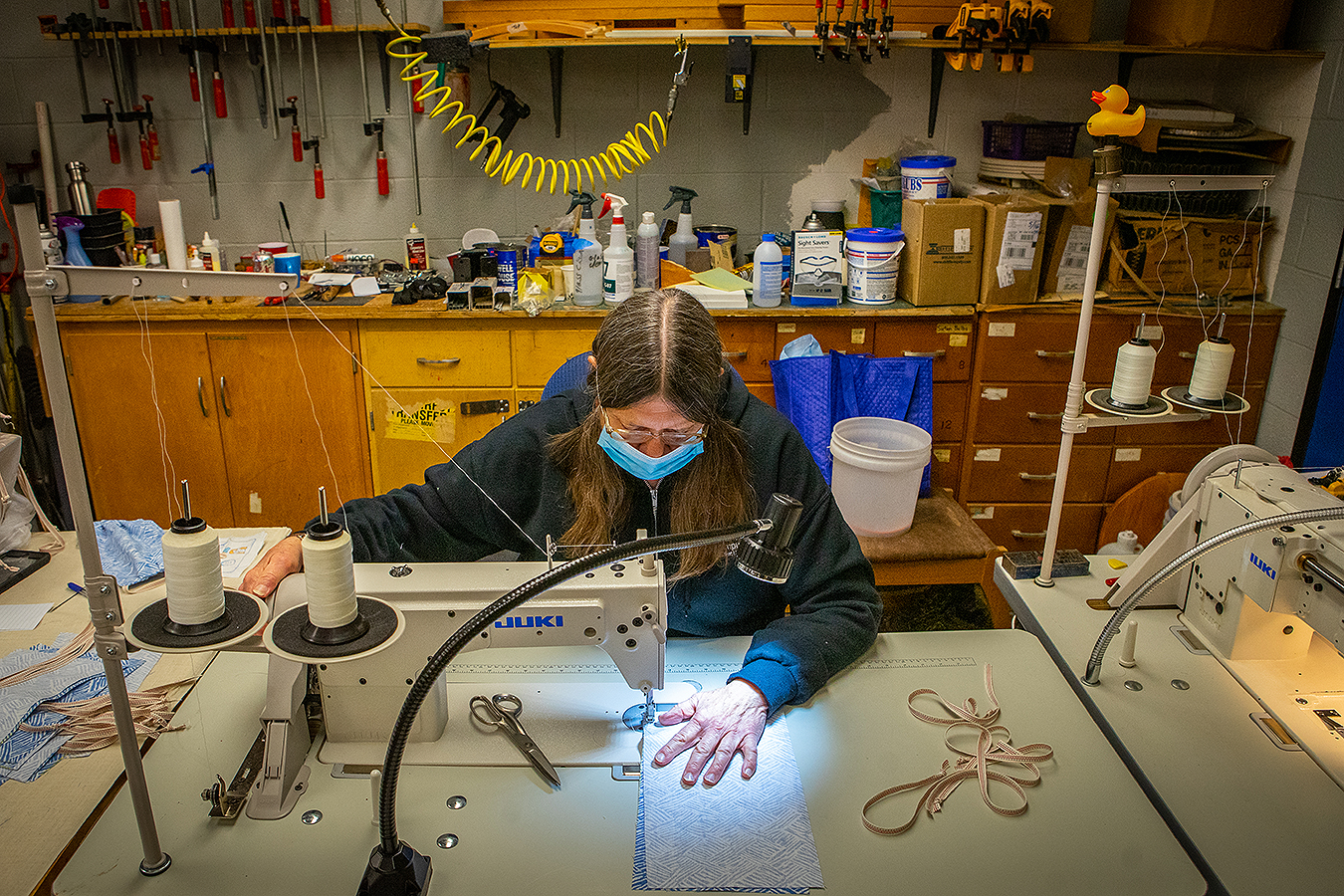
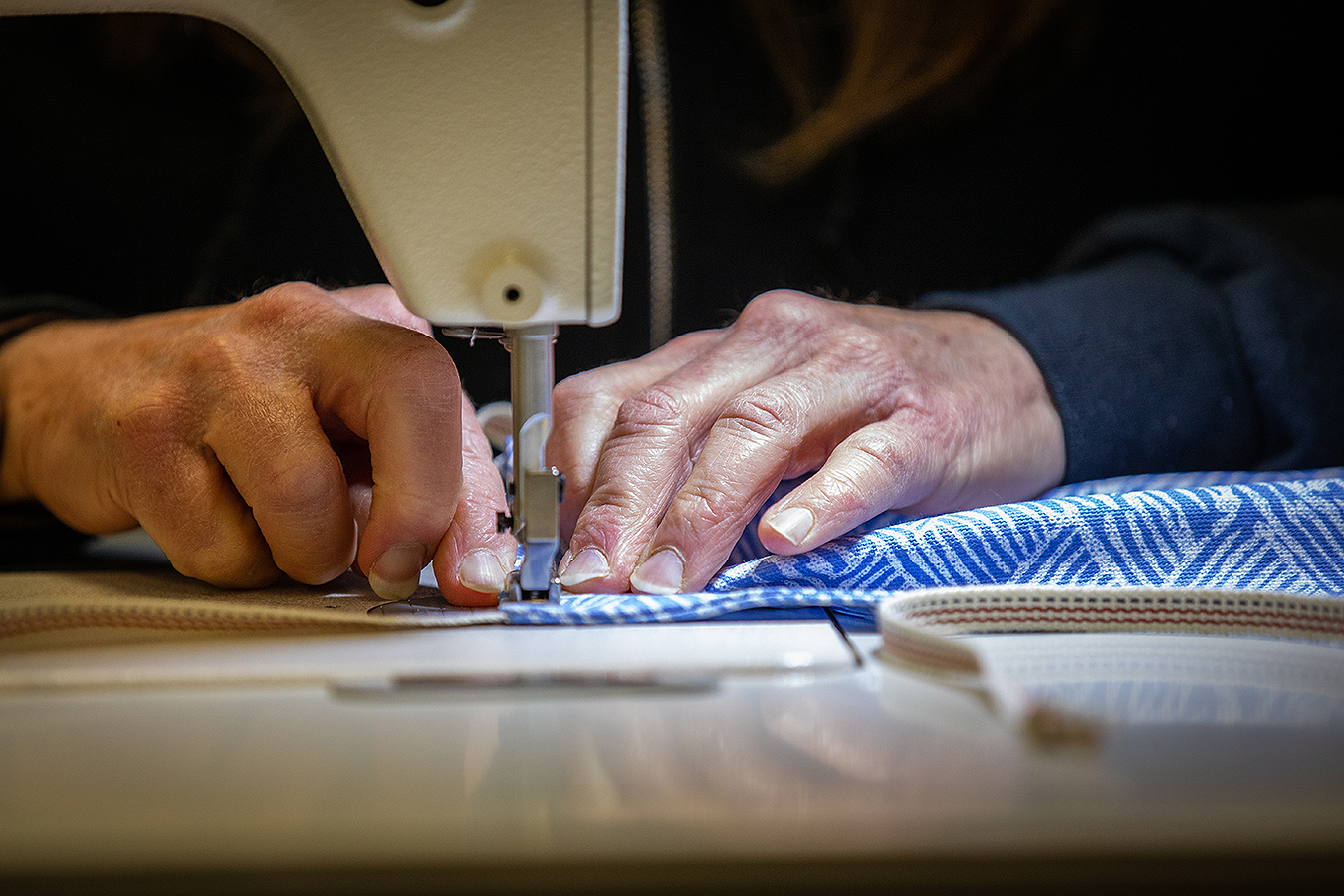

Upholsterers from Campus Living are sewing initial limited quantities of face-covering masks in an upholstery workshop on the North Campus. Photos: Douglas Levere
By MICHAEL ANDREI
Published April 30, 2020 This content is archived.
UB will begin producing university-designed face-covering masks, augmenting the university’s careful monitoring of COVID-19 developments and its implementation of proactive measures to ensure the health and safety of members of the campus community.
UB upholsterers, part of Campus Living’s maintenance team, are sewing initial limited quantities of the masks in an upholstery workshop on the North Campus.
The masks are endorsed by the university’s Department of Environment, Health and Safety as consistent with Centers for Disease Control and Prevention (CDC) guidelines for face coverings.
“The UB-designed face-covering masks will add to the university’s stockpile of personal protective equipment,” says Joseph Raab, director of environment, health and safety. “They will be in addition to 40,000 surgical masks that have been ordered for the university community.”
The feasibility of UB producing its own COVID-19 masks was first considered in early March in response to the tight supply chain on all PPEs, explains Tom Tiberi, director of campus living.
“The project started out following discussions between administrators in Student Life and Campus Living, who were trying to determine if the university could purchase sufficient quantities of material approved for COVID-19 masks, which would then have to be produced on campus,” Tiberi says.
“Preliminary efforts to design and produce these specific items of PPE have resulted in an initial production of approximately 300 masks.”
Christina Hernandez, interim vice president for student life, says she continues to be “impressed by the versatility and talents of our staff in Student Life. This is just another example of what makes working at UB so rewarding.
“Faced with a unique challenge, Campus Living provided an innovative solution, utilizing current resources to benefit the safety of our students, staff and campus community,” she says.
Once the project was approved, the next step was sourcing the materials and looking at associated costs, says Robin Paella, manager of purchasing and logistics for Campus Living, noting that the university wanted to purchase everything from U.S. companies.
“For mask ties, an American manufacturing mill located in Georgia looked like a good source,” Paella says. “In my conversation with the co-owner, however, she emphasized they were only supplying materials to the medical market and the ‘front lines.’ She eventually agreed to sell ties to UB after I explained to her we are doing this to protect members of our campus community.
“A top-notch US supplier of technical textiles in New Jersey was able to supply us with COVID-19-compliant fabric.”
For the sewing machine that would be required to do the job, Paella consulted with UB upholsterers Maureen Matesic and Luke Ganley, who brought years of experience upholstering furniture to UB from their previous positions at the Kittinger Furniture Company in Buffalo.
“I gave Robin recommendations about high-speed tailoring machines at Kittinger, but we didn’t know what the fabric that we would be able to obtain would be like,” Matesic says. “So that made it kind of tricky at the start.”
Paella says the sewing machine that was needed turned out to be available in Western New York through a company in Rochester. “The machine will allow us to sew masks, as well as future UB furniture upholstery projects, so it will remain in use.”
Matesic worked closely with Raab to create a mask design that UB’s upholsterers could produce and that would be compliant with CDC guidelines.
Raab calls the finished masks sturdy and well-made. “The material is quite thick and will reduce the amount of respiratory droplets released,” he says.
“The concave design is well done and provides good coverage at the bridge of the nose and chin area, and the pleats make a nice chamber in the interior of the mask so that the fabric is not sitting directly on the mouth area.”
Paella says the UB team working on creating the masks set an aggressive timeline for the project.
“We received approval to begin the process of sourcing materials and assessing costs on April 8,” she says. “We had our first sewn sample on April 16.
“Our goal was to come up with something that does the job within CDC guidelines, keeps people safe and is durable and can be used through repeated washings.”
Following the positive assessment of the UB-designed masks, Tiberi says Campus Living will now move forward with making 5,000 more masks and will reassess the process and demand at that point.