News and views for the UB community
Campus News
North Campus exercise demonstrates rapid, coordinated emergency response
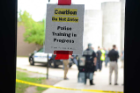
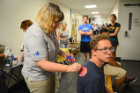
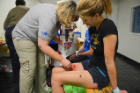
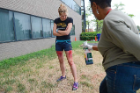
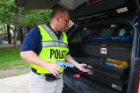
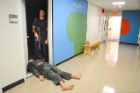
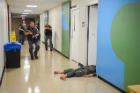
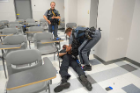
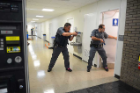
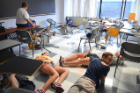
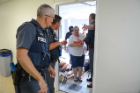
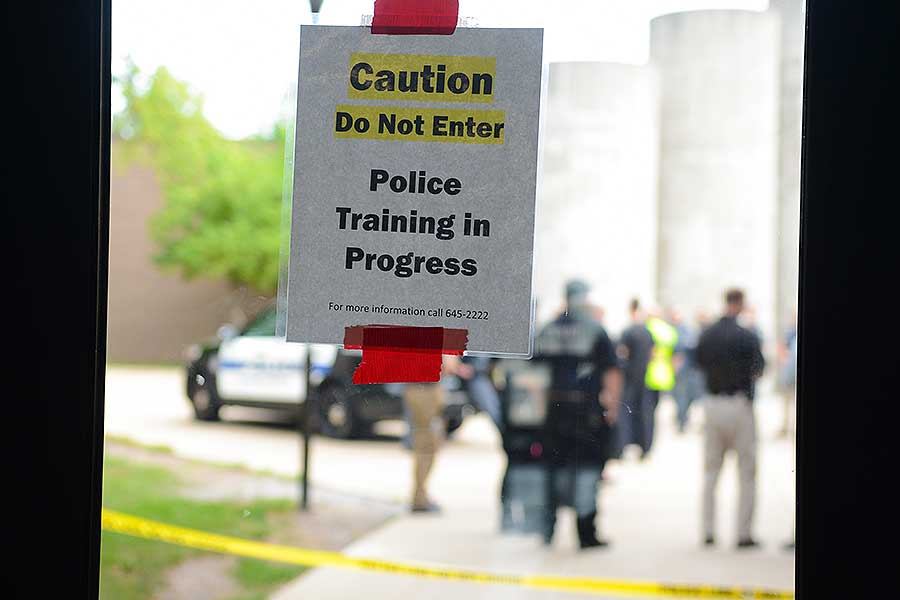
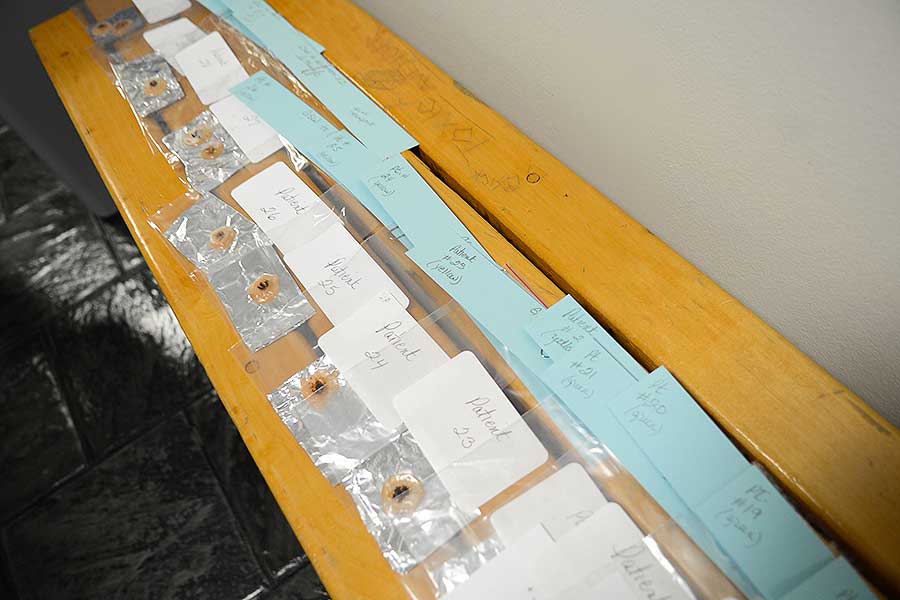

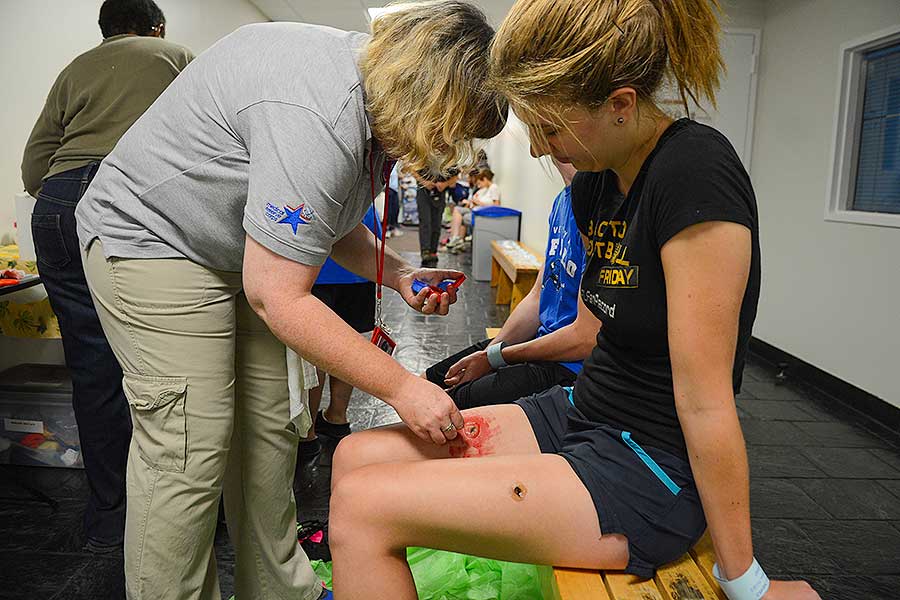
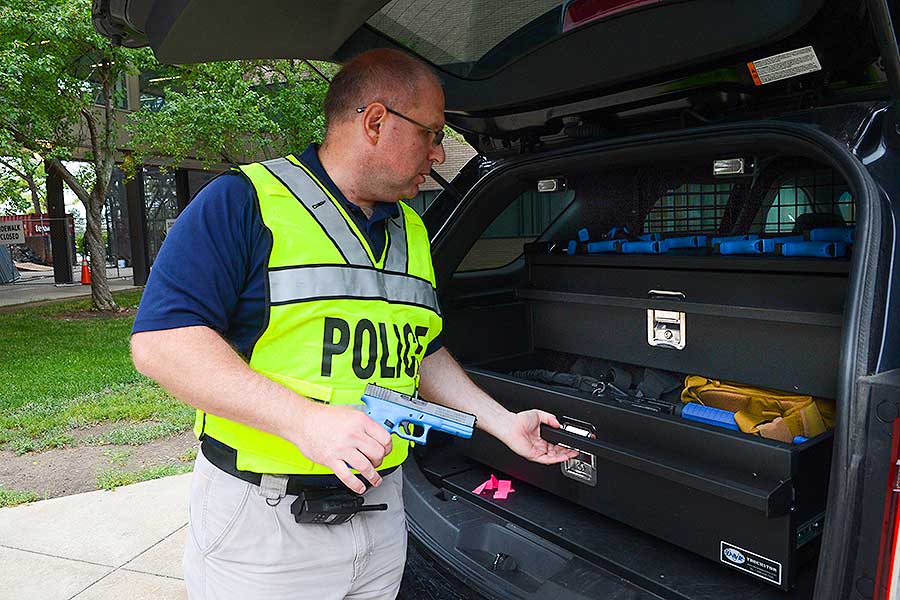
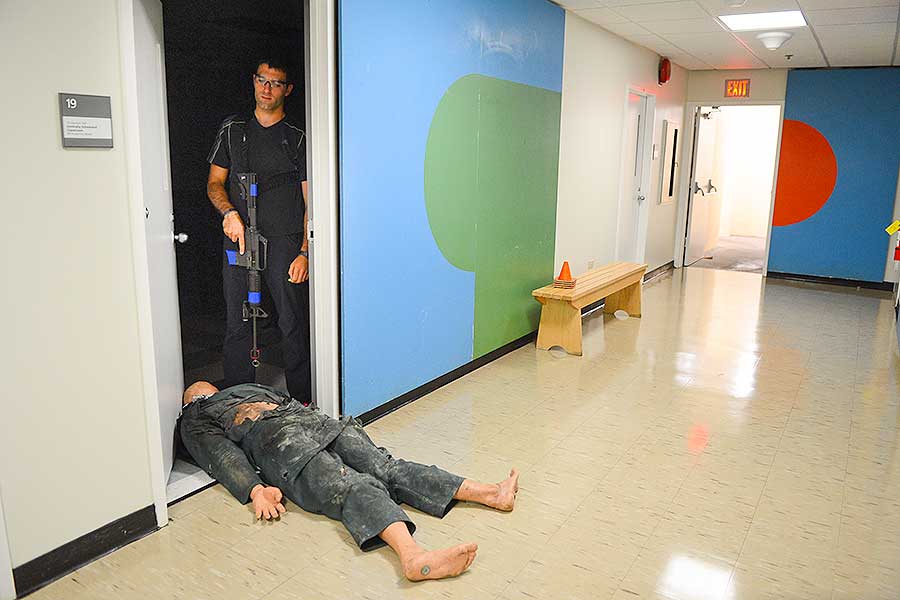
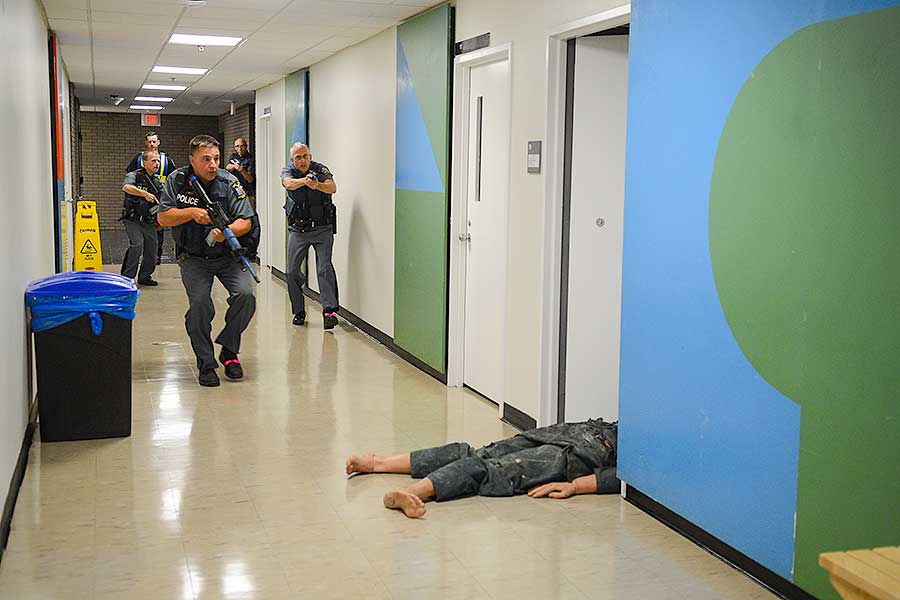


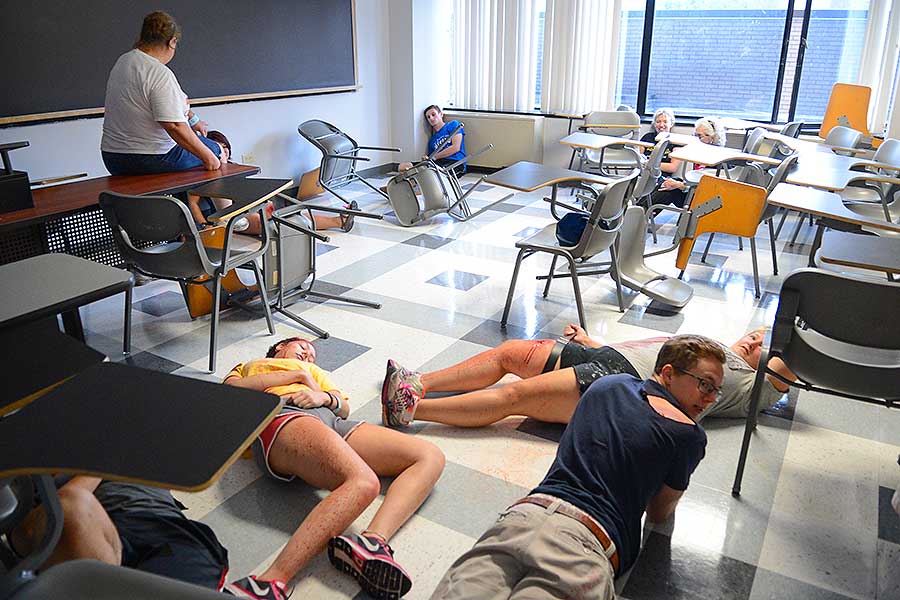
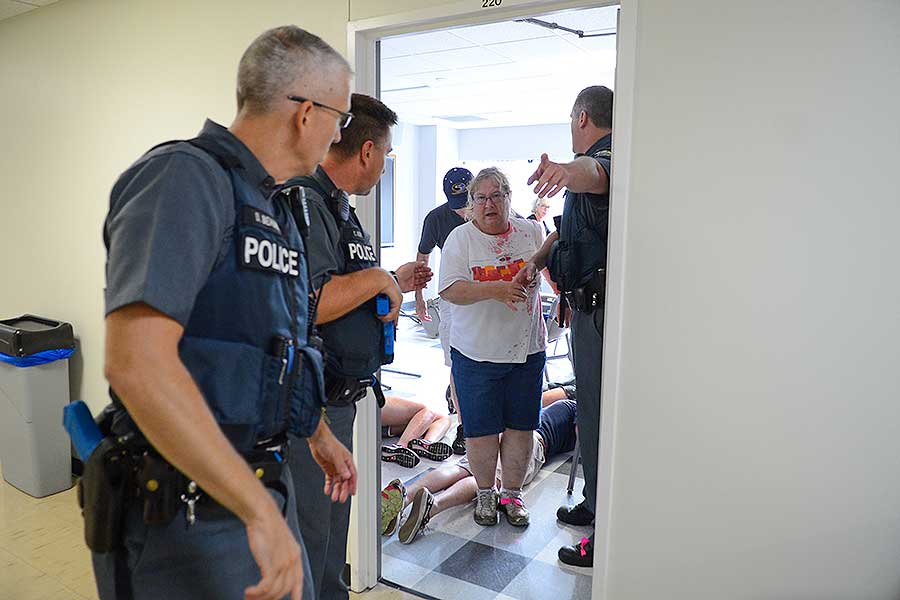
UB staged a full-scale “active shooter” drill on Sunday on the North Campus. It was the first time UB Police has involved emergency medical technicians and firefighters together with law enforcement in an emergency exercise at the university. Photos: Nancy J. Parisi
By MICHAEL ANDREI
Published August 17, 2016 This content is archived.
The UB Police Department (UPD), in collaboration with local, state and federal law enforcement agencies, delivered a timely and effective response and recovery to a simulated “active shooter” emergency on Sunday.
For the full-scale exercise, which took place from 6 a.m. to 11 a.m. in and around Clemens Hall on the North Campus, UPD also collaborated with UB Emergency Management, Student Affairs, University Communications and the College of Arts and Sciences.
“From the time the call went out on ‘shots fired’ inside Clemens Hall, we were able to subdue the ‘shooter’ in seven minutes and remove all of those who were actor ‘gunshot’ victims from the building in 34 minutes,” said Joshua B. Sticht, deputy chief, UPD.
This is the first time UPD has staged an exercise on this scale. Sticht said it is also the first time UPD has involved EMT (emergency medical technicians) and firefighters together with law enforcement in an emergency exercise at the university.
“From the time someone is wounded, there is a period called a ‘golden hour’ which gives them the greatest chance for survival if they are evacuated within that time,” Sticht said.
“We were able to achieve that goal during our initial response to the simulated crisis in this drill.”


The “shooter,” portrayed by UPD dispatcher Chris Tornabene, waits in a classroom. A “drag dummy” in the doorway indicates to officers that this is where they might find the shooter. Photo: Nancy J. Parisi
Chris Tornabene, the UPD dispatcher who portrayed the armed individual inside Clemens Hall, said the role provided insight into how police responders might make their actions more effective.
“Being inside and on the other end during this exercise gives you a different perspective: what the responding officers are feeling, what they are thinking and how we might change what we are doing to minimize mistakes.”
Evaluating how prepared the university community is to respond to campus-wide crises is a key goal of UPD and UB emergency planners. Sticht said the exercise helped to meet those objectives by providing a number of key insights into strengthening emergency response at UB. Among them:
- “Working with Twin City Ambulance and Getzville Fire, we determined how we would be able to move medical assistance to injured parties as quickly as possible.”
- “Using students and community members as actor victims helped us clarify the kinds of instructions we need to give to victims so they understand exactly what we need them to do and where we need them to go.”
- “Working with Emergency Management from both UB and the Town of Amherst, we learned exactly what we need to set up a safe triage site for an incident with multiple victims.”
“One of the most important things that I learned personally,” Sticht said, “was how important it is to involve all of our emergency service partners in a drill like this.
“I really feel we all have a better understanding that will help us work together in the future.”
“This was an ‘active shooter’ drill, but a lot of the principles can be applied to other large-scale emergencies where we have to work together with our fire and EMT partners as well,” added Chris Bartolomei, UPD assistant chief.
“It is important to take an all-hazards view toward being prepared and having a planned, coordinated response. A crisis affecting the entire campus can take many forms,” Bartolomei said. “These types of incidents have demonstrated the quick response of staff, law enforcement and local first responders has a significant impact on the number of potential fatalities and injuries.”
The agencies that participated in UB’s exercise included Amherst Police, Erie County Sheriff’s Office, Buffalo FBI Office, Getzville Fire Department, Twin City Ambulance and Erie County Specialized Medical Assistance Response Team (SMART).
“This exercise represented an unprecedented level of collaboration for an extreme event,” said Jay Roorbach, UB senior emergency management coordinator.
“From the university’s perspective, the goal in this large-scale emergency exercise is to be able to collaborate with our EMT partners on a level that goes beyond the normal responses to calls to treat an injured person, fire alarms or other small emergencies that occur on a day-to-day and week-to-week basis.”
The exercise also provided an opportunity for Student Affairs staff to test how quickly a call center to support the university could be set up.
“After running our test during the exercise on Sunday, we are confident we could be ready to accept calls at the center within one hour,” said Tom Tiberi, director of student activities.
“In the event of a major emergency, we know that UPD’s dispatchers will get overwhelmed pretty quickly with calls from parents and others trying to get through to the university,” he said. “The center is staffed with 12 call attendants who are there to respond to the calls, deliver the university’s message and provide assistance to family members of UB students and members of the university community.”
Sticht, Roorbach and others involved in the exercise noted that even if an initial threat is resolved quickly, EMTs and emergency responders must continue evacuating injured people, rescuing those who might be barricaded in place and searching to make sure all victims are accounted for.
“We know from seeing these types of events in other places that part of the event can be over very quickly. There will be people injured to the point where we can’t just carry them out, so we built our drill on some of the things that have happened in other places,” Sticht said.


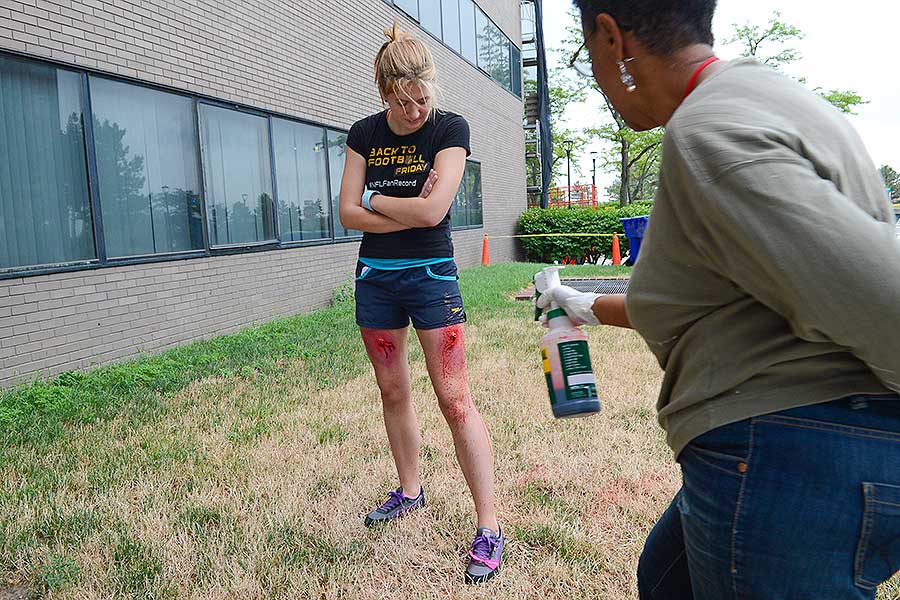
“Victim” Tracey Eastman of University Communications is sprayed with fake blood. Photo: Nancy J. Parisi
Tracey Eastman, senior associate director for content marketing and one of approximately three dozen volunteer actors for the exercise, said participating in the scenario provided a window into the complexity of a real event.
“My role was to play someone who was, basically, in shock,” she said.
“Under the scenario, I was surrounded by others who had been shot. And it made me realize how difficult it is for police and first responders to locate people. How do you figure out where somebody is in a building?
“There are a lot of moving parts in a crisis, an extreme event of this nature. There are many things that responders can anticipate and plan for, and many others that they cannot. There is a focus on both the big picture and very many details.”
Sticht said the responders worked on the concepts of hot zones and warm zones. “These are places where, even though an event may not be completely over, police can escort EMT and firefighters in to treat wounded people who are being sheltered in place or who cannot move themselves,” he said.
“That is the most important thing for us, and we will be planning additional exercises around EMT. Because we know that if something like this exercise scenario occurs, we are going to have to do that.”