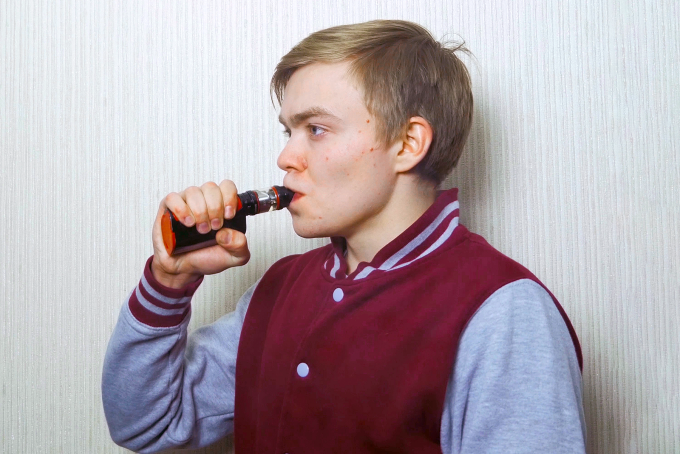
UB cancer researchers applied machine learning and XAI to find out why some tactics work and others don't.
The symposium hosted by the Center for Information Integrity brings UB and visiting scholars together to address the problem of misinformation.
The new Art of Research competition encourages grad students and postdocs to present the inherent beauty of their scholarship through original images.
Despite advances in recent years, the global burden of the disease remains high, a Lancet overview authored by a UB researcher has found.
Angela Khidhir’s winning device, the StressVest, improves the accuracy of echocardiography.
UB researcher Holly Jean Buck argues that better knowledge of these often-overlooked emissions is essential to achieving net-zero.
The journey represents an evolution that arrived by tapping into an interconnected media system, says UB researcher Yini Zhang.
Adam Rome is among the experts interviewed in the film about solar energy pioneer Mária Telkes.
A panel of experts from the community and UB discussed the effects of language, messaging and AI at the CTSI Annual Forum.
UB biologist Soo-Kyung Lee has been awarded a $1.5 million grant to study gene therapy for FOXG1 Syndrome, a disease that affects her daughter.
People who kept their drinking habits had lower prevalence of mental health issues compared to those who abstained or whose patterns changed.