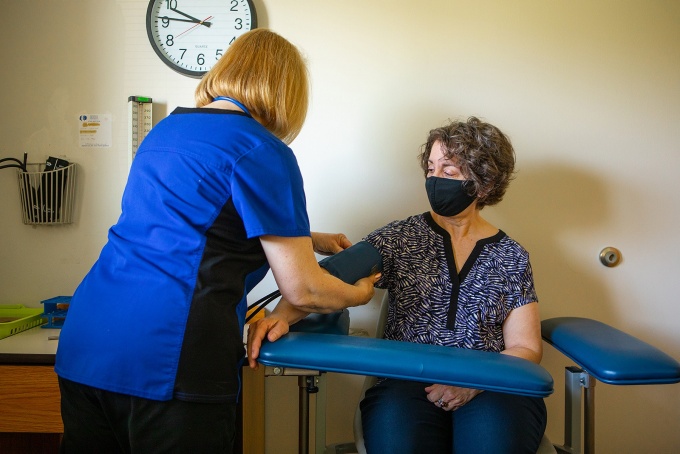
Individuals with the highest levels of IL-6 in their blood had twice the chance of coronary-related death versus the ones with lower levels.
UB scientists’ system aims to reduce contamination, increase the recycling of materials to help enable a circular economy.
SPHHP researchers’ study reveals low recognition of cannabis labels among New York consumers.
Researchers have uncovered a connection between a specific gene and healthy brain function.
One‑step process generates high entropy alloy nanoparticles in milliseconds.
A family-based behavioral treatment developed at UB can prevent children from developing metabolic disease when they grow up.
Students partnered with East Aurora-based fluid and motion control systems manufacturer Moog to gauge the footprint of each step of its supply chain.
As artificial intelligence becomes increasingly integrated into everyday life, Ophir is uncovering how false and misleading information spreads.
The institute expanded its autism intervention programs at UB with support from a $450,000 Children's Guild Foundation grant.
Management study finds interest in lawful hacking overlaps with interest in criminal hacking, raising concerns for cybersecurity education.
UB geographer helped develop the first warning system that can forecast up to nine months in advance where and when vertebrates will be exposed to extreme heat.