UB researchers, working in collaboration with University Health Network in Toronto, have developed a novel contrast agent that could redefine what’s possible in the evolving field of medical imaging.
Heart failure patients with a condition called “heart block” derive significant benefit from cardiac resynchronization therapy (CRT), according to the results of the Block HF clinical trial.
Bats are creatures of the night, designed by nature as nocturnal and, in many ways, defined by humanity through their association with the darkness, according to Phillips Stevens, UB associate professor of anthropology.
The well-known “door-in-the-face” (DITF) persuasion strategy predicts greater compliance with a target request if it is preceded by a larger and more objectionable request.
Alzheimer’s disease, autism, Parkinson’s disease and multiple sclerosis are among the topics to be discussed at “Brains & Gains,” a free public event being held Oct. 20
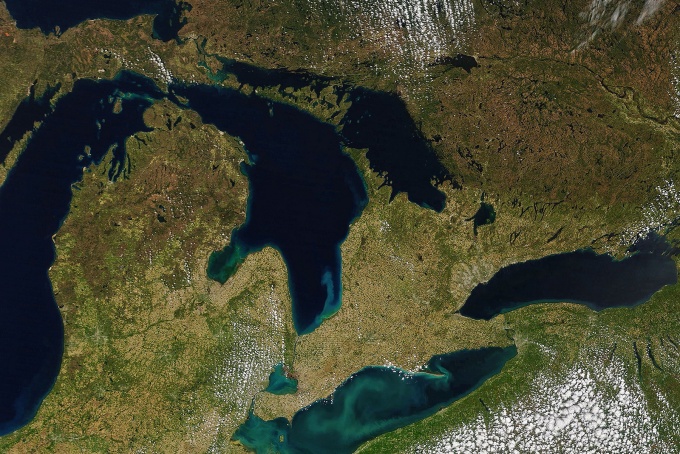
UB and 20 other U.S. and Canadian universities and institutions will join forces to propose a set of long-term research and policy priorities to help protect and restore the Great Lakes, and train the next generation of scientists, attorneys, planners and policy specialists who will study them.
UB last month provided the SUNY Board of Trustees, per its request, with a report that summarizes the facts and circumstances regarding formation of the Shale Resources and Society Institute (SRSI).
UB faculty member Diana Aga and Lewiston-Porter High School teachers Michelle Hinchliffe and Colleen Glor have won a national science education award for their efforts to train student scientists to measure pharmaceutical contamination in Niagara County waterways.
The UB 2020 Civic Engagement and Public Policy strategic initiative (CEPP) has awarded five new Civic Engagement Research Fellowships for 2012-13 to UB scholars in fields of communications and health sciences, education, law and social work.