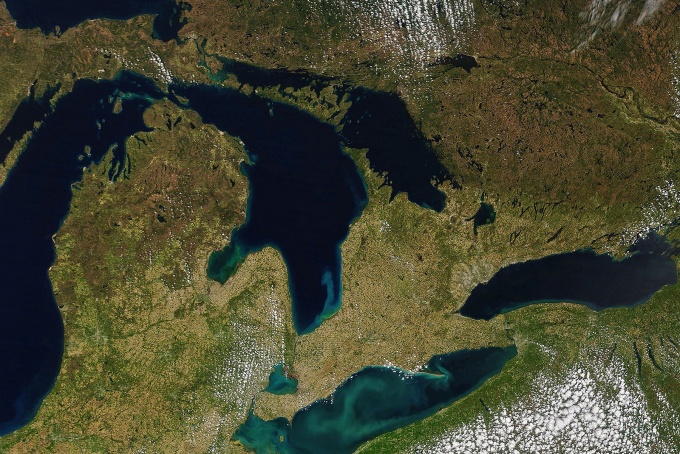
UB will play an expanded role in researching and protecting the largest group of freshwater bodies on Earth.
The global assessment of protected landscapes draws on Adam Wilson’s research on species’ exposure to extreme temperatures.
The American Congress of Rehabilitation Medicine recognized the UB researcher for her work in the field.
A UB-led study makes chiral semiconductors better at absorbing visible light.
The SUNY Distinguished Professor has “played a central leadership role in bridging fundamental materials research with industrial deployment.”
Automated commerce could quietly erode the economic, psychological and social benefits people receive from shopping on their own terms.
The new technology aims to deliver personalized risk estimates and clinician-adjustable insights to support surgical decisions.
Fellowship recognizes individuals who have made significant contributions and service to the clinical and translational science field.
School of Nursing researchers identify several themes that can improve the design and inclusive quality of behavioral health research.
The College of Arts and Sciences' second Spotlight Symposium honors UB neurodevelopmental biologist Soo-Kyung Lee’s FOXG1 mission.
In pushing for support on Iran, Trump may risk eroding U.S. influence on the alliance, UB political scientist Carla Martinez Machain writes in The Conversation.