CIGBS Advisory Board
Who are we?
The CIGBS Advisory Board members are experienced in world health issues and will guide the center's projects and initiatives.


Sharon Hrynkow, PhD
Senior Vice President for Medical Affairs, CTD Holdings
Sharon Hrynkow's career as a neuroscientist and global health leader spans more than 20 years in the public and private sectors. She was the inaugural president of the Global Virus Network, a non-profit organization working to prevent the spread of viral disease, including pandemic threats (2012 - 2015). Her career in public service includes over a decade of senior executive leadership roles at the National Institutes of Health, including as deputy director, Fogarty International Center (2000 - 2007), acting director of Fogarty (2004 - 2006), associate director of the National Institute of Environmental Health Sciences (2007 - 2008) and counselor and senior advisor for science at the U.S. Department of State (2010 - 2012).
Hrynkow has developed and launched innovative programs and policies on a range of global health issues, including AIDS, emerging diseases, chronic disease and public health impacts of climate change. She has worked at the highest levels with government partners and launched innovative programs to train tomorrow's health leaders worldwide. She currently serves as senior vice president for Medical Affairs at CTD Holdings, a publicly traded company, where she leads the clinical trial program to bring to market a drug against a rare and fatal disease. She is director of Forward Industries.
Hrynkow is an elected member of the Council on Foreign Relations and an elected fellow of the American Association for the Advancement of Science.
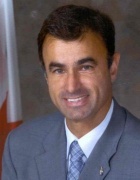
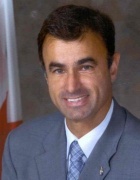
Keith Martin, MD, PC
Founding Executive Director, Consortium of Universities for Global Health
Prior to CUGH, Keith Martin served as a Member of Parliament in Canada and was appointed in 2004 to the Queen’s Privy Council for Canada. As a parliamentarian, he created CanadaAid.ca, an online platform to facilitate partnerships between universities, governments, multilateral institutions, NGOs and the private sector.
Martin has been on numerous diplomatic missions to areas in crisis including Sudan, Zimbabwe, Mali, Niger, Sierra Leone, Colombia and the Middle East. He has traveled widely in Africa and served as a physician in South Africa on the Mozambique border during that country’s civil war. He is the author of more than 150 editorial pieces published in Canada's major newspapers and has appeared frequently as a political and social commentator on television and radio. From 1997-2000, he created and moderated the nationally syndicated, current affairs television program "Beyond Politics." He is currently a board member of the Jane Goodall Institute, editorial board member for the "Annals of Global Health" and an advisor for the International Cancer Expert Corps. He has contributed to the Lancet Commission on the Global Surgery Deficit, is a current commissioner on the Lancet-ISMMS Commission on Pollution, Health and Development and is a member of the Global Sepsis Alliance.
Martin’s main areas of focus are in global health, foreign policy, security, international development, conservation and the environment. He is particularly interested in strengthening human resources capabilities and scaling up initiatives in low-income settings that improve environmental sustainability and human security.


Jean B. Nachega, MD, PhD
Associate Professor of Epidemiology, Infectious Diseases and Microbiology
Jean B. Nachega, MD, PhD, MPH, DTM&H, FRCP, FAAS, MASSAf, is a Full Professor of Infectious Diseases and Director of the Biomedical Research Institute at Stellenbosch University, South Africa, and a tenured Associate Professor of Epidemiology, Infectious Diseases, and Microbiology at the University of Pittsburgh, USA. An internationally recognized physician-scientist with more than 30 years of experience, his research focuses on HIV/AIDS, Ebola, mpox, tuberculosis, and other emerging and re-emerging infectious diseases in Africa. He has led major NIH, PEPFAR, EDCTP, and Wellcome Trust–funded research and capacity-strengthening initiatives, including co-leading the NIH Fogarty Emerging and Re-Emerging Pathogens Research Training Program in the Democratic Republic of the Congo and serving as Principal Investigator of the Wellcome Trust/FCDO-funded MpoxGECIVO Africa Programme in the Democratic Republic of the Congo, Nigeria, and Cameroon. Professor Nachega has authored more than 230 peer-reviewed publications in leading journals, including The New England Journal of Medicine, The Lancet, Nature Medicine, and JAMA, and serves as an advisor to WHO, Africa CDC, U.S. CDC, and other global health organizations. His work is dedicated to strengthening African scientific leadership, epidemic preparedness, and the next generation of researchers.


James Rooney, MD
Vice President, Medical Affairs, Gilead Sciences San Francisco, United States
Dr. James F. Rooney joined Gilead Sciences in 1996 as Vice President of Clinical Research and in 2004 became Vice President of Medical Affairs. From 2004 to 2006, he was also Vice President of Drug Safety and Public Health. Dr. Rooney has been instrumental in the clinical development of the company's antiviral therapies, including treatments for HIV, hepatitis B and influenza. Dr. Rooney also leads many of the company's clinical research activities in the developing world. Prior to joining Gilead, Dr. Rooney worked as a global project leader in HIV at Burroughs Wellcome and Glaxo Wellcome. Dr. Rooney received his undergraduate degree at Harvard University, in Cambridge, Massachusetts, his medical degree and residency training in Internal Medicine at the University of Maryland Hospital in Baltimore, Maryland, and his training in Infectious Diseases at the Laboratory of Clinical Investigation, National Institutes of Health, Bethesda, Maryland. Dr. Rooney is board certified in Internal Medicine and Infectious Diseases and is a Fellow of the Infectious Diseases Society of America.


Suketu Naik, DVM
CIGBS Advisory Board
Dr. Suketu Naik is an entrepreneur with an interest in advancing biomedical sciences and health care systems. His most recent endeavor is Apace Systems, an independent tech company revolutionizing Health IT in Africa and beyond. From real time biometric switching, to advanced analytics & secure, scalable solutions.


Alash’le Abimiku, PhD
Executive Director, International Research Center of Excellence at the Institute of Human Virology-Nigeria - Professor, University of Maryland School of Medicine, Institute of Human Virology
Dr. Alash'le Abimiku, PhD, As a postdoc, I had played a pivotal role in establishing a long-term collaboration between Institutions in my home country, Nigeria, and investigators at the National Institutes of Health and at the Institute of Human Virology University of Maryland School of Medicine where I currently have an appointment as Professor. Being an effective lynch pin, as captured in an article in Science, has made it possible to create a portfolio of successful research grants in Nigeria that has effectively trained young Nigerian scientists. As a scientist, I was first to demonstrate the HIV strain prevalent in Nigeria as subtype G in 1993. I was also first in establishing the first reliable HIV research laboratory in central Nigeria. The research laboratory supports my past and current funded grants on the role of subtypes in disease pathogenesis using mother to child model and effects of co-infections with TB on HIV pathogenesis. As the Director for Research and laboratory science, I have established a laboratory network and infrastructure including a BSL-3 for TB diagnostics activity, a robust lab QA/QC component, a comprehensive laboratory training program with four associated training facilities, and a biorepository network under the Institute of Human Virology-Nigeria PEPFAR program. These facilities have supported national efforts on achieving the UNAIDS 90-90-90 targets, early infant diagnosis, and post market validations for PEPFAR HIV rapid test kits. As the Principal investigator for the pre and in-service laboratory training program under PEPFAR, I have effectively leverage those trainings and that of our Fogarty program to build research capability in Laboratory science by updating the in-service curricula used in 20 Universities and 47 Colleges of Health Technology offering degree and certificate for medical laboratory science program in Nigeria; and training over 2000 in-service laboratory personnel to support HIV and TB diagnosis and monitoring for the nation.


Karen Webster-Kerr, MBBS; DrPH
Principal Medical Officer, National Epidemiologist, Jamaica Ministry of Health
Dr. Karen Webster-Kerr is the Principal Medical Officer, National Epidemiologist, Ministry of Health, Jamaica. She has been in public health practice for 20 years and spent most of her time at the Local Health Department in Kingston and St. Andrew (KSA). While at the KSA Health Department she led the response to the large urban outbreak of malaria, 44 years after it was eradicated from Jamaica. The strategies employed resulted in the re-elimination of malaria.
In her current position she leads on national health programmes and policies especially as it relates to epidemiology and research. Dr. Webster-Kerr is Chair of the Health Thematic Working Group for Jamaica’s National Development Plan: Vision 2030. She is Principal Investigator for the Centres for Disease Control and Prevention Grant: Surveillance and Response to Avian and Pandemic Influenza in Jamaica and the Co-Principal Investigator for the Jamaica Health and Lifestyle Survey III 2016/2017.


Terrence Forrester, PhD, DM
Professor, University of the West Indies, Mona Campus
Terrence Forrester holds fellowships in the Royal College of Physicians of both London and Edinburgh and is a professor of experimental medicine at the University of the West Indies Mona Campus.
His research focuses on risks and impacts of obesity, metabolic programming of early life and the constraints of fetal growth, and understanding the economic implications of chronic diseases and their intervention. He spearheaded the formation of the Tropical Medical Research Institute, which unified four research units—the Tropical Metabolic Research Unit, the Sickle Cell Research Unit, the Epidemiology Research Unit at Mona, Jamaica, and the Chronic Disease Research Unit in Barbados—across three campuses of the University of the West Indies.