
The School of Medicine and Biomedical Sciences today held the
grand opening of its Clinical and Translational Research Center in
the joint UB-Kaleida Health building at Goodrich and Ellicott
streets in downtown Buffalo.
The new CTRC is an important step in the relocation of
UB’s medical school to downtown Buffalo, made possible by
Gov. Andrew Cuomo’s NYSUNY 2020 law, which is enabling the
university to implement the next phase of its UB 2020 strategic
plan. When it is completed, by 2016, the new medical school will
bring approximately 1,200 people to downtown Buffalo. In total,
both the CTRC and new medical school projects will create more than
3,000 jobs.
The CTRC is a unique 170,000-square-foot research facility that
allows UB’s physician-scientists to do their research
upstairs in the CTRC and to see patients and work with clinicians
downstairs in Kaleida Health’s Gates Vascular Institute and
at Buffalo General Medical Center, the new planned Women and
Children’s Hospital of Buffalo and Roswell Park Cancer
Institute.
The CTRC was designed by Cannon Design with significant input
from UB researchers to maximize the kind of collaboration that
leads to medical breakthroughs and innovative treatments.
The CTRC’s offices and laboratories occupy the
building’s top four floors, providing panoramic views of Lake
Erie and Buffalo’s waterfront. While visitors are enthralled
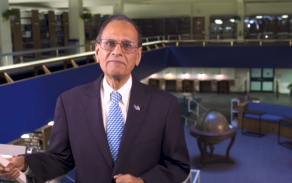
by the sweeping views outside the CTRC’s labs, President
Satish K. Tripathi noted that what’s happening inside the
facility will ultimately have the greatest impact on Buffalo.
“As remarkable as this building is—and it truly is
extraordinary—what we are really celebrating today are the
opportunities it creates for the faculty, researchers, clinicians
and students who will work here; for the people of our community
who will experience this building’s role in revitalizing
Buffalo and our region; and for the people here in Western New York
and around the world whose lives will be transformed by the cures
developed and discoveries made here,” Tripathi said at the
grand opening ceremony.
“This is a historic time of progress and investment from
the state, helping to create great opportunities for UB and the
region,” Tripathi said. “From NYSUNY 2020, to the
governor’s billion-dollar pledge for Buffalo and the work of
the Regional Economic Development Councils, New York State’s
investments are advancing significant progress for our university
and region. The opening of the CTRC is an important step in the
relocation of UB’s medical school to the Buffalo Niagara
Medical Campus, under the UB 2020 plan and with the support of the
NYSUNY 2020 legislation.”
Lt. Gov. Robert Duffy pointed out that Cuomo enacted the NYSUNY
2020 legislation “to help transform our universities and the
communities they are in.”
“UB’s new Clinical and Translational Research Center
is a clear example of this. The new center will grow the university
while helping to revitalize Buffalo’s economy through the
creation of good-paying, sustainable jobs throughout the
region,” Duffy said.
“Under Gov. Cuomo’s leadership and with the NYSUNY
2020 funding, the SUNY system is becoming a leading catalyst for
regionally focused economic development and improving academic
quality for all students. Today’s grand opening of the CTRC
is a clear example of the historic impact the NYSUNY 2020
initiative is having on the University at Buffalo, the city of
Buffalo, Western New York and beyond,” he said.
Michael E. Cain, UB vice president for health sciences and dean
of the medical school, called CTRC “an invaluable research
facility for UB’s physicians, researchers and medical
students.”
“The health and vitality of our citizens and the economic
vitality of our community will be greatly enhanced through the
collaborations that will happen in the CTRC, with our research and
health care partners at the Gates Vascular Institute downstairs and
with all of our partners throughout Western New York,” Cain
added.
John M. Canty Jr., Albert and Elizabeth Rekate Professor of
Medicine in the School of Medicine and Biomedical Sciences and
UB’s chief of cardiovascular medicine, is one of the
CTRC’s earliest occupants. He said the center will make the
progression from promising research discoveries to an actual health
care product or innovative therapy much easier.
“Basic research has typically been conducted in an
environment removed from where clinical research is carried
out,” Canty explained. “The advantage we have within
CTRC is we can span both the clinical and preclinical aspects of
translational research in the same building. Clinical research in
the CTRC also will be greatly enhanced by having the investigators
and research facilities located immediately above a hospital. Taken
together, it forms a unique environment to advance innovative,
cutting-edge therapies.”
In addition to Canty’s group, which develops
bench-to-bedside personalized treatments for heart disease
patients, UB’s CTRC houses the laboratories of some of
UB’s highest-profile researchers, who collectively have more
than $25 million in research funding. They are conducting research
to develop treatments for a broad range of diseases and conditions,
including chronic obstructive pulmonary disease (COPD), diabetes
and obesity, cardiovascular disease, HIV/AIDS, Alzheimer’s
and memory disorders, stroke, ear infections in children and
autoimmune disorders of the skin.
Several of the researchers recently were recruited to UB and
more new hires are on the way, according to Timothy F. Murphy, SUNY
Distinguished Professor and director of the CTRC. When the CTRC is
fully occupied, it will house between 250 and 300
physician-scientists and staff.
“With five health sciences schools—rare among
academic health centers—UB is in a very strong position to
best leverage research collaborations, both inside the university
and with external partners,” Murphy said.
“UB also is home to a range of high-profile national
research programs, including the Women’s Health Initiative,
the world’s longest running COPD trial, cutting-edge
cardiovascular research, development of innovative devices for
treating vascular disease and others.”
Physician-scientists at UB and Roswell Park also play leadership
roles in developing national guidelines for key clinical questions,
he added.
In addition to custom-designed laboratories and common spaces,
the CTRC includes a Biosciences Incubator to assist UB researchers
with the commercialization of new medical therapies. Operated by
UB’s Office of Science, Technology Transfer and Economic
Outreach (STOR), the Biosciences Incubator already is home to two
life science firms that will benefit from their location on the
Buffalo Niagara Medical Campus, near potential research and
clinical partners such as UB, Roswell Park Cancer Institute and
Kaleida Health. The companies are AccuTheranostics, which has
developed a method for personalizing chemotherapy treatments, and
AndroBioSys, which is developing novel ways to detect, image and
treat early prostate cancer.
Also located in the CTRC is the Jacobs Institute, which will
catalyze medical collaboration and innovation through partnerships
between UB, Kaleida Health, community physicians and industry.
The JI’s chief executive officer is L. Nelson Hopkins,
professor and chair of the Department of Neurosurgery at UB, board
chair of the Gates Vascular Institute and director of the Toshiba
Stroke and Vascular Research Center, which also is housed in the
CTRC. A $10 million gift from Jeremy M. Jacobs, his wife, Margaret,
and family was used to create the Jacobs Institute and honor Jeremy
Jacobs’ late brother, Lawrence D. Jacobs, a UB neurology
professor and world-renowned medical pioneer whose research led to
the development of Avonex, which today is the most prescribed
treatment for patients with relapsing forms of multiple
sclerosis.
Following the opening ceremony, a SUNY Honorary Doctorate in
Science was conferred on former UB and Roswell Park Cancer
Institute scientist J. Craig Venter, the pioneering biologist who
developed the tools and techniques that allowed his team at Celera
Genomics to sequence the human genome. Venter gave a keynote
address titled “From Reading to Writing the Genetic
Code.”