UB 2020 Planning Archives
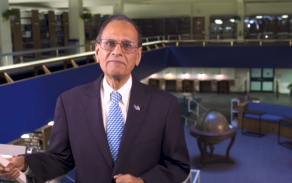
Provost Tripathi on the UB 2020 planning process
Satish K. Tripathi is provost and executive vice president for
academic affairs.
Why are we engaging in the UB 2020 planning process now?
We have an unparalleled opportunity to distinguish our
university, its programs and our faculty—to become one of the
best public research universities in the nation. In order to be
competitive with our peer institutions, we need to identify a group
of multidisciplinary priorities in which we can succeed instead of
striving to be all things to all people. This will allow us to
admit the best students, hire the best faculty and realize the best
opportunities for institutional prominence, giving UB an
institutional leadership role in higher education. President
Simpson and I have a shared vision for the success of this
effort.
Why does this process include envisioning retreats and other meetings?
The faculty are absolutely integral to our university's success,
and the envisioning retreats and other meetings provide a forum in
which our faculty—as subject-matter experts—can develop
fully our areas of strategic strength. I encourage all of our
faculty members to participate in this groundbreaking process.
What is the timetable?
Our planning process is moving forward in three phases. In Phase
1, which ended in December, we came to understand UB's existing and
potential academic strengths, and we recommended a set of strategic
strengths. Now we have begun Phase 2, which will create a vision
for each strength, assess other programs and funding sources, and
develop an investment plan for each strategic strength. As the
first step of Phase 2, we are engaging in a substantial
"envisioning process" with a broad cross-section of the UB faculty
through a series of daylong envisioning retreats and follow-up
sessions. We anticipate that the first part of Phase 2 will end in
May. The remaining components of Phase 2 and their timetables are
as follows:
- Assess other programs and funding sources (June 2005). UB will
identify competitive programs at other institutions and external
funding sources.
- Create a plan for continuously growing each strategic strength
(July-August 2005). A cross-functional team of UB faculty and staff
will develop a model for operating each strategic strength.
- Develop a strategic strength investment plan (September-October
2005). UB will create a plan for university investment in the
strategic strength areas, identifying realistic investments that
need to be made during the first year, within three years, five
years and longer time periods. UB also will identify key areas in
which both the deans and the Office of the President will make
strategic investments.
In the third and final phase, which will start in November 2005,
we will migrate toward our strategic strengths by beginning to
enact the developed plans. The deans, guided by their college's or
school's strategic plan, will begin to realign resources, make
investments, develop partnerships and recruit new faculty.
Concurrent and subsequent to this process, the deans will measure
success and progress toward goals.
What do you expect the faculty to do?
President Simpson and I are asking the faculty to define a
vision for the fields of study under discussion: academic areas,
resources and new faculty that we need to bring to the University
at Buffalo. Our real expectation for faculty is to get involved
with the planning process. In order for this planning process to be
truly successful, we—as a campus—will need to be
creative in our thinking, provide opportunities and venues to share
our unique perspectives and think beyond traditional academic
boundaries.
How will the information be formalized?
We expect the information gathered from each envisioning retreat
and future planning sessions to result in a white paper from the
Office of the Provost. Each white paper will be coauthored by three
to five UB faculty members, with broad involvement from the other
faculty who have participated in the planning sessions. Each white
paper will contain several components including: (1) unique
elements—a description of the unique factors that currently
distinguish, and have the future potential to distinguish, UB
within that strategic strength; (2) areas of focus—a summary
of the academic, research and other elements on which UB should
focus in order to become a recognized leader in that strategic
strength; (3) resource plan—a description of the
resources/capabilities that UB currently possesses, and those that
it must possess, in order to achieve success within that strategic
strength; (4) breadth of involvement—a description of the
connection of the various elements within the strategic strength to
current research, graduate and undergraduate education, and service
efforts. This will give us a plan for multidisciplinary and
transdisciplinary collaboration; (5) timelines and
strategic-strength growth plans—a five-year plan with
appropriate milestones and a vision for the stages of growth.
What resources will be available?
We realize that there are concerns about available funding. As
the vision for each strategic strength is more clearly articulated,
we will need to consider how to bring appropriate resources to
bear. This responsibility will, in part, reside with the deans, who
will need to consider allocating their existing resources to
support the strategic strengths. President Simpson and I also will
need to provide additional support for these strategic strengths,
such as sponsored research grants and gifts from donors.
What question do you wish I had asked, and how would you have answered it?
I would have asked, "How will this planning process affect
existing academic programs?" My answer is this: Although the final
results of the planning process will necessarily affect UB's
budgetary, academic support and facilities investments, this
process will not diminish our commitment to sustain the existing
excellence of our research, scholarship and creative activities, as
well as our undergraduate, graduate and professional programs.