| VOLUME 30, NUMBER 6 | THURSDAY, OCTOBER 1, 1998 |


Why was Millard Fillmore College created?
Seventy-five years ago, the University of Buffalo recognized that working adults and some "youths" were unable to attend the university during its traditional day session. The university created the evening session, later renamed Millard Fillmore College, where the non-traditional students could study the business sciences and the arts. Millard Fillmore College was created as an extension of the university and its mission was service to the public through education.
How has the role of MFC changed over the past 75 years?<p>
For three-quarters of a century, MFC has embodied the protean spirit of the university. Changing with the times, MFC has expanded and contracted its mission accordingly. With the "evening college" as its core, MFC has provided comprehensive continuing education as a division of the university with degrees, credit courses, non-credit programs, conferences and even served as an administrative home for WBFO. GIs returning from WWII, Korea, and Vietnam found access to UB through MFC. Workers retraining for new jobs during Buffalo's economic downturn found MFC as their educational home at UB. Today, MFC still serves the working adult, but also the traditional day student. Besides serving the public, MFC has served the university's enrollment management by acting as a release valve for overcrowding in the past and more recently supplementing day-course needs. In some ways, MFC's mission is not as clear-cut as it has been in the past.
Is MFC well understood in the community, on campus?
I don't think so, either on or off campus. On campus, MFC is still seen by some as the traditional "night school" that educated adult students by cloning undergraduate day programs and making them convenient only by their evening hours. This is a limited view of MFC, which is a "different side of UB." Instead, MFC's programs need to be redesigned to accommodate the working adult's lifestyle and learning styles-we're talking about more than just convenience, but serious reconsideration of androgogy versus pedagogy, to use a distinction developed by Malcolm Knowles. As for Western New York, we have found an absence of awareness, and some confusion among the public. We are developing marketing and advertising that focuses upon MFC's UB connection-stressing it as a part of UB, not apart from it. The general public may not understand the collegiate structure of a university-MFC is the only named college at UB. And the name itself may cause some confusion too-we have a local hospital by the same name. It may be time to rename MFC to more accurately describe its mission and scope.
Who are today's Millard Fillmore College students, and how will that change in the future?
If we exclude day students taking MFC courses, the "true" division 3 student is over 31, married, working, with a family, and split about evenly between male and female, most of whom live and work in Erie or Niagara counties. I expect this student profile will continue, possibly become older, but with an increasing number of students from other counties in Western New York and beyond. Whereas today's MFC students are taking undergraduate degrees, I expect that there will be increasing interest in post-baccalaureate certificates and degrees. Student demands will increase the need to provide short courses; modular-designed, content-focused programs offered on weekends, starting and stopping at times outside the traditional semester system.
What is your vision for MFC?
I see the MFC of the future as working closely with UB's academic colleges to offer a variety of undergraduate and post-baccalaureate educational programs through traditional classroom and new distance-learning technology. MFC will emphasize continuing studies and the extension of university programs, but designed for special audiences. Continuing education and university extension are institutional responsibilities shared by MFC and the university's academic colleges.
Will distance learning play a larger role in the education of non-traditional students in the future?
I expect it will, maybe not as extensively as some predict, but it will be significant for those institutions that commit to this technology seriously. The term "distance learning" is unfortunate because it focuses upon the wrong issue. It's not distance but "access" that is the essential issue here. Whether through Internet (asynchronous) courses, cable-television telecourses or real-time (synchronous) interactive classes, the challenge is to make UB's courses accessible to students wherever they live.
What's the most popular program among students enrolled through MFC?
Among the degree programs, management and engineering are most popular. But there is increasing interest in MFC's certificate programs and non-credit short courses.
What is the greatest challenge MFC faces?
The challenge for MFC is to refocus itself upon serving non-traditional audiences with courses and programs designed to meet their needs. We need to decrease the dependence of traditional day students upon MFC for their courses. This is going to be an even greater challenge with the implementation of new budgeting proposals currently under consideration.
What question do you wish I had asked, and how would you have answered it?
Possibly-what contribution can I make to UB and its mission? During the time I spent in Iowa, I came to appreciate the contribution a great public university can make to the public good through its continuing-education, outreach and extension programs. I hope that MFC can provide leadership at UB and work with the academic colleges to better serve the public through continuing education and extension programs
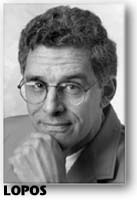 George Lopos is dean of Millard Fillmore College, which is celebrating its 75th anniversary. He joined UB in 1995 from the University of Iowa, where he was associate dean of the Division of Continuing Education.
Current Issue | Comments? | Archives | Search
UB Home | UB News Services | UB Today