Birdseye aerial view of the City of Buffalo at sunset. The expansive urban scene faces south east. In the foreground, highlighted by the golden light of sunset, are several buildings in the downtown district, including the art deco style City Hall, and the ultra modern Court House. In the background, residential districts are visible in the distance. In the upper right corner, the Skyway winds out toward the shoreline of Lake Erie, showing the windmills of Lakawanna. The Boston hills appear in the distance.

In the Communities of Care project, we focus on communities of care in Buffalo to think with study participants about the everyday ways that those impacted by disability, both caregivers and those receiving care, including poor, racialized, and disabled people, navigate and negotiate living, working, and accessing vital healthcare and other needs.

We use “communities of care” to extend our understanding of care networks beyond formalized healthcare settings to include the vital care that takes place in the home, in neighborhoods, and in other settings. We also consider care as work – both in its more formal settings and in the informal spaces in which it most often occurs.

We are exploring the ways in which this work has been/is gendered and racialized and the implications that this has for the formation of caregiving/receiving relationships and worker organizing.

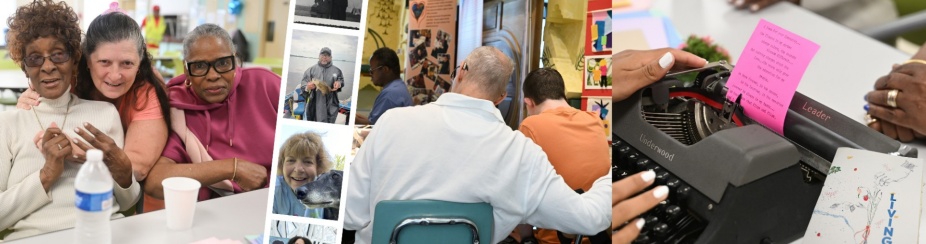
We are creating a permanent digital archive and exhibition space made available to community members, students, and researchers of all levels. We are bringing together community people, artists, and scholars involved in giving and receiving care to share their stories through interviews, creative writing, memoir, and art making, as well as other approaches that interact with the “communities of care” theme.

The Communities of Care project amplifies the voices of those whose stories are not often heard, both the caregivers and those receiving care; and will focus on the intersection of disability, race, and gender.

NEWS AND NOTES

Michael Rembis' new book, Writing Mad Lives in the Age of the Asylum (Oxford University), enables a significant new interpretation of the history of madness and asylums, as well as the people who occupied them. The Department of History recently hosted a special event to celebrate the book, with commentary by Prof. Rachel da Silveira Gorman (York). Learn more about the book.

Victoria Wolcott receives the SUNY Chancellor’s Award for Excellence in Scholarship and Creative Activities 2025. One colleague described Wolcott as “the most influential and talented historian working at the juncture of gender, race, recreation, and civil rights ideology in modern American.” Learn more about the awards.

Events

The Communities of Care is a sponsor of special events, lectures, art exhibits,  symposia, and more throughout the year. Our events bring together community members, students, faculty, artists, writers, and others to share their work on care and caring communities. Learn more.

UB Center for Disability Studies

The UB Center for Disability Studies offers academic degree programs that provide students and community members with the tools needed to advance the study of disability within the humanities in collaboration with social sciences, education, law, and the health sciences. Learn more.

UB Gender Institute

The Gender Institute, a UB-wide research center founded in 1997, offers grants and awards to UB faculty and students. We support scholarship on women and on the intricate connections between gender and other social forces, such as sexuality, race, class, health, age, religion, and place. Learn more.

UB SPHHP

The mission of the School of Public Health and Health Professions (SPHHP) is to improve the health of populations, communities and individuals through disciplinary and interdisciplinary education, research and service. Through a range of research initiatives and centers, the SPHHP is contributing to improved health for populations, communities and individuals. Learn more.