Advancing Interdisciplinary Legal Scholarship since 1978
FALL 2025
The Baldy Center Podcast

Prison yard, surveillance camera, screen print by Jos Sances, 1992. Artwork based on the Newgate Prison Exercise Yard by Gustave Doré, and a series of graphics from the late 1800s, updated by the artist to reflect current issues. Sances has authorized use of his artworks under a Creative Commons CC BY-NC-ND license. Image courtesy of the U.S Library of Congress.
Episode 51
Michael Gibson-Light discusses prison labor, prisoners’ unions, and the politics of work behind bars
Published December 5, 2025
In Episode 51 of The Baldy Center Podcast Michael Gibson-Light discusses his research on the 1970s prison labor movement in the United States. He details how incarcerated workers organized through underground newspapers like The Outlaw, the rise and fall of prisoners’ unions, and what this history reveals for today’s debates on prison labor and mass incarceration.
KEYWORDS: Prison Labor, Prisoners’ Unions, Mass Incarceration, 13th Amendment Exception, Underground Newspapers, The Outlaw, Unity Day Strike, Labor Rights, Prison Activism, Carceral History, Penal Policy
STREAMING AUDIO 24/7
You can stream each episode on PodBean, Spotify, Apple Podcasts, and most any audio app. You can also stream the episode using the audio player on this page.
Podcast Audio Player
- Episode 51: Michael Gibson-Light
Note: Audio Player may not function ideally on small-screen devices.
The Baldy Center for Law and Social Policy at the University at Buffalo
Episode #51
Podcast recording date: 11/13/2025
Host-producer: Tarun Gangadhar Vadaparthi
Guest Speaker: Michael Gibson-Light
Contact information: BaldyCenter@buffalo.edu
Transcription begins.
Tarun:
Hello and welcome to The Baldy Center for Law on Social Policy Podcast produced by the University at Buffalo. I'm your podcast host and producer Tarun Gangadhar. In today's episode, I'm joined by Professor Michael Gibson-Light to explore the hidden history of prison labor organizing in the United States from underground newspapers and multiracial strikes to the legal battles that shape incarcerated workers' rights. Professor Gibson-Light is an associate professor of sociology and criminology at the University of Denver and the Fall 2025 mid-career fellow at The Baldy Center. His research investigates the often obscured experiences of working prisoners through ethnographic interviews and archival analysis, and he collaborates with advocacy groups to improve prison policy. While in residence at UB, he is advancing a project on the rise and fall of prisoners’ labor unions in the 1970s, uncovering how incarcerated people fought for dignity, recognition, and safer working conditions behind bars. Here is Professor Gibson-Light. To start us off, what first drew you to study the history of prison labor and the movement to unionize incarcerated workers in the United States?
Michael:
There's a couple factors that led me to this project. The first, I guess, intellectual motivation you could say, really came out of the aftermath of my first book, which was called Orange Collar Labor, and that was a study of the experiences and the systems that structure prison labor in the United States today based on ethnographic observations and some interviews with people incarcerated as well as prison staffers. And like every study, there were some lingering questions at the end of it, and one of the big questions for me was, well, what are the sort of socio-legal roots of the way that prison labor policy and practices look like today? And I guess the second question that I still sort of had after that project was also there are a lot of inequities and issues that were very well documented, not only in my work, but in many other people's work now on prisons over generations. And so given all of that, what are some different forms that resistance behind bars can take specifically attached to labor being carried out? And so with those kind of two things in my head, I had begun crafting a study that looked really very different than what I'm doing right now. It was actually going to be a project focused on studying current efforts to not unionize because for reasons I'm sure we'll get to, you can't legally unionize as an incarcerated person anymore in the United States, but there are still efforts to sort of organize workers to help them understand their rights and advocate for themselves in different states throughout the country. And so I had begun the early, early stages of making contact with a group that was doing that sort of work. But then, the second big factor that shaped the current project arose, and that was the COVID-19 pandemic. So when we all went into lockdown, prisons were specifically and quite literally very locked down at that time. And that also meant that these sort of outside activist organizations, including the one I was intending to study or at least work with to learn more about this, they went dark and then from what I could tell essentially dissolved during the pandemic. And so I was at a sort of crossroads like many people, and I needed to pivot. And so the pivot that I made was something I thought was going to be quite temporary, and that was, I'll take this time during lockdown, back when we knew not how long it would last. I'll take this time, whether it's a few weeks or whatever, to learn about, well, what are the history of these efforts to organize workers behind bars? But what I learned during that preliminary process doing some early digging was that that history is really rich and really fascinating and relatively understudied. I mean, I am someone who spends their time focusing devoutly, let's say on understanding prison labor, especially in the United States, and even I had very little knowledge of these movements in the sixties and the seventies. But I was able to find some stuff, and long story short, blossomed into a whole new project where now the entire effort is to understand this history. And maybe sometime down the road in a year or two after this book is done, maybe I'll get to that other project that I started and stopped. But that's what led me there, questions from after the first book and then some circumstances that were sort of outside of my control that forced me to change course.
Tarun:
It's really interesting to hear of your earlier work and how the disruptions of the pandemic ended up opening the door to this whole new project. Your recent research, including “The Ghost Inside” and your forthcoming book, Organizing Outlaws, revisits, how imprisoned workers in the California organized during the 1960s and the 1970s? What central story are you trying to uncover about that period?
Michael:
There’s a few different stories I think, or a few different ways I could discuss the story. But I think really first and foremost, part of what I'm most excited about doing right now with this work is arguably quite descriptive. Like I mentioned, there's not been that much written on a lot of these groups, these prisoners’ unions that sought to unionize incarcerated people in the sixties and seventies, especially the seventies. And so I have questions that I'm now answering through this new book, really basic descriptive types of questions like who were these unions? How and why, and when and where did they form? What sort of activity did they engage in? Where were they successful? Where did they fail, or not succeed? What sort of pushback did they face? And ultimately, why did they disappear? So part of the story is exactly that. What is the sort of trajectory of the birth, rise, and fall of prisoners’ unions in the United States? But there are also some empirical questions I want to answer. One thing that's become quite clear is that these groups were very influential in their time. For a short-lived period of about a decade, they really did have an impact on prison policy and operations inside prisons throughout the country. So empirically, I also want to just uncover what exactly was the impact that these incarcerated groups and their allies on the outside, what was the impact they had on prison policy in their era, but also how can we trace those impacts through today? So how do the things they did in that moment continue to impact prison policy as well as prison activism today? And then I guess finally, there's a theoretical story that I'm teasing out because this is a fascinating case of a relatively unique sort of labor union, one that represents incarcerated people. And so given the sort of special constraints that they faced, I really want to use them also as a case to understand how do groups like that, groups that are excluded from normal socio-legal processes, let's say from legal classifications that give them the rights and protections that workers in the free world often rely on. How did they seek the identity and the protections that they wanted and what can we learn from their experiences that can help us understand similar groups also?
Tarun:
That's a really helpful way of framing it, both as a descriptive history and as a way to think about a very unusual kind of labor union. In one chapter of the book, you write about a secret prison newspaper called The Outlaw that connected activism across San Quentin Folsom and Soledad. How did that underground press emerge, and why was it so important for the moment?
Michael:
Yeah, thank you. The prison press is really almost as old as the prison itself. So the first prison newspaper, in the United States at least, emerged in the year 1800 in New York. It was called Forlorn Hope. It didn't last for particularly long, but it did inspire a journalistic movement that still exists. So prison newspapers are still flourishing in the United States today, but in that period that we're talking about, especially at the tail end of the 1960s, The Outlaw newspaper became hugely influential for what this movement to unionize prisoners became. So its original mission, The Outlaw, was ultimately, could be described as an attempt to combat misinformation. So in 1967, there was a strike by primarily black prisoners in San Quentin prison. About 900 folks went on strike, and they did that in protest of staff violence against black prisoners in particular. And there were a sequence of events that unfolded following that, but ultimately, officers and prison administrators had access to the mainstream news media to describe this disturbance that had occurred. And they described it as a race riot, which did not align with the viewpoints of the incarcerated people who actually went through this effort on the inside. And so they decided, or at least some folks decided, that they'd sort of take matters into their own hands if the mainstream newspapers on the outside of the bars weren't going to adequately tell their side of the story. Then they made their own newspaper, and they called it The Outlaw. And it was a very, let's say, colorful attempt and effort to not only broadcast the realities from their perspectives of that one particular strike, but also to just institutionalize an effort to amplify prisoners' voices more broadly. And in the prison was a huge success. It started getting traded all around the San Quentin Prison Yard. People started smuggling it out, it started making it to other prisons. It started making it to newsletters and outlets on the outside, like radical newspapers on the outside started reporting on articles from The Outlaw. It became this big thing, and it stayed important. That newspaper stayed important throughout the entirety of the 1970s. It also helped inspire similar newspapers and other prisons in California, but also in other states to give the imprison population a voice to sort of share what their needs are, what their perspectives are, where they feel like they've been wronged, and also what demands and requests they have for how they think their lives and their time inside as workers and just as people could be improved. And I think really without those newspapers, they would've struggled to do that. Now, prison officials knew this, and in many cases, arguably most cases weren't particularly thrilled by the existence of these underground newspapers that they couldn't control. And so they tried to stamp them out in a lot of different ways. They tried identifying who the writers and the editors were and then transferring them to other prisons. But that tended to backfire pretty dramatically. Either they would transfer the wrong person and the newspaper would continue, and then they would look foolish for thinking they had stopped it, or they would transfer to new prisons and then a new newspaper would just pop up in that prison. And then all of a sudden you had this sort of whack-a-mole situation going on where they're trying to chase down these incarcerated journalists and stop them. And that really didn't work. So then they turned, they being the prison administrators and guards eventually turned to the courts. They tried to sort of ban these newspapers behind bars. That didn't always work out very well for them either. That led to a lot of high profile court cases at the time over First Amendment rights behind bars. So it became, in many ways, one of central sites of this struggle between prison officials and prisoners themselves was really unfolding through these newspapers. And for that reason, these newspapers have been a sort of key source of data for me because they were a site of struggle. And also, again, they just continued to be an outlet for the imprisoned themselves to express their perspectives on important events that were unfolding.
Tarun:
The way The Outlaw traveled through the prisons and even reached outside media really shows how central information and storytelling were to this moment. You also described the 1968 Unity Day strike, which brought together prisoners from different racial, religious, and political backgrounds. What does that call for unity tell us about solidarity and resistance behind bars in that era?
Michael:
Yeah. The Unity Day strike was initially called for in the pages of The Outlaw, the underground newspaper. And ultimately what the organizers of that strike and the writers of that newspaper called for was exactly as you say, unity. It's in the name of the strike, of course. It was really, it was a bold exclamation of solidarity across different racial groups, different religious groups, different gender groups across different institutional boundaries that up to that point had been quite divided behind bars. Prison is, among other things, it is a site of classification where people are placed into these different groupings. Again, racial and religious groupings are quite influential in prisons, and they're separated in that way, and those divisions ultimately weaken collective action. So if the entire imprisoned population in a given facility feels like they're being wronged in a similar way, these folks recognized that it was in their interest to bring all those different groups together and to demonstrate that they were together. And to do that, they launched this massive strike again, including all of these different groups behind bars participating. And it really took off. On the first day of the strike around 20% or so of prisoners in the facility were participating. The next day was up to about 75%. A day or two after that it was almost 100% of the entire prison, and this was a massive prison we're talking about, refused to work or to participate in other sorts of programs to really assert how serious they were that they wanted their demands to be met. And their demands were relatively straightforward as well. They wanted parole processes and sentencing to be reformed. They wanted food and medical care and living conditions to be improved, and they wanted safer work environments, and they wanted increased wages. So relatively straightforward sorts of demands, at least when it comes to prison demonstrations. But what was really unique with this Unity Day strike in 1968 was that it happened across racial and ethnic groups, across religious groups really coming together to say, we're all in this as one cohesive unit. And that arguably is what ultimately inspired what became a union movement. Again, spanning these boundaries and seeing a sort of shared collective identity became really important to forging what would ultimately become prisoners' unions to represent everyone who is in a similar situation.
Tarun:
That escalation from a partial strike to almost full participation across so many divisions really underlines how powerful that sense of shared identity became. And this wasn't just happening inside the walls, musicians like the Grateful Dead and activists from the Bay Area counterculture even performed outside San Quentin. How did these outside allies influence public understanding of prison conditions and labor rights?
Michael:
The second unique thing about the Unity Day strike, if the first unique thing was that it really reached across racial and ethnic and religious boundaries, the second unique thing was the level of outside support, the counterculture movement in the late 1960s. I mean, especially we're talking about the San Francisco Bay area where that sort of movement was really thriving. It quickly latched on to the prison as a site of struggle. So in other words, these outside supporters, people who heard about prisoners' rights efforts on the inside who heard about the strike, and they wanted to show up and help, they did a lot of the important work not only to get the word out about what was going on behind the bars, but also to really explicitly link other struggles that were going on throughout the country at that time. So racial justice struggles, gender equality struggles, and others, they linked those to what was going on in the prison, and they really helped amplify the reality that the prison was also a site where those divisions mattered and where we needed to fight for equity. And also that the prison was from their perspective, at least a tool of the folks in power who they saw as really dividing them. And so there was this growing interest outside the walls to support this growing prison movement within the walls. And one of emblematic, one of the best examples of that was during these Unity Day strikes, bands like the Grateful Dead and Jefferson Airplane and some other bands from that scene at the time, they rolled up to the prison and they installed big monitors on the back of a flatbed truck, and they started performing and they got all their fans to come out, and they held the big rally right on the lawn of San Quentin prison. And they not only wanted to help get more people out there, but also, they played incredibly loud because they said they wanted the people inside to know and to be able to hear that they had support outside. And that really emboldened the activists behind the bars to know that they weren't alone, they weren't isolated, and that they had people in the free world who had their back. And prison officials saw this too, and they were terrified. The warden of San Quentin, Warden Park, said around the time in the days after that big Unity Day strike where the Grateful Dead played outside and all that stuff was happening, he said the strikes were a success from the perspective of the inside organizers because it proved that insiders and outsiders together could shut down the normal operation of the prison. And that was a real threat. And because it was a real threat and it was accepted as a real threat, that gave this movement a lot of power really early on to be able to say, we know we can shut down these facilities. And so we would like some concessions.
Tarun:
That image of bands playing right outside the prison so people inside could hear this support is really striking. And it shows how this struggle connected with broader moments of the time. In your article, you use the concept of classification struggles. What does that mean in context of prison labor, and how were incarcerated workers trying to gain legal and social recognition as workers?
Tarun:
So the concept of classification struggles, at least as I use it, I'm pulling from a French sociologist named Pierre Bourdieu. And one of the things that Bourdieu argues is that the way that different people or different groups are classified in society really has a big impact on, ultimately their quality of life in general, how easy their access is to different important resources, their ability to be sort of mobile within society, and other things are really determined by how people are classified and categorized. And so a classification struggle is really when it comes down to it, an effort to change that classification, so to alter the rules of the game, to improve your status or your influence or resources in a given social space or a social field. So when we are talking about unionizing prisoners, there were several different classifications that were working against them. One was the very label of prisoner, being imprisoned in the United States means you have, by definition fewer rights, access to fewer resources, et cetera. But also, directly tied to that, in the United States then and still today, that status of being imprisoned also brings with it a different sort of classification, and that is the classification of being a worker who is not actually an employee. And so that distinction really solidified the barriers that incarcerated workers face to securing different rights for their own health and safety and protections and dignity in the workplace. And so these prison labor movement actors, I argue, are engaged in, were engaged then and still engaged today, in a classification struggle to alter that system of classification to be recognized as people and as citizens and as employees who are deserving of the rights and the dignity and the protections that brings with it.
Tarun:
So it's not just about pay or specific conditions, but about how people are named and categorized and whether they are even seen as workers in the first place. The prisoners’ union eventually negotiated directly with California's Department of Corrections. What kind of legal or institutional barriers did they face when they tried to gain formal recognition?
Michael:
There were a lot of barriers to be sure. Some of the key barriers came from a combination of outside the prison and inside the prison. First and foremost, corrections officers in the US at that time were a major opponent to the prison labor movement. In this same period from the late sixties through the seventies, corrections staff throughout the country are also unionizing. In many cases, they're attempting it for the first time. And so there is this parallel trajectory where incarcerated workers and the officers who are tasked with overseeing them are trying to unionize at the same time, which ultimately means they're both trying to get more influence over the prison at the same time. And so unionized or unionizing corrections officers saw prisoners' efforts to unionize as a direct threat on their authority over the institution. And so in this fight over control, they came out swinging against the prisoners’ unions. They engaged in acts of sabotage where they would leak potential plans that the prisoners’ unions had started to develop with prison wardens and DOC directors. They would leak those to the press and misrepresent them to sort of turn the tide of public support suddenly against the prisoners’ unions. The officers would threaten to strike themselves if they perceived that wardens or other corrections officials were giving into any of the demands or requests of prisoners’ unions. And so they really laid themselves down on the path to what the prisoners’ unions were trying to accomplish along the way. And they had a lot of powerful allies. The officers were supported by tough-on-crime politicians and other folks who had a vested interest in rejecting the calls for dignity and protections that the prisoners’ unions were making. And as the decade wore on, especially into the later 1970s, another barrier became public perception. Late sixties, early seventies, there was, especially in California, rising public support for prisoners' efforts to assert their rights and get the protections and the status that they saw themselves as worthy of. But that started to shift, and a lot of that had to do with, again, the actions and efforts of officers, of certain wings of local and federal politics, but also a general sort of shift in sentiment against prisoners' issues more generally and against workers' issues more generally, especially through the media. And then legally speaking, there were many barriers as incarcerated people. As I mentioned, these folks were not considered legal employees. And so that meant that a lot of standard labor laws didn't really apply to them in the same way, or that it remained an open question whether or not those laws did apply to them. And so through various lawsuits, they were sort of testing those waters, so to speak. And ultimately, in the courts, this kind of boiled down to a fight over basically constitutional rights versus institutional security. So do people behind bars, while they're serving on a prison sentence, have the same sort of rights that let's say other workers on the outside have? Do they have first amendment rights? Do they have the right to organize, or is that too much of a threat to security within the institution? So that really became this sort of either or question that was kind of being repeatedly litigated, literally. And it went back and forth a lot. There were major cases where prisoners’ unions in different states won some of those rights, and then maybe on appeal they would lose them or vice versa. So it was really a sort of ping ponging back and forth until the end of the 1970s. And the final blow, which became the ultimate barrier for the effort to unionize workers behind bars, came in 1977 in a Supreme Court, US Supreme Court case that was an appeal of a district court case in North Carolina. And the Supreme Court case was called Jones v North Carolina Prisoners’ Labor Union. And ultimately, the justices came down on the side of the prison officials who had argued ultimately that institutional security is the most important thing. And for that reason, it was unsafe to allow incarcerated people to have the first amendment right of association. And so the courts basically decreed that unions for prisoners from that day on were illegal. And this is the reason that today there can't be prisoners’ unions, that any efforts to advocate for the rights of prisoners have to take different forms to get really creative because we have to work within these new confines of the law that ultimately were the result of this decade long fight over prisoners’ unions and their right to even exist in the first place. So they faced a lot of barriers during their fight. And at the end of their fight, a lot of barriers remained that activists today are still trying to navigate.
Tarun:
That legal history, especially the Supreme Court's decision, really helps explain why efforts to unionize behind bars look so different today, even when the issues haven't gone away. Looking at today's debates about mass incarceration and the “prison-labor exception” in the 13th Amendment, what continuities or lessons do you see from the struggles of the 1960s and 1970s?
Michael:
Yeah, there are a lot of continuities between what was going on in the sixties and seventies and today. In 2016, we saw the biggest prison strike in this country since the 1970s. It spread across just about half the country, prisons and states across half the country. It was a coordinated nationwide effort. There was lots of different demands in different states because prison systems look a little different from state to state. But the overarching sort of shared goals that really defined that strike in 2016 looked very, very similar to the demands at different major strikes throughout the 1970s. They ultimately came down to the same sort of thing, dignity and respect for incarcerated people, and especially incarcerated workers, safety protections for those workers, fair treatment as well as fair pay for all those workers. But also, across different jobs, across different prisoner groups, again, along the lines of race, ethnicity, equity in work and in living conditions across different institutions that are divided along gender lines, ultimately the same sorts of demands. And then again, two years later in 2018, there was a repeat of that effort, an even bigger strike. So another record breaking attempt to not only halt prison labor practices for a short while, but to do so intentionally to try to raise public awareness with the ultimate aim of trying to improve the rights and safety and dignity of people behind bars in the United States. And what that highlights to me is, my project, earlier we talked about the Unity Day strike of 1968, and now I'm talking about this nationwide prison strike in 2018. And so half a century later, the exact same sorts of demands are still needed. The exact same tactics in many ways are being used, albeit with some creativity to try to work around existing legal barriers that exist. And so we see today in today's prison activists and prison labor activists on the ground inside and outside of the prisons, we really see a reflection of the 1970s movement. And I think that's also become kind of one of the motivating factors for this book is I do think it's important. It's crucial that we understand this period in history. We're talking about the years leading up to mass incarceration. And so part of my agenda for the book is to understand, well, what role did incarcerated people and these unions play in this fight to prevent what ultimately became mass incarceration? But another agenda that has arisen for this book project is what lessons can be learned from that period, over 50 years ago, that can help inspire or inform policy, legal arguments, and boots on the ground activism and advocacy that's still going on all these years later? I think one last thing I'll mention is in regard to that. Another thing that is sort of consistent from the late sixties through today, the mid 2020s, is that labor remains central to American punishment. As mass incarceration sort of flourished from that period I'm studying now, up and through to today, labor has remained central to how this system works. As the prison population rose, the proportion of people working behind bars rose pretty much in parallel with it so that two thirds of people behind bars, more or less at any given point, are working to maintain these massive and overcrowded, often, institutions. And so in that regard, prison labor is literally central to maintaining incarceration and mass incarceration in the United States. But I think more than that, even again today, just like in the 1970s, labor is also how we continue to justify the way that we punish, especially through the prison system. Work is described as rehabilitative programming in a lot of states with the implication being that state or that Department of Corrections argues that we must force coerce, compel people to work “for their own good” so that maybe they'll learn a skill. So they'll learn a routine. So that when they get out, they'll have these capabilities that, for one reason or another, we've presumed that they don't already possess. And one thing I've learned that becomes very apparent in the research in this area is that, well, that's not really true. People in prison are workers. They're workers while they're in prison certainly, but they're also workers before prison and they'll be workers when they get out. The thing that changes after doing time is their ability to secure stable and reliable and dignified work, which in many other cases was already quite low before prison, absolutely plummets after they have a criminal record. That's not new, but it is, I think, an amplification of what was really a motivating factor back in the seventies as well. So the more things change, the more they stay the same. And similarly though, there are signs of hope that continue. There are people who maintain this fight over the rights of people behind bars for their safety and health and protection and dignity at work or just in life. And so there are glimmers of hope as well that are also reflections of that period.
Tarun:
It's striking how many of the same demands, tactics, and tensions show up again in the 2010s, even decades after the period you're writing about. What challenges do researchers face when they're trying to reconstruct histories of underground activism from fragmentary archives? And what surprised you the most during this project?
Michael:
The effort to get these historical data has been, I'm going to say it's been a fun challenge, but it has really been a challenge. So you describe them as fragmentary archives, and I think that's a generous way of putting it. The historical record tends to favor the powerful, and we're talking about people who by just about every definition lack power. And so their materials, their records tend not to be preserved in archives, but they are still out there in smaller fragments. And so what I've been doing over the past several years is really piecing together from a variety of sources, everything I can find to sort of build a body of materials that are written by and represent and reflect the words and the priorities of these prison labor organizers. And that has included scrounging things up in university archives across the country and finding what I can in different boxes and folders from the dusty stacks, but that's also included community archives.
There's a particular resource called the Freedom Archives in California that has been really, really useful for me in this work. And they are a community archive that is specifically interested in basically bucking this trend that I've described and making it a point to preserve the legacy of people's movements of all different sorts in California and beyond. And so they had a lot of great materials from these, especially the California based prisoners’ unionization efforts. Also places like radical bookstores and people online who just happened to have copies of The Outlaw newspaper or some old memo or newsletter or pieces of correspondence from people at this time. If I can verify them and collect them, then they kind of become part of my growing dataset. And I piece it all together.
But the effort really is focused towards reversing what the sociologist Howard Becker refers to as a hierarchy of credibility. So he argues ultimately that people in power, in this case, prison wardens, corrections officials, politicians, they tend to get the last word when it comes to describing and defining what went on at any given moment. But the voices of the underrepresented, in this case, the imprisoned, are hugely important to really understanding the full picture of what actually went on at that time. So my goal is not to necessarily refute, let's say dominant narratives about the way that these fights went on behind bars and on the streets, but rather to sort of add additional angles to understanding what went on and how did the people who were at the heart of these battles for prisoner labor rights, how did they see and understand what they were doing? How did they strategize, how did they react to and engage with people in power or other people on the ground? And what can that teach us about this really influential time in American prison history.
Tarun:
That really highlights how much work goes into bringing forward voices that were never meant to be preserved, and how central those archives are for rethinking this history. Finally, do you have anything else you want to share with our listeners?
Michael:
I think one of the ultimate arguments I hope that this book will get across is that in the 1970s, just as well as today, people who are working while they're in prison, people who are in prison in general. They are still people. We're talking about people, we're talking about workers, and there's absolutely no reason that I can make sense of that they shouldn't be respected and protected as such. And so if we have labor laws, for instance, that keep workers in factories in the outside world safe from bodily harm, it seems unconscionable to me that those same rules and laws and regulations wouldn't also apply to people doing the exact same work behind bars. And yet, federal OSHA regulations don't typically apply within prisons. Other sorts of protections, like if you get sick or injured at work and you can't go into work while you're incarcerated, you can lose that job. And for many people spending many years, maybe even decades behind bars, you begin to build a life around a given job. And if you're injured as a result of carrying out that work, there's ultimately additional punishments that come with it. And most strikingly, it remains true in most states in the country that people remain compelled to work. That forced labor remains the sort of name of the game. Even in states like my home state of Colorado where we've enacted a change to our state constitution to remove our version of the exception clause that had previously said slavery is abolished except as punishment for a crime. We removed that in Colorado in 2018, and yet people are still compelled to work while they're in prison. So even sometimes when the law changes, the practices don't change. And so I think that's a kind of important thing to keep in mind as a lasting takeaway, I hope, is that in my experience doing research, interviewing, observing, spending time with people on the inside, talking with folks after release, et cetera, and now pouring over these documents written by people in the 1970s during their time behind bars, it becomes very clear that for the most part, there's not many arguments being made that these folks didn't do anything wrong and don't deserve punishment. In many cases, folks recognize that they have something to repent let’s say. They seek and desire resolution for what they had done. There's an honesty there, there's an acceptance of that.
One of the final things I want to highlight is also that what this prison labor movement in the 1970s reveals is that disenfranchised workers, disenfranchised people in general, can actually generate very significant change. So even though this movement was ultimately defeated, it took a lot of time and energy and resources to defeat it. And what we can kind of piece together in hindsight is that these prisoners’ unions represented in many ways a final barrier that had been blocking the onset of what we now see as policies and practices that comprise mass incarceration. And there's a concerted effort to sort of remove them from having influence in the penal field so that those new policies could come down the pipeline.
But along the way, they had many, many, many successes. They combated prison censorship, they had dangerous work sites closed down completely, they prevented the opening of potentially dangerous new institutions. They fought for, and in many times secured, concessions from prison administrators to respect the rights that they were supposed to be legally guaranteed, and also to enshrine new rights along the way. And they generated unity and solidarity within prisons in ways that actually reduced violence and reduced tension behind bars that led to safer environments in the prison for everyone involved, for themselves as well as for the officers. And in many cases, officers supported those efforts, even though I earlier touched on some examples where they very much did not do that. And so these victories I think are hugely important, and they reveal that these subaltern groups can bring about massive change. And I think that's important to keep in mind because it can be easy, especially looking back historically at a story like this, to see it as the story of a failed movement. And I want to make the case, and I think it's very easy to make in this instance, that this is not a failed movement. It was a movement that in its initial form was ultimately defeated but that took a concerted effort, and it didn't disappear. It's still going on today in different forms, and it's motivated by the same sorts of principles and needs that have persisted for now the better part of the century, and that people are putting a lot of important work into doing the right thing. So I think that's ultimately another sort of strand of the story.
Tarun:
Thank you for your time, Michael.
Michael:
Thanks, Tarun.
Tarun:
That was Professor Gibson-Light, and this has been The Baldy Center for Law and Social Policy Podcast produced by the University at Buffalo. Let us know what you think by visiting our X, formerly Twitter @baldycenter, or emailing us at baldycenter@buffalo.edu. To learn more about the Center, visit our website, buffalo.edu/baldycenter. My name is Tarun and on behalf of The Baldy Center, thank you for listening.
Prison labor is literally central to maintaining incarceration and mass incarceration in the United States. [...]
The historical record tends to favor the powerful, and we're talking about people who by just about every definition lack power. And so their materials, their records tend not to be preserved in archives, but they are still out there in smaller fragments. And so what I've been doing over the past several years is really piecing together from a variety of sources, everything I can find to sort of build a body of materials that are written by and represent and reflect the words and the priorities of these prison labor organizers
So my goal is to sort of add additional angles to understanding what went on and how did the people who were at the heart of these battles for prisoner labor rights, how did they see and understand what they were doing? How did they strategize, how did they react to and engage with people in power or other people on the ground? And what can that teach us about this really influential time in American prison history."
—Michael Gibson-Light
(The Baldy Center Podcast, Fall 2025)
Michael Gibson-Light (University of Denver) The Baldy Center Mid-Career Fellow, Fall 2025


Michael Gibson-Light
PERSONAL BIO
I am an Associate Professor of Sociology & Criminology at the University of Denver. Through my research, I investigate the obscured experiences and struggles of working prisoners through ethnographic observations, interviews, and historical and archival analyses. I also engage with local, national, and international advocacy groups to help improve prison policy.
My current research investigates the prison labor movement of the 1970s, through which American prisoners sought to unionize in pursuit of improved rights and protections. I document the rise and fall of this labor struggle behind bars, tracing its impacts on evolving penal policy, with insights for policymaking and organizing today. Future phases of this work will interrogate such organizing across international contexts.
RESEARCH FOCUS
History of prison labor, prisoner unions in the 1960s–1970s, underground newspapers (The Outlaw), labor organizing behind bars, cross-racial solidarity movements, legal battles over incarcerated workers’ rights, and the socio-legal roots of prison labor policy.
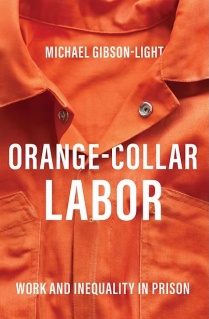
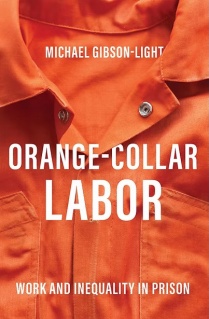
- Book available via
Oxford University Press
What this prison labor movement in the 1970s reveals is that disenfranchised workers, disenfranchised people in general, can actually generate very significant change. [...]
Along the way, they had many, many, many successes. They combated prison censorship, they had dangerous work sites closed down completely, they prevented the opening of potentially dangerous new institutions. They fought for, and in many times secured, concessions from prison administrators to respect the rights that they were supposed to be legally guaranteed, and also to enshrine new rights along the way. And they generated unity and solidarity within prisons in ways that actually reduced violence and reduced tension behind bars that led to safer environments in the prison for everyone involved, for themselves as well as for the officers.
These victories I think are hugely important, and they reveal that these subaltern groups can bring about massive change. It can be easy, especially looking back historically at a story like this, to see it as the story of a failed movement. And I want to make the case that this is not a failed movement. [...] It's still going on today in different forms, and it's motivated by the same sorts of principles and needs that have persisted for now the better part of the century."
—Michael Gibson-Light
(The Baldy Center Podcast, Fall 2025)
Podcast Streaming 24/7
Tarun Gangadhar Vadaparthi, Podcast Host/Producer


Tarun Gangadhar
Tarun Gangadhar Vadaparthi is the current host/producer for The Baldy Center Podcast. As a graduate student in Computer Science and Engineering at UB, Vadaparthi's research work lies in machine learning and software development, with a focus on real-time applications and optimization strategies. He holds a bachelor’s degree in electrical engineering from NIT Nagpur and has also completed a summer program on Artificial Intelligence and Machine Learning at the University of Oxford. Vadaparthi's research and projects are rooted in data-driven decision-making, with a strong commitment to practical innovations in technology.
Executive Producers
Matthew Dimick, JD, PhD
Professor, UB School of Law;
Director, The Baldy Center
Amanda M. Benzin
Associate Director
The Baldy Center