Advancing Interdisciplinary Legal Scholarship since 1978
SPRING 2026
The Baldy Center Podcast

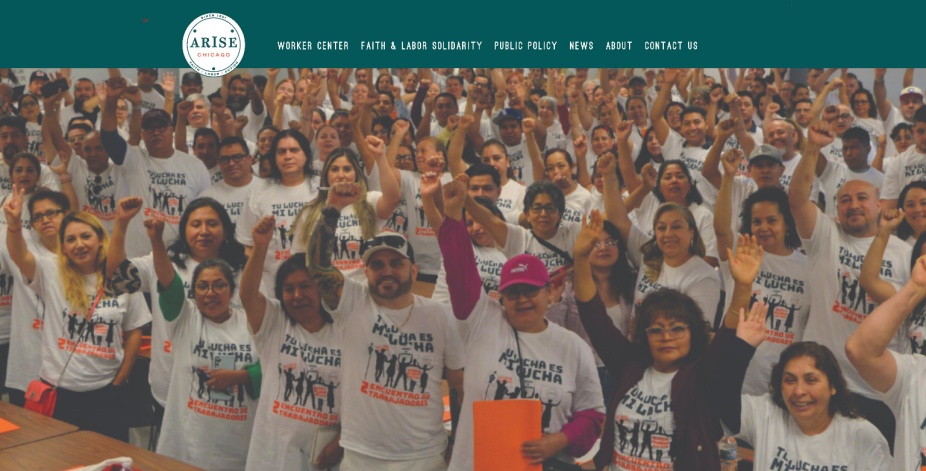
César Rosado Marzán and Matthew Dimick discuss how worker centers are constructing a new moral economy
Published May 12, 2026
In Episode 55, César Rosado Marzán and Matthew Dimick discuss Rosado Marzán’s forthcoming book, A Baseline of Decency: Social Capital, Symbolic Capital, and the Moral Economy of Alt-Labor and Worker Centers. The conversation explores worker centers as network organizations that leverage social capital, symbolic capital, coalition building, and grassroots activism to reshape labor protections and construct a new moral economy rooted in dignity, equity, and democratic participation.
KEYWORDS: Worker centers, alt-labor, labor law, moral economy, social capital, symbolic capital, labor organizing, wage theft, collective bargaining, labor inequality, immigrant workers, workplace democracy, economic justice.
HASH TAGS: #LaborLaw #WorkerCenters #AltLabor #EconomicJustice #MoralEconomy #LawAndSociety #LaborMovement #SocialCapital #WorkerRights #BaldyCenter
Podcast Streaming 24/7
STREAMING AUDIO 24/7
You can stream each episode on PodBean, Spotify, Apple Podcasts, and most any audio app. You can also stream the episode using the audio player on this page.
Podcast Audio Player
- Episode 55. César F. Rosado Marzán, The Baldy Center Podcast
Note: Audio Player may not function ideally on small-screen devices.
Worker centers are trying to rebuild a labor moral economy rooted in dignity, equity, and democratic participation.
[...]
The struggle itself creates the recruits.
[...]
Worker centers help unions bridge the gap to low-wage workers they have historically struggled to organize.
[...]
And I say labor's moral economy at its core is egalitarian. It is equitable, meaning, it fundamentally recognizes the difference in bargaining power between workers and employers, and therefore requires new rules so that one could have legitimate dealings between workers and employers despite this asymmetrical relationship. So it's equitable at its core."
—César F. Rosado Marzán
The Baldy Center Podcast, Spring 2026
The Baldy Center for Law and Social Policy at the University at Buffalo
Episode #55
Podcast recording date: 04/17/2026
Host-producer: Jeffery White
Speakers: César F. Rosado Marzán and Matthew Dimick
Contact: BaldyCenter@buffalo.edu
Transcription begins.
Jeffery:
Hello and welcome to the Baldy Center for Law and Social Policy podcast produced by the University at Buffalo. I am your host and producer, Jeffrey White. And in this episode, I'm joined by César Rosado Marzán of the University of Iowa College of Law and Matthew Dimick, Professor of Law and the Director of the Baldy Center for Law and Social Policy here at UB. And we're here to discuss Rosado's amazing forthcoming book, A Baseline of Decency: Social Capital, Symbolic Capital, and the Moral Economy of Alt Labor and Worker Centers. Drawing on over a decade of ethnographic fieldwork, Marzán examines how worker centers, despite limited resources and operating outside of traditional unions, have been able to pass labor protections and influence policy across local and state levels. The conversation explores how these organizations leverage social and symbolic capital build coalitions and contribute to new mural economy rooted in dignity, equity, and democratic participation. So what does it mean to build labor power from the ground up? And where do worker centers fit in all of this future labor? Let's get into it.
Matthew:
César and I have known each other for years now. I think we kind of hit the job market about the same time. We both have PhDs in sociology. Our interests were labor and employment law at a time when it was kind of tough, I think, to be one sort of legal research area. Why don't you give us just a brief introduction about yourself?
César:
I currently work at the University of Iowa College of Law. As you mentioned my background is both in law and sociology. I both carry a JD and a PhD. I was a union lawyer for about two and a half years in New York City before I entered academia. And since then, my research has focused on labor and employment law, but mostly I've been interested in alternative kinds of labor formations. I've done some work on traditional unions, but it's always been the labor inspectorates in Latin America or global labor unions or global works councils or just works councils, labor courts. Just trying to find different kinds of ways that organized labor can diversify its portfolio of organizations. And now this book is the culmination of my work on worker centers.
Matthew:
So that's a great segue to the book. I guess one thing that struck me about the book, and this is the way maybe to frame the book project as a whole, is that you go back about a decade or more to looking at this one particular worker center. Give us a summary of the book's main point and then maybe a little bit about how you started the project.
César:
Well, the book's main point or argument is that worker centers, they are these community groups, they are not unions. It means they are not engaging in collective bargaining or more generally in this give and take dealing with employers. They don't try to bargain for collective bargaining agreements or anything like that, but they are small. They don't have a mass base of union dues paying members.
The question I originally had was, however, despite not having those resources that traditional unions have had, they have actually been quite capable of getting over, now it's close to 100 different jurisdictions. And by that, it's like state and local jurisdictions to pass labor protective laws. So they have been leading these efforts. And how is it that there are these little groups with no real resources, dependent on foundation money, are able to do this? And my claim is, after spending some time in one worker center as a participant observer and reading a lot of secondary literature, that we have to understand worker centers as network organizations rather than hierarchies.
So the book mostly tries to explain via this one case of Arise Chicago, the worker center I spent time as a participant observer, how this networked structure helps the worker center organize and push for state and local legislation. And just to get a little bit further down, the main claim I make is that networks are sources of social capital. So while you don't have the money unions have or all the experts that unions can hire from lawyers to lobbyists, et cetera, they have connections.
Arise Chicago has lots of connections. And the first time I noticed that was when I was invited to a labor breakfast. So it was the faith labor breakfast. So Arise Chicago is an interfaith worker center, and they have a big fundraiser every year. I was invited. I paid $150 as a donation to have breakfast there. And there were easily, I would say, more than 500 people in there. And they were all from various kinds of congregations, different kinds of Abrahamic traditions were there. So you had a whole school of clergy, you have the big unions from Chicago, you had the Chicago Federation of Labor, you had other worker centers, you had other immigrant rights groups all convened in this one room. And I was like, oh, I get it. These people are good at building coalitions. They were there giving their money, but then when they engage in certain campaigns, they also recruit from that group. So social capital, meaning connections, who you know.
I also make a claim that they're good at building the symbolic capital of workers themselves, which I think is not a new thing that I'm saying. Typically, we tend to think that people with symbolic capital, that's prestige, are high status individuals. In some of these things I've been with Arise Chicago, they have the Archbishop of Chicago there, right? So big guy. But in fact, most of their public facing events, their main speakers are workers themselves who are trained by the worker center to speak to the cameras, to the TVs and that sort of thing. And they actually attract a lot of attention.
And finally, I make an overall claim that what the worker centers are doing goes beyond just trying to fix one, put a patch here to say, make sure workers get paid their wages, or put a patch here so that they can get personal days off, which they do. But overall, what they're aiming at is to build a new moral economy. And it's a term we use in the social sciences, but I think it's been diffused more broadly now, where basically is what is legitimate and illegitimate right or wrong when it comes to any kind of economic transaction in this particular case when dealing with employment relations. So that's kind of the general gist of the book.
Matthew:
I think one thing that gives your project structure from the chapters that we read is you focus on three or four different pieces of legislation at city level, county level, also state level, if I'm remembering right in Illinois, around the city of Chicago, Cook County, Illinois, and then the state of Illinois, right?
César:
Yes.
Matthew:
And how this one worker center Arise Chicago played a role in advancing the legislation in each of these venues or arenas. Just as a side note, maybe we can come back to it, that I thought was interesting is how the different kinds of capital, social, symbolic, and then you make distinctions within kinds of social capital, how those play different kinds of social capital were activated, used at different stages. We talked about almost a progression in terms of social capital. Anyway, we can come back to that, but I thought that was really engaging for me.
You mentioned moral economy, so let's give the book a little context. The context is we're in a period where there's been a decline in unions, rise of inequality, and a weakening, this is not just about an assertion of a moral economy, but a weakening of a previous moral economy. So I guess maybe what's different? Or maybe say a little bit more about this idea of moral economy, what's different from the new one you see coming out of this? Why are worker centers maybe more important as a new form of worker representation than older ones to do this?
César:
So in many ways, this book was inspired by a paper written by Jake Rosenfeld and Bruce Western, both sociologists. It’s a 2011 paper where they explain how union decline is actually linked to increasing income inequality in the United States. And so for some time, we haven't been able to really pinpoint the right regression or whatnot. And they published this paper in the American Sociological Review showing that, in fact, that's what's happened. Other scholars thereafter have been able to reproduce these results with other data.
So we now know that certainly the kind of labor unions and membership has led to an increase in income inequality. But in that paper, what they claim is that unions, it's not that unions merely bargain for better terms for their own members. It's not that the auto workers who are unionized make more money than the auto workers who are not unionized, which is true, but that is not the only thing unions did, especially at their height in the, say, 1950s and ‘60s.
They created an overall environment where huge income inequality was frowned upon. Where having a CEO making 300, 400 times what the line worker was making was seen as basically wrong. And the unions did that, not solely through collective bargaining, but by engaging in politics, in public discourse, being involved in Washington for minimum wage legislation and increasing the minimum wage, for health and safety regulations, for all kinds of things that have been good for working people, generally speaking. But they also operated and funded tons of newspapers and programs and some kinds of institutions that they supported that maintained income inequality in check. There were still a lot of income inequality, but not to the extent that we see that today. And they call that a moral economy. And so they say they had these norms that could be both legal and social and also institutions that reigned in economic inequality. As labor unions have been drying up and the resources have been drying up, then they have been unable to sustain this moral economy.
And so what I'm seeing with worker centers is as I said, a hundred jurisdictions have passed labor protective statutes. They are involved in many states and cities and even outside of cities. And so they, through their activism, might be also engaged in building a new moral economy. In the book, I explain that the workers, I make a claim that there isn't a moral economy necessarily and an immoral economy. As the labor moral economy has disintegrated, it's been replaced by a kind of pro-market moral economy.
Matthew:
An amoral economy. That’s sort of the traditional way to think about a market, right? Yeah. Amoral to me is sort of the best way to express this. It's sort of something like we don't even think about it as relevant to a moral discourse even. It's kind of like a set of facts. I'm not saying that's the way you should see the economy.
César:
I think the market moral economy is individualistic, right? So to the extent that you are limiting individual rights and individual's capacity to contract is frowned upon. So I would say that's part of their morality.
Matthew:
So it's like a different morality.
César:
It's a different sale morality. Yeah. I've been on a number of panels with say Richard Epstein, huge neoliberal. He gets so angry about when people bring up, like me, these questions of inequality, and the need for unions and regulation as if I'm calling for the devil to come into the room. So I do think that there is a morality in the market, right? It's their own kind of morality. Labor changed that I think quite significantly.
Now we're in this neoliberal state, and in fact, we're something different. I think we need to also focus on what is this post-neo-liberal situation we're in right now because with populism and Donald Trump and all of that, I think it's taken a turn that's even darker than neoliberalism. But anyhow, worker centers, what they are trying to rebuild in many ways, the old labor moral economy. And I say labor's moral economy at its core is egalitarian. It is equitable, meaning it also, it fundamentally recognizes the difference in bargaining power between workers and employers and therefore requires new rules so that one could have legitimate dealings between workers and employers despite this asymmetrical relationship. So it's equitable at its core.
And you also find in a lot of, at least a lot of the pre-New Deal ways unions talked very much about worker dignity and thereafter as well. So I think that's part of it. And democratic in the sense that it wants workers to have a voice in the workplace. And so industrial democracy was a big thing that unions did.
In the book, I argue worker centers strive for a very similar moral economy. The one difference I find is the alt-labor movement, generally speaking, all of these groups are advocates for workers, but not within the union organizational structure, value equality more. You see equality being more present and salient because they represent workers who have been historically excluded from labor regulations.
So I have the case of the domestic workers, domestic workers' bill of rights, who were excluded in the New Deal originally because of both mostly concerns by the Dixiecrat members of the coalition who didn't want their Jim Crow economy to be upset by this new regulatory structure. And at that point in time, agricultural workers, most Black people who were working, were working either as agricultural workers or domestic workers. And so that was a way of excluding them.
There's also the gender component to it where the household workplace isn't seen as a legitimate place of work. So the worker center movement is saying that that needs to be fixed. This is work like any other work to a great extent, and so we need to give them basic protections. Also, the alt-labor movement tries to represent independent contractors and a few other kind of workers who have been historically excluded.
So I make the claim that you see equality have more of a present role in this moral economy, but it is still at its core equitable. It is still at its core democratic while not engaging in workplace collective bargaining by getting workers engaged in local politics, getting them to lobby state legislatures. I've done this with them, getting them prepped to do that, to talk to them and all of that. They're forwarding also kind of a democratic vision for this moral economy where workers are engaged politically.
So that's in a nutshell, what I would say about the worker center type of moral economy and how it's different from a purely individualistic and formally egalitarian, where a neoliberal would say there is no problem with having a low wage worker in Amazon negotiating an individual contract with Amazon.
Matthew:
It's just looking at a contract.
César:
Exactly. And it would be preposterous and outrageous if you didn't let that worker negotiate their own contract with Amazon. And the labor moral economists know that the inequality of bargaining power is so outrageous that there is no real contract there. There's just Amazon telling the worker what they need to do.
Matthew:
So the book is, I mean, it's a great fit for Baldy Center law and society research, right? It's not just sort of a doctrinal analysis of a set of labor regulations. You conduct ethnographic field work to sort of investigate this worker center, how it sort of produces law. And also, I mean, it's a story about how law is being made from below. And so maybe tell me a little bit about your method. What was it that made you choose this particular method and did your field work change how you think about where labor law and social policy actually come from?
César:
So I decided to do an ethnography. I spent 12 months at the worker center. I asked permission from the worker center to basically be present there in their business and the whole thing for months. And they agreed what the deal was, you'll be one of our organizers. So I was a workplace organizer for the worker center. I was a volunteer. It was free labor for them. Being bilingual, that was very useful for them. Of course, knowing the law was very useful, though I was not functioning as an attorney, I was a workplace organizer.
But I wanted to do this because I had no clue about worker centers when I started. I used to be, as I said, a union lawyer. I know NLRA, I know union elections, I know bargaining in good faith, how to file 8A5 claims and bargain contracts. I know how to help the union administer the contract. I represented tons of workers who were fired from their job and that sort of thing, but I had no idea what these worker centers were. And it was just reading about them in the abstract was hard for me because I was trying to figure out where are they drawing their money from? Where are these workers coming from?
So just being in the worker center really helped me understand from within what is it that they do. And then once there, I noticed, oh my God, they're not just representing Mary and Joe and Jose in their individual cases, but they have this bigger agenda to change workplace law in Chicago and the state of Illinois, and they're actually winning.
And that's what eventually led to what I thought was really interesting about this worker center, that we had staff meetings of seven, but then you had coalitions of 25, and then when you had a big event, you could have 50 or 60 people. And so there was more to it than just these workplace campaigns. So that's why I thought doing this ethnography was useful.
At that point in time, there was one book written by Jennifer Gordon. So she is a professor of law at Fordham, and she was one of the people who started with the worker center. So she started a worker center in New York State. And the book is kind of an ethnography, but it's more biographical. It's her sitting down and kind of writing how she interpreted and understood the work that she did for this worker center. And eventually her main claim there is that the worker center helped build citizens, even though most of these workers are not citizens, not US citizens, right? They were engaging in the core functions of citizenship, which was going to your legislators, getting laws passed and having those laws influence your job, that sort of thing.
Now, but other than that book, there was very little else. And so I thought this could be a contribution in terms of adding to the literature, something more textured and also more theoretical. So as a sociologist, I'm not there just kind of with the naked eye, just describing what I see, but I'm trying to make a theoretical claim about how is it that this particular type of organization can be effective. And that's why I bring all the kind of network social capital baggage with me. Now, the second part of your question was, how did it make me change?
Matthew:
Did it? Did your field work change how you think about where labor law and social policy comes from?
César:
That's interesting. So I would say one thing that was a little surprising to me, and maybe looking back, it shouldn't have been. So I saw my work as a workplace organizer, so a little bit about what that meant. A worker showed up to the office. They said, "I haven't been paid my wages in one week." And so I would interview the worker. If I thought in fact I had a meritorious case, I would start a campaign to get his money back, which usually meant he needed to go to a lawyer rights workshop. Then after he learned about his rights, we'd try to find coworkers, and if not coworkers, allies, delegation, we would call that and go to the workplace and demand his pay. So that sort of thing, more complicated cases, we might bring lawyers. When there were more workers, then it got more complicated, but that's the gist of a workplace action. But one's for Jose and then one for Mary and that sort of thing.
And I thought people that were doing the policy work were doing a completely different thing. And as I learned more about the policy work and about my own role, I noticed that they were actually quite linked. And at that point, I was like, wow. At a different level, I was like, well, that's what theory in many ways would've said. If this worker center actually legitimately is changing law in a way that benefits workers at some level, there must be some real activism happening in the grassroots that's kind of feeding into this policy. And this is how I saw this.
So there was this one case where this worker wasn't paid her wages for a certain period of time. Her coworker didn't want to participate. So I was about to give up the campaign. I was like, I don't know what to do other than just write a letter, personally go there. And so the workplace executive director told me, "Well, César, have you got in touch with the other person?" So that's the municipal legislator, the councilperson, city hall person. And I said, no. It's like, well, that restaurant is in an area. We don't have any relationship with the alderperson. There was an alder lady at that point, alderwoman. So they said maybe get in touch with her because this worker is claiming health hazards and other things that are not just labor related. And so I started a conversation with her chief of staff and with her office to push this employer to pay up.
What the worker center wanted was not only to get this worker her wages, but also to have now this ally in city council for other purposes down the line. And so as I looked at, say the wage theft ordinance, I noticed, oh, the wage theft ordinance was championed by the alderperson who was already involved in a failed car wash campaign to organize the workers. So that failed, that campaign to organize the workers failed, but because it failed and they already have the workers and the alderperson, then they pushed for a law citywide to make it harder for employers to get away with wage theft.
And so that's where I noticed, oh, there actually is a connection between what I'm doing here and in fact it is very important because here is where the social capital gets built. It gets built in struggle, which also reminded me of Rosa Luxemburg's old saying that basically the recruits for the struggle come from the struggle itself. The recruits for the organization come from…
Matthew:
It's not the recruits that create the struggle; it's the struggle that creates the recruits.
César:
Exactly. And my understanding is that this car wash campaign had a huge impact on the alderperson because he became aware through the car wash campaign that workers were losing something like $7 million a week or something like that in wage theft. It was in his own district. And he wanted also to make a name out of himself as a progressive alderman. And so he said, "If you have the people, we have almost a coalition made here. I have the mayor's ear." And the mayor, I can't prove this, but the notion was the mayor was a little bit worried about this younger cop of aldermen and alderwomen who were also a lot more progressive than he was. So this was Mayor Rahm Emanuel, a very mainstream Democrat. So he had to be paying attention to what was happening with the newer politicians. And so eventually they got this coalition, and I was able to get the ordinance passed in Chicago. So to your question, when you mentioned bottom up, it really is bottom up. This isn't a worker center like an NGO operating in the heavens with other NGOs proposing things and then behind the backs of everyone else getting these things done. There is real work being done on the street that eventually leads to these laws.
Matthew:
Super interesting. So one of the main questions in the book is how do these workers centers, which are so resource poor in the traditional sense of money and paid staff and formal, maybe bureaucratic, hierarchical, organized in that way, how are they able to succeed despite those lack of traditional resources? And your answer is social capital. So I guess I'm curious, you talk a lot about, in what I read, distinctions within social capital. It sounds like later you talked about symbolic capital more. I want you to focus on that distinction mainly. So what is the difference between social and symbolic capital? Why does that difference matter? How are they deployed in different ways here? And then I also think what was really interesting was how you talked about what is unique about these worker centers and social capital.
One of the things that really clicked for me is how you compare it to traditional unions, which on the one sense you would think would be heavy on social capital because they organize workers in a workplace and you think that would be a rich source for social capital. But it turns out that they tend to be, I forget how you put this, but they tend to be actually in terms of civil society organizations, very isolated, which was super interesting. And I think basically, you can explain this more, but I think that basically it says something about how, yeah, you may have a workplace that's organized, but beyond that, the connections are very, very weak and worker centers are doing something different here.
César:
They are. And so I would first bracket in terms of being able to generalize to a population. So this is from a social scientist perspective. I did a case study, and so there are issues here in terms of how much we can generalize to a population. But given secondary literature, this is how I'm going to answer the question. So I'm going to start with different kinds of social capital, this is theoretical.
So I point out three different types of social capital. One is bonding social capital. That's when you make connections to people who are like you, quote unquote. And so a good example might be, and I'll come back to this, is you have a ton of steel workers in a steel plant in a town that only has the steel plant. Everyone there is kind of like the other person. And so they form this bonding social capital, which can be extremely powerful if we are calling for a strike, because everyone supports each other. It's very, very good for solidarity.
Bridging social capital is a second type of social capital. It is forming connections with people who are different from you. So that would be the union saying, for a specific campaign, we're going to make a coalition with say the environmentalists, which environmental groups don't always agree with unions, especially if these are unions, say mine workers and maybe other types of workers, maybe truckers who want cheap gas. But it's when you make a tie with a different group that you create this bridging capital that then gives you access to all the other networks involved, say in this case, it would be the environmentalist groups.
Matthew:
Can I add one things here too? I think what's so important about this distinction is that when Robert D. Putnam first started doing this kind of bowling alone stuff, you sort of assume that any kind of association or personal tie was good, was intrinsically good, but there's sort of a double-edged sword of bonding capital because it tends to unite people who are similar, it can be a way of excluding those who are outside. And then bridging is interesting because it tries to do the opposite. It tries to bridge what otherwise could have been fundamental social divides.
César:
Which makes the whole social capital, understanding what it does complicated, right?
Matthew:
But also interesting too.
César:
But also double edge. Not all social capital is necessarily good, right? So those are two types. Then I talk about individual and collective, ties between individuals and then ties between organizations. So Joe and Mary might have a connection as individuals, but they might also just have a connection because one is a clergy member, the other one is part of a worker center, and these two groups have had institutional ties for some time. The most important one is really this bonding and bridging. You mentioned unions. So I just finished reading a book, Laney Newman and Theda Skocpol’s book called Rust Belt Union Blues. And so in that book, they talk about how, very relevant to my own book, the dissolution of unions in the ‘70s, ‘80s, especially ‘90s, didn't just mean you no longer had collective bargaining in certain towns, but a whole network of groups, civic organizations that existed in those towns, these are steel worker towns, also disappeared, including neighborhood churches.
It’s so interesting what gets replaced, gun clubs and mega churches. So you went from the Union Hall and the neighborhood church and the Kiwanis Club and the Lions Club and these kind of civic clubs and the Y from all of that to these mega churches and gun clubs. But as I read that book, it became very, very clear that these were tightly made communities. And so unions, because they have mass memberships, especially if they are industrial unions where they were organizing large workplaces, you have this amazing bonding, bonding social capital and there was really no need, and the structure didn't really lend itself towards, say, trying to reach out with the environmentalists or whomever else. And so because worker centers do not have a deep pool of members, they cannot afford literally, cannot afford not to make connections with, say, the environmentalists or whomever else.
So I think that goes to your question about unions. There’s this one survey that was done in the 2000s after the dissolution of most of these unions, and in fact shows that remaining union members are basically, they're members of the union and maybe members of a church, and that's it. They don't have any other life outside those kinds of groups. And so if you go to some other kind of group, you might find that they might be members of three other kinds of groups, but not unions. Churches, however, have some overlap. So that's interesting.
But anyway, its union members apparently are quite isolated. And so part of what I argue in the book is that worker centers help unions bridge the gap that they have with parts of the working class, they haven't been able to organize like low wage workers. And so in fact, the chair or the president of the Chicago Federation of Labor told me, the reason why we're so involved with Arise Chicago is because that's the only way we can reach the low wage worker constituency in Chicago, which is huge. It's a very large part of the working class. And so they have that group, they have a foothold in that group, and then that's why they're very instrumental and valuable to us. And I mean, just by the language itself, they have social capital, this group.
Now in terms of social capital and symbolic capital. So social capital is basically connections, physical connections to other people or groups. Symbolic capital is different. That is the type of prestige, cache status, right? That a specific person, or maybe if we're going to talk about charisma, maybe the office or something like that might carry. And so social capital might get you good symbolic capital. It might not. So if you know someone, maybe that someone doesn't have a lot of real clout in city hall in the sense that they, because they're not a member of city council, can't go around the offices and ask for votes, but they are so influential culturally that they actually can have an impact when you're trying to pass a law.
So again, if you have the archbishop or any of other folks who are very influential in Chicago's Catholic community, Chicago is very big on the Catholic church, then you have a connection with someone with high symbolic capital that if you put them before the media, the news, they have influence over this campaign. So what I found quite interesting is that Arise Chicago does have that kind of connection. So I even went to a fundraising event with Charlie Sheen, and he was raising money, and he talked about how when he started his career, he was a golf caddy, and he was a union golf caddy and whatever. It was kind of an interesting story. But really the main spokespersons for all of their campaigns are the workers themselves. And so they are the ones who say, this is how I was treated at work, blah, blah, blah. But it was not just like, I'm a victim, then I'm asking or demanding that we get this law passed or that this happens and that happens so that this doesn't happen to anyone else. And they are, when you have them there, the news just covers the story. So it's very easy for me to go to the newspaper, see how the worker center politically does its job to get the ordinance for sick days passed. And you find in the newspapers, tons of testimonies from workers themselves. And to me, that means, okay, this is very interesting to the news, likely to the readers, likely to the politics. So that's symbolic capital, right? So one is a connection just to someone with some kind of leverage, and the other one is a connection to someone with prestige that is now more symbolic in nature.
Matthew:
All right. So last question to wrap up with. So the first part is again, just one thing that really stands out to me between the kind of lawmaking, if you want to call it that, between worker centers and traditional unions is, and here we're talking about local ordinances, statutes at state level, and also in some ways, more traditional enforcement model of the law in the sense of having an inspectorate or something like that, that makes sure these laws are enforced, again, in a little bit of a traditional model.
Compared to that with a traditional collective bargaining agreement, which is in some ways again, I always find the collective bargaining agreement endlessly interesting because it's not a contract, it's not a statute, it as a whole is completely different sort of form of enforcement and adjudication. So what are we gaining or losing by toggling between these two models, unions and worker centers and their forms of law, if you want to call it that. And then that kind of leads to the last part of the question, which is you had this really nice comparison. We talk about worker centers as the foxes of the labor movement, and then unions as the lions of the labor movement.
So maybe just end by talking about that. That suggests a very nice complementary between worker centers and labor unions, but what's the future, where you see that kind of complimentary going forward forever, or there are other bigger changes that need to happen to really get the labor movement new and really revitalized in a way that can really make really fundamental change made.
César:
So institutionally, first question is that the institutions are creating for enforcement and then the future of this kind of Fox and Lion relationship. So the thing I did not mention, Matt, when you asked me about the moral economy of unions vis-a-vis worker centers is I talked about equality, but another one would be this one that you mentioned is no collective bargaining for worker centers and rather statutes that are enforced by government.
Now, I don't think it's in any way controversial within the labor law world to say that collective bargaining is a lot more effective in getting workers' rights enforced than a statute that's enforced by government. And the reason is the union is there in the workplace, they see the violation, they have a contract, it's binding, they have an arbitration, they have the common law of the shop. I mean, it's handled in that way, and it is much more efficient and effective than waiting for a government inspector to show up and cite the employer and this and the other thing. And maybe in the United States, typically speaking, our types of inspectorates or agencies, their penalties are very, they're very light. And in fact, employers might even decide, let me just break the law and if I get caught, I'll just pay back pay and that's it.
So now worker centers are trying to improve on this model, but through co-enforcement. So what they are aiming, Arise Chicago did this through the Office of Labor Standards, I would say that's the crown jewel, is getting a local government to create a small bureaucracy that enforces the local labor code, but then actually provides resources to advocacy groups like Arise Chicago to help the agency enforce the law. So when it passed, the chief of the office would go to Arise Chicago's office, the workers would go there and then there they would say, "This is what's happening to me in the workplace." And they might even come up with a plan on how to attack a certain industry and all of that. So that's happening. And so that is not collective bargaining, but that certainly includes the worker center. And so it gives power to the workers, the workers are the eyes and ears, they can really point to where the problems are and how to create a solution for them. So not collective bargaining, but better than typical what we call command control. And because you don't need 20 inspectors, maybe you just need two, and a bunch of workers who are actively engaged with the worker center and they can serve as inspectors as well.
And so that is, I think, another big difference between these two moral economies that we're including the institutional aspect of them. When it comes to the Fox and the Lion, so that's from Machiavelli, I once read that and I thought that it was so interesting that the prince needs to act like a lion sometimes, be strong, charge, roar, but the lion can be stuck in a trap, the snare. So that's why sometimes you can't act like a lion. You have to act like the fox who finds the snares. And so what Machiavelli was saying, a good leader needs to know how to act in these two different ways.
And I think the labor movement actually has been doing that all along. So I mean, I don't have all the history, but anecdotally, and from what I've read, so when we're talking about the moral economy of the 1960s, the United Auto Workers had hundreds of newspapers, tons of community groups that they were creating, understanding that it's not just the union. And as a collective bargaining kind of institution that will get us through everything we need to do, but it's also all of these community connections. So they funded a lot of stuff. There's a literature on social movement unionism in the '90s and 2010s where unions actually link up with other types of groups. You saw that in the late '90s or early 2000s with the Seattle protests, that's when you start to see that sort of thing. So in my lifetime, I've seen it by unions. T
oday with the Fight for 15, with OUR Walmart, you also see unions, at least some of them engaging in this kind of coalition, different kind of organizing thing. But I think worker centers are part of it. So the work center is part of the new types of engagements that we see the labor movement doing with us, with advocacy groups. And I see it as right now a very effective partnership. So precisely because of the things I've been mentioning, the labor movement doesn't have connections to many workers who are part of the new economy in big cities and even outside of them. And so finding a way to still represent in some fashion these workers is through these kinds of coalitions.
Whether the future will continue to be NLRA (National Labor Relations Act) type Wagner type unions with worker centers, I don't know, but something tells me that I don't think so. It's not like what we're seeing now is having a dramatic impact on income inequality. Again, I was reading this book by Newman and Skocpol, and the situation in middle America, rural America is very bad. And once you understand what all of those folks have gone through, at least you understand why they have moved towards voting for the Republican Party and for Donald Trump and being hardcore.
And so our current unions with these worker centers are not touching on that, are not in any way dealing with that situation. That's a situation that needs to be resolved. There has been a critique that by Professor Leslie Green and a few others that worker centers and the way that we talk about low wage work excludes African Americans. There might be 10 worker centers of 250 that actually expressly advocate for issues related to black people in the United States.
And just to go back to the social capital story, there might be a dark side of social capital story here where the existing worker centers have been able to attract the attention of politicians and foundations while at the same time kind of keeping it for themselves and not really sharing those connections with groups that advocate for working class and poor black folks in the United States. I'm not saying that's the case. I'm saying that is an issue for further research and I think a very legitimate one.
Matthew:
Thank you very much.
César:
Thank you.
Jeffery:
So once again, that was César Rosado Marzán, Matthew Dimick, and this has been the Baldy Center for Law and Social Policy podcast produced by the University at Buffalo. To learn more about the Baldy Center, visit our website at buffalo.edu/center. My name is Jeff, and on behalf of the Baldy Center, thank you for listening to our podcast. Until next time.
César F. Rosado Marzán (Iowa Law)


César F. Rosado Marzán
BIO: César F. Rosado Marzán is the Edward L. Carmody Professor of Law at the University of Iowa College of Law, and serves as Director of Graduate Programs and Visiting Scholars. He is an internationally acclaimed socio-legal scholar and award-winning author whose work bridges theory and practice. At Iowa Law, he teaches Contracts as well as a variety of labor and employment law courses and seminars. He has earned the Iowa Law Collegiate Teaching Award, a distinction granted by students in recognition of his exceptional teaching.
Rosado Marzán is coauthor of Labor Law in the Contemporary Workplace: Cases and Materials (4th ed., West) and the award-winning Principled Labor Law: U.S. Labor Law Through a Latin American Method (Oxford, 2019), which received the Simón Bolívar Prize for Best Juridical Work. His current socio-legal book project explores the moral economy of alt-labor, revealing how U.S. worker centers—despite limited resources—are reshaping workers’ rights. His articles have been featured in leading publications, including Law & Social Inquiry, University of Chicago Law Review, Minnesota Law Review, University of Chicago Legal Forum, Berkeley Journal of Employment and Labor Law, and many other contributions spanning the U.S., Europe, and Latin America. Learn more via Faculty Profile.
ABOUT THE BOOK
César F. Rosado Marzán, A Baseline of Decency: Social Capital, Symbolic Capital, and The Moral Economy of Alt-labor and Worker Centers (UC Press, Spring 2027)
Abstract: The book discusses how worker centers—non-union community organizations that advocate for low-wage workers—advance labor protections despite having limited money and human capital for advocacy. Focusing on Arise Chicago, a worker center, the book shows how the organization helped enact local and state laws that secured wage theft protections, paid sick leave, domestic worker rights, and the creation of a new city enforcement agency, the Office of Labor Standards.
The book argues that these reforms contribute to a new moral economy rooted in egalitarian, equitable, dignitarian, and collaborative values. A similar moral economy is also surfacing in other cities and states where worker centers prevail. The book targets scholars and students in law and society, law and political economy, labor and alt-labor studies, sociology, and social movements along with policy makers, journalists, and others interested in contemporary labor rights and economic justice.
PODCAST EPISODE CITATIONS
- Rosado Marzán, César F. A Baseline of Decency: Social Capital, Symbolic Capital, and the Moral Economy of Alt-Labor and Worker Centers. (UC Press, Spring 2027).
- Rosado Marzán, César F. 2019. Principled Labor Law: U.S. Labor Law Through a Latin American Method. Oxford University Press.
- Rosenfeld, Jake, and Bruce Western. 2011. “Unions, Norms, and the Rise in U.S. Wage Inequality.” American Sociological Review.
- Gordon, Jennifer. Suburban Sweatshops: The Fight for Immigrant Rights. Harvard University Press.
- Newman, Laney and Theda Skocpol. 2024. Rust Belt Union Blues: Why Working-Class Voters Are Turning Away from the Democratic Party. Columbia University Press.
Matthew Dimick. Professor of Law (School of Law, Buffalo), Director, The Baldy Center


Matthew Dimick, Professor of Law, and Director, The Baldy Center for Law and Social Policy
BIO: Matthew Dimick, Professor of Law at the University at Buffalo School of Law, is the director of The Baldy Center for Law and Social Policy. Dimick's scholarship can be broadly categorized under the heading of law and political economy. Recent work has explored the epistemological status of “race” under capitalism, labor law and the republican theory of domination, a comparative evaluation of antitrust and labor law in correcting for firms’ market power, and the relationship between altruism, income inequality, and preferences for redistribution in the United States. Dimick is currently undertaking a study on capitalism and antidiscrimination law and, along with John Abromeit and Paul Linden-Retek, is editing a volume on Jürgen Habermas’ legal and political theory.
Dimick’s research has appeared in both law reviews and economics, political science, and sociology journals, and has been featured in The Atlantic, Vox, Jacobin, and the On Labor blog. He has made regular contributions to Jacobin magazine and the Legal Form blog. He teaches regularly in contracts, law & society, labor law, employment law, and employment discrimination law and has also taught courses in federal income taxation, tax policy, and comparative and international labor and employment law.
Dimick holds a PhD in sociology from the University of Wisconsin-Madison and a JD form Cornell Law School. Prior to coming to the University at Buffalo Law School, he was a Law Research Fellow at Georgetown University Law Center. After law school and before graduate school, he worked for the Service Employees International Union in Washington, DC.
RECENT BOOK
Dimick, Matthew. 2025. Ending Income Inequality: A Critical Approach to the Law and Economics of Redistribution. Cambridge University Press
Jeffery White, Podcast Producer/Host


Jeffery (Jeff) White
Jeffery White (He/Him) is the current producer/host of The Baldy Center Podcast. As a full-time PhD candidate in Sociology at the University at Buffalo, his research examines how system-impacted students experience higher education as either an extension of or rupture from carceral systems. His scholarship extends traditional understandings of the school-to-prison pipeline by interrogating higher education as a possible site of both containment and transformation in the life course.
White is a researcher, writer, published poet, educator, and social advocate whose work examines the intersections of race, education, and the carceral state. He began his academic journey at John Jay College of Criminal Justice, studying International Criminal Justice and Human Rights, where his research explored the relationship between the U.S. criminal legal system and international human rights frameworks.
He earned his MA from Columbia University in Human Rights and Social Stratification, conducting statistical analyses of police killings of unarmed Black men and examining patterns of racialized state violence. He later completed a teaching fellowship and earned his MS in Special Education (7-12) with a concentration in Urban Education Policy from Brooklyn College.
White taught incarcerated youth at Rikers Island, an experience that shaped his commitment to dismantling the school-to-prison pipeline. He went on to serve as a secondary educator and racial equity curriculum specialist, and worked with the NYC Office of Safety and Youth Development to support culturally responsive, restorative practices in District 15.
Executive Producers
Matthew Dimick, JD, PhD
Professor, UB School of Law;
Director, The Baldy Center
Amanda M. Benzin
Associate Director
The Baldy Center