Advancing Interdisciplinary Legal Scholarship since 1978
The Baldy Center Conference June 18, 2026
Mass Adjudication in a Changing Administrative State


JUNE 18, 2026: Join us for the conference, Mass Adjudication in a Changing Administrative State. The event aims to put scholars of all three mass adjudicatory agencies in conversation about the future and challenges of mass adjudication in a time of bureaucratic change.
Three federal mass adjudicatory agencies adjudicate more claims each year than all of the federal courts combined:
—The Executive Office for Immigration Review
—The Social Security Administration
—The Department of Veterans Affairs
Each agency has unique procedures or doctrinal wrinkles; at times, courts and scholars have treated them as exceptional. Yet each has faced similar challenges, including backlogs and endemic delays; disparities in grant rates and claims of arbitrary decision-making; struggles of bureaucratic and political control, quality-control programming and error correction; and in interacting with federal courts via judicial review.
Today, each agency also faces an uncertain and quickly shifting administrative law landscape: increased political control as the Supreme Court undermines adjudicators' interference, enhanced judicial review of agency decision-making and statutory interpretation, and an Executive Branch gutting the federal workforce and benefits programs. Conference contributions will thus look to respond to this moment and highlight trends across the mass adjudicatory state, while looking for broader transubstantive insights that these settings can provide for administrative law and bureaucracy writ large.
Thursday, June 18, 2026
9:00 a.m to 5:00 p.m., 509 O'Brian Hall, UB North Campus
Organizer
John Harland Giammatteo
UB School of Law
johngiam@buffalo.edu
Conference Presenters
Sponsors
- The Baldy Center for Law and Social Policy
- University at Buffalo School of Law
The conference is free and open to the public.
Meghan E. Brooks, South Carolina School of Law

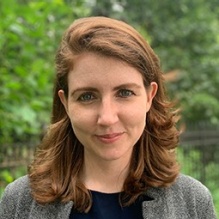
Meghan E. Brooks
Meghan E. Brooks is an assistant professor of law at the University of South Carolina School of Law, and the Director of the Veterans Legal Clinic. Brooks teaches Administrative Law and public benefits, and her work focuses on veterans law and agency adjudication more generally. Before joining the University of South Carolina faculty, Professor Brooks was the Robert M. Cover Fellow in the Veterans Legal Services Clinic at Yale Law School, where she co-taught the clinic and an introductory legal writing course. Prior to that, she was a Justice Catalyst Fellow in the Veterans Benefits and Special Litigation Units at New York Legal Assistance Group, where she represented veterans and their families in benefits appeals.
Brooks holds an A.B. magna cum laude with highest honors in the Comparative Study of Religion from Harvard College, and a J.D. from Yale Law School, where she was an Editor-in-Chief of the Yale Journal of Law and Feminism and was awarded the Charles G. Albom Prize for Appellate Advocacy. Faculty profile.
Jill E. Family, Widener Law Commonwealth

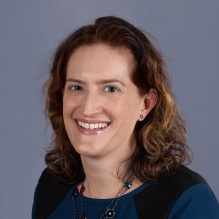
Jill E. Family
Jill E. Family is the associate dean for faculty research and development, and, professor of law at Widener Law Commonwealth. Family's scholarship leads the discussion of the intersections of immigration law and administrative law. She studies the relationships between the three branches of government in setting, implementing, and interpreting immigration law. Her expertise played a prominent role in a hearing before the U.S. Senate Judiciary Committee, Subcommittee on Oversight, Agency Action, Federal Rights and Federal Courts. Her work has been published in British and Spanish law journals, in addition to many leading U.S. law reviews.
Family lends her expertise to policy discussions about the future of administrative law and immigration law. She served as chair of the American Bar Association's Section of Administrative Law and Regulatory Practice, is an elected member of the American Law Institute, and contributes to the Notice and Comment Blog of the Yale Journal on Regulation. In addition, Family is a member of an academic consultative group of the Administrative Conference of the United States. Faculty profile.
Joshua Feinzig, Duke University School of Law


Joshua Feinzig
Joshua Feinzig, visiting assistant professor of law at Duke University School of Law, writes and teaches in civil procedure and administrative law, with a focus on how adjudication functions across courts and administrative agencies. His work examines complex and large-scale adjudicative systems—such as multidistrict litigation and the immigration courts—and the procedural forms and institutional arrangements used to manage volume, discretion, and authority. Before joining Duke, Feinzig clerked for Judge Diane P. Wood of the U.S. Court of Appeals for the Seventh Circuit and practiced appellate litigation at WilmerHale. He has authored briefs in most federal courts of appeals and in the U.S. Supreme Court on a range of regulatory and constitutional questions, and has argued before the Ninth Circuit. He has also represented parties in agency adjudications, class actions and multidistrict proceedings, and cross-border disputes.
Feinzig earned a J.D. from Yale Law School, an M.Phil. from the University of Cambridge as a Gates Cambridge Scholar, and a B.A. summa cum laude from Yale University. Before law school, he conducted fieldwork in immigration detention centers and prisons abroad, and spent a year working within Taiwan’s Ministry of the Interior on transpacific immigration and refugee policy. Faculty profile.
John Harland Giammatteo, University at Buffalo School of Law

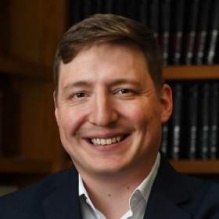
John Harland Giammatteo
CONFERENCE ORGANIZER: John Harland Giammatteo is an associate professor at the State University at Buffalo School of Law. Giammatteo researches the intersections between civil procedure, federal courts, and administrative law. His scholarship engages with two primary areas. First, he studies access to courts and rightsclaiming, with a particular emphasis on barriers to federal litigation. Second, he undertakes ethnographic studies of court-like procedures used by mass adjudicatory agencies. Giammatteo’s writing has been published or is forthcoming in the California Law Review, New York University Law Review Online, and the International Journal of Refugee Law, among other academic journals and periodicals.
Giammatteo joined the UB School of Law faculty following a clinical teaching fellowship at Georgetown University Law Center, where he taught in the Civil Litigation Clinic and supervised students in a wide range of civil litigation matters. Before teaching at Georgetown, Giammatteo represented asylum seekers and noncitizens at Lutheran Social Services of New York’s Immigration Legal Program as a Justice Catalyst and Liman Fellow. Giammatteo is a 2017 graduate of the Yale Law School. Faculty profile.
Andrew Hammond, Indiana University Maurer School of Law

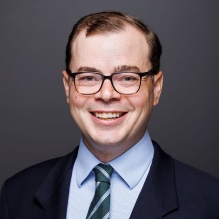
Andrew Hammond
Andrew Hammond, Professor of Law and Harry T. Ice Faculty Fellow at Indiana University Maurer School of Law, writes and teaches in the areas of administrative law, civil procedure, and poverty law. His scholarship focuses on how agencies, courts, and legislatures respond to poor people’s claims. His articles have appeared in or are forthcoming in the California Law Review, the Georgetown Law Journal, the Iowa Law Review, the Michigan Law Review, the New York University Law Review, the Northwestern University Law Review, and the Yale Law Journal, as well as other publications.
Hammond's past articles have won the American Constitution Society’s Richard D. Cudahy Writing Prize for Regulatory and Administrative Law and the Call for Papers Competition of the Southeastern Association of Law Schools. He has chaired both the Civil Procedure and the Poverty Law Sections of the Association of American Law Schools, and he has received the Trustees’ Teaching Award twice. Faculty profile.
Jonathan Petkun, Duke University School of Law

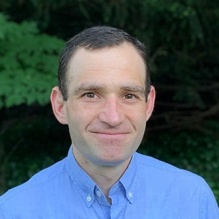
Jonathan Petkun
Jonathan Petkun, Associate Professor of Law at Duke University School of Law, is an economist and a legal scholar. His academic interests include public economics, civil procedure, judicial and court administration, and access to justice. Broadly, he is interested in the legal and economic organization of large public institutions, especially federal and state courts and the U.S. military.
Petkun joined the Duke Law faculty in 2022 after serving as a Senior Liman Research Affiliate at Yale Law School. He previously clerked for judges on the U.S. Court of Appeals for the D.C. Circuit and the U.S. District Court for the District of Connecticut. Petkun received his Ph.D. in economics in 2020 from the Massachusetts Institute of Technology and his J.D. in 2019 from Yale Law School. During law school, he represented veterans in civil litigation and legislative advocacy as a member of Yale’s Veterans Legal Services Clinic. Petkun is a veteran of the U.S. Marine Corps and a veteran of the conflicts in Iraq and Afghanistan. Faculty profile.
Bijal Shah, Boston College Law School

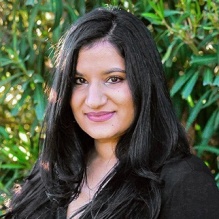
Bijal Shah
Bijal Shah is Professor of Law and Provost Faculty Fellow at the Boston College Law School, and the recipient of the Boston College Law School Faculty Prize for Excellence in Scholarship in 2023. According to the 2024 Sisk study on scholarly impact, Shah is one of the top-ten most cited faculty at BC Law. Before joining BC Law, she was an associate professor at the Arizona State University, Sandra Day O'Connor College of Law and an acting assistant professor at the NYU School of Law.
Shah's research focuses on administrative law and structural constitutionalism, and is grounded in the specifics of agency dynamics (particularly in matters of immigration and interagency coordination). She is also developing critical theories in these areas of law. Her new project, Administrative Subordination, forthcoming in The University of Chicago Law Review, argues that the administrative pursuit of important public interest values harms noncitizens and contributes to environmental injustice. Faculty profile.
Conference Photo Gallery

The Baldy Conference: Mass Adjudication in a Changing Administrative State; Presenters (partial group) Pictured from left, Seated: John Harland Giammatteo, Matthew Dimick, Meghan E. Brooks, and Joshua Feinzig; Standing: Jonathan Petkun, Jill E. Family, and Joshua R. Coene.
Conference Poster

Information for visitors
UB provides resources and general information to welcome visitors to our region: