Karle Norman: Leather Prayers

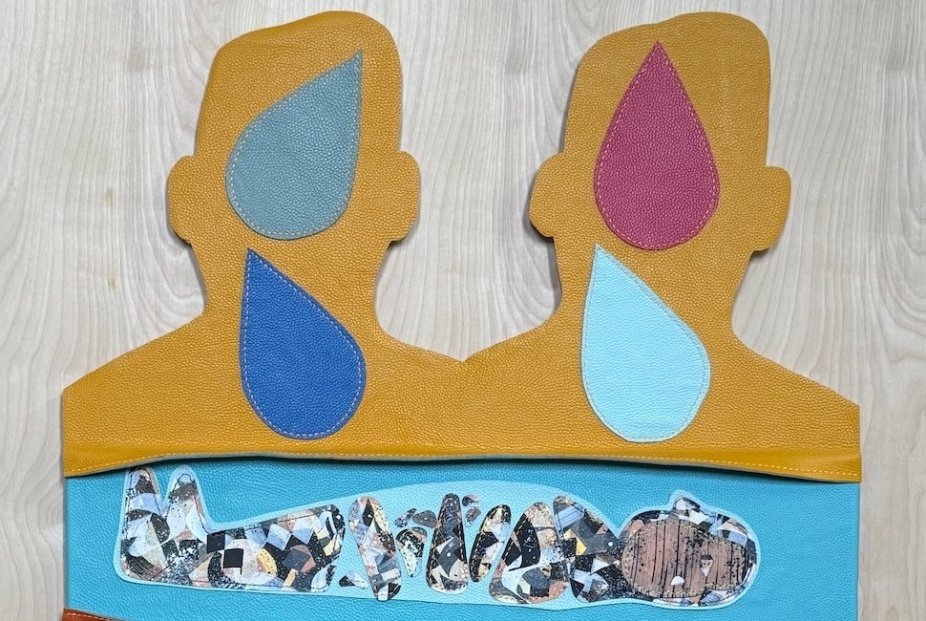
Karle Norman, Brotherly (detail), 2026. Courtesy of the artist.
Sculptural hand-stitched leather wall hangings and installation work exploring belief, community, and control through the lens of Norman's own path away from a high-control religious group.
Belief and community are both formed incrementally. Sometimes this can be positive — getting to know others, bonding over similar interests, learning how you fit into a space. Repetitious acts help forge friendships and provide purpose. But this repetition can also build a set of rules, reinforce control, and create space for manipulation. Stitching is often used as a metaphor for building a larger work from smaller parts. Stitching, metaphorically and literally, is central to Karle Norman's work in Leather Prayers, an exhibition composed of sculptural hand-stitched leather wall hangings, site-specific installation, and years of sketchbook ideas. Norman's specific life path in “disfellowshipping” from a high-control religious group is told through the leather figures in the gallery, who are at once bodily— proportional roughly to Norman's own body—and fantastical. Their three-dimensionality is created by molding over different shapes and features, indicating that we are all molded by forces that we can't choose.
Choice is a key component in Leather Prayers. The work is physically charged, both drawing in visitors through their vibrant, intentional color relations, while also creating a sense of unease simultaneously. Crucially, visitors have a choice about how they would like to engage with the work, bringing in their own experiences with community and control, and their own bodily agency to move through, within, and under the work. The process of hand-stitching leather is painstaking and labor intensive, and that time component may call to mind the weight of grief, the joy of movement, or the realities of pain.
Karle Norman: Leather Prayers is curated by Anna Wager, Ph.D, Curator of Exhibitions at UB Art Galleries.