
IAD Days
The AI and Data Science Symposium @ UB
April 17 - 19, 2024
April 17 - 19, 2024

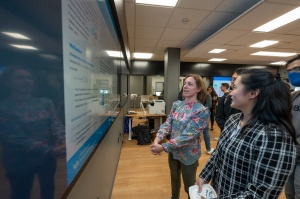
Celebrating artificial intelligence, big data, and high-performance computing at the University at Buffalo.
IAD Days: The AI and Data Science Symposium @ UB (formerly CDSE Days) is a signature annual event hosted by the Institute for Artificial Intelligence and Data Science. The event brings some of the nation's most prominent data science and AI scholars to Buffalo for a week of workshops, lectures, and networking. The initiative increases educational opportunities and employability for students, attracts new graduate students to UB, and boosts research opportunities for aligned faculty members.
Keynote Speakers

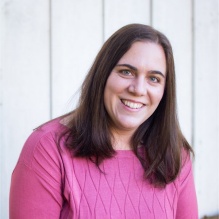
Tazzie Howard
Customer Engineer, Google Public Sector
Tazzie Howard is a Customer Engineer at Google Public Sector, with a speciality in geospatial data and analytics. She supports state, local, and higher-ed customers in harnessing the power of Google Cloud Platform (GCP) for geospatial solutions. Prior to joining Google, she spent 15 years supporting the National Geospatial-Intelligence Agency (NGA) as a scientist, analyst, and team leader. She worked closely on research initiatives, designed and executed training programs, and led operational teams, applying geospatial analysis and data science techniques to critical National Security and Intelligence missions. Holding an MS in Geosciences from Pennsylvania State University, her academic foundation complements her work experience in Earth systems, remote sensing, and data analysis methodologies.

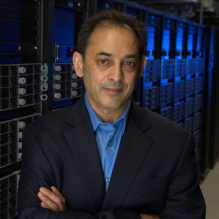
Manish Parashar
Director, Scientific Computing and Imaging Institute, Chair, Computational Science and Engineering, Presidential Professor, Kalhert School of Computing, University of Utah
Dr. Manish Parashar is Director of the Scientific Computing and Imaging (SCI) Institute, Chair in Computational Science and Engineering, and Presidential Professor, Kalhert School of Computing at the University of Utah. He recently completed an IPA appointment at the National Science Foundation as Office Director of the NSF Office of Advanced Cyberinfrastructure where he oversaw investments in national cyberinfrastructure. He also served as co-chair of the National Science and Technology Council’s Subcommittee on the Future Advanced Computing Ecosystem and the National Artificial Intelligence Research Resource Task Force.

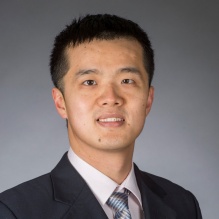
Yiyu Shi
Professor, Department of Computer Science and Engineering, University of Notre Dame
Dr. Yiyu Shi is currently a professor in the Department of Computer Science and Engineering at the University of Notre Dame, the site director of National Science Foundation I/UCRC Alternative and Sustainable Intelligent Computing, and the director of the Sustainable Computing Lab (SCL). He is also a visiting scientist at Boston Children’s Hospital, the primary pediatric program of Harvard Medical School. He received his B.S. in Electronic Engineering from Tsinghua University, Beijing, China in 2005, the M.S and Ph.D. degree in Electrical Engineering from the University of California, Los Angeles in 2007 and 2009 respectively. His current research interests focus on hardware intelligence and biomedical applications. In recognition of his research, more than a dozen of his papers have been nominated for or awarded as the best paper in top journals and conferences, including the 2023 IEEE/ACM William J. McCalla ICCAD Best Paper Award, 2021 IEEE Transactions on Computer-Aided Design Donald O Pederson Best Paper Award. He is also the recipient of Facebook Research Award, IBM Invention Achievement Award, NSF CAREER Award, IEEE Region 5 Outstanding Individual Achievement Award, IEEE Computer Society Mid-Career Research Achievement Award, among others. He has served on the technical program committee of many international conferences. He is the deputy editor-in-chief of IEEE VLSI CAS Newsletter, and an associate editor of various IEEE and ACM journals. He is an IEEE CEDA distinguished lecturer and an ACM distinguished speaker.
Speakers & Panelists

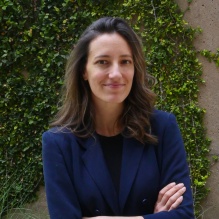


Associate Professor, Department of Biostatistics, and Associate Director for Education, Institute for Artificial Intelligence and Data Science, University at Buffalo
Dr. Hageman Blair is an Associate Professor in the Department of Biostatistics. She is a co-Director of the Institute for Artificial Intelligence and Data Science. She oversees educational activities and initiatives and serves as the Director of the MPS program in Data Science and Applications. Her research is in Computational Biology. Her research group has made research contributions, and software tools, in network inference and analysis, module detection and data clustering.
Holly Buck
Assistant Professor, Department of Environment and Sustainability, University at Buffalo
Holly Jean Buck is an assistant professor of environment and sustainability at the University at Buffalo. She is a social scientist whose research focuses on public engagement with emerging technologies. At UB, she teaches courses in environmental justice, energy and society, and emerging technologies and sustainability. She holds a PhD in Development Sociology from Cornell University.


Clinical Associate Professor, Department of Management Science and Systems, University at Buffalo
Dianna Cichocki serves as a Clinical Associate Professor for the School of Management at the University at Buffalo. Her recent course offerings have included, "Statistical Decisions in Management" in the School of Management's Undergraduate Program, "Statistical Foundations in Analytics" in the online MBA and MSBA programs, and "Data Modeling" in the MBA program, and "Communicating with Data" in the School of Engineering's Undergraduate Program. Beyond her teaching commitments, Dianna actively engages in workshops and presentations at local, state, and national levels. These sessions focus on integrating technology into statistical practices and advocating for effective data visualization methods. Moreover, she has led multiple industry training sessions aimed at bolstering managerial expertise across different organizational tiers.

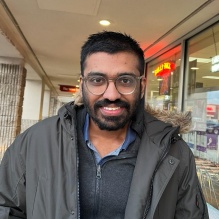
Sai Vikneshwar Mani Jayaraman
Software Engineer, AWS Redshift
Sai is a Software Engineer at AWS Redshift. He is interested in anything and everything about databases. Not so long ago, he finished his PhD from UB under the wise guidance of Atri Rudra. In the past, he has worked on Codes for Distributed Storage (Intern, Microsoft Research), Ads Quality Infra (Intern, Google) and Product Support (Engineer, Microsoft). His work has been published in Principles of Database Systems (PODS) and IEEE Transactions on Information Theory. In a previous avatar, he trained teams for ACM-ICPC (World Finals 2013, 2014).

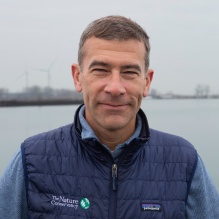
Ryan A. McPherson
Chief Sustainability Officer, Office of Sustainability, University at Buffalo
As UB’s inaugural chief sustainability officer since 2011, Ryan McPherson works to create a culture of innovative and collaborative sustainability at UB and implements strategies to help position the university as a sustainability leader in the community, state and nation, as well as across higher education. Among his chief priorities has been setting 10 key strategies to implement within the next decade as part of the university’s climate action plan. He also has worked to integrate the Sustainable Development Goals across campus and New York as part of the broader work to create the next generation of change agents who are building the future we seek.
Under McPherson’s oversight, UB has already reduced its carbon footprint by 35% and been recognized as a national model for climate action by Vice President Harris, received the Green Power Leadership Award from the US Environmental Protection Agency, won the New York State Department of Environmental Excellence Award, and rated #1 in the world by the Times Higher Education Impact Assessment in taking urgent action to combat climate change.
Prior to this role, Ryan was the Associate Vice President for Government & Community Relations where he successfully led a multi-year New York State effort that resulted in the enactment of the most comprehensive higher education in the previous two decades. He is also very active in the community and sits on numerous boards including the Nature Conservancy (New York), the Western New York Sustainable Business Roundtable, and Gobike Buffalo. Mr. McPherson is also an adjunct faculty member at the University at Buffalo School of Management. Ryan received his B.A. in political science from the University of New Hampshire and graduated magna cum laude from the University at Buffalo Law School with a concentration in environmental law.
Ryan enjoys trail running through nature (and specifically mountains) and spending time with his wife and two near adult children as they work to instill a love of nature and advance all things biophilia.


Associate Professor, Department of Biostatistics, University at Buffalo
Jeffrey C. Miecznikowski (“Mesh-KNEE-cow-ski”) received his Ph.D. in Statistics from Carnegie Mellon University in 2006. In 2006, he started as an Assistant Professor in the Department of Biostatistics at the State University of New York at Buffalo (UB) and received tenure in 2012 with appointment to Associate Professor. He has previously served as the Associate Dean of Faculty Affairs and Diversity and as the interim Chair of Biostatistics at UB’s School of Public Health and Health Professions. He has 75 published peer-reviewed articles in statistical journals and applied interdisciplinary journals and is currently an associate editor for the Journal of Applied Statistics and Frontiers in Genetics.

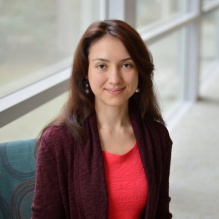
Alexandra Oprea
Assistant Professor, Department of Philosophy, University at Buffalo
Alexandra Oprea is an assistant professor of philosophy at the University at Buffalo. She works in the interdisciplinary field of Philosophy, Politics, and Economics (PPE). Her research primarily deals with democracy, education, and the way in which the two inform and constrain each other.

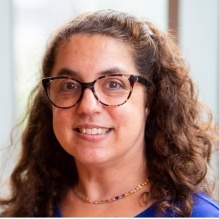
Carolyn Penstein Rose
Professor, School of Computer Science, Carnegie Mellon University
Dr. Carolyn Rosé is a Professor of Language Technologies and Human-Computer Interaction in the School of Computer Science at Carnegie Mellon, and Program Director for the Masters of Computational Data Science Program. Her research program focuses on computational modeling of discourse to enable scientific understanding the social and pragmatic nature of conversational interaction of all forms, and using this understanding to build intelligent computational systems for improving collaborative interactions. She is best known for her work on dynamic support of collaborative learning using intelligent conversational agents in online, face-to-face, and hybrid settings, triggered through real time analysis of conversational interactions. Her research group’s highly interdisciplinary work, published in over 300 peer reviewed publications, is represented in the top venues of 5 fields: namely, Language Technologies, Learning Sciences, Cognitive Science, Educational Technology, and Human-Computer Interaction, with awards in 4 of these fields. She is a Past President and Inaugural Fellow of the International Society of the Learning Sciences, Senior member of IEEE, Founding Chair of the International Alliance to Advance Learning in the Digital Era, and Executive Editor (formerly Co-Editor-in-Chief) of the International Journal of Computer-Supported Collaborative Learning. She also serves as a 2020-2021 AAAS Leshner Leadership Institute Fellow for Public Engagement with Science, with a focus on public engagement with Artificial Intelligence.

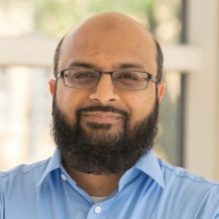
Mohammad Zia
Systems Architect, Roswell Park Comprehensive Cancer Center
Mohammad earned his PhD from Rutgers, the State University of New Jersey in Biomedical Engineering. He now works as a systems architect at Roswell Park Comprehensive Cancer Center, specializing in accelerating data-driven research through his expertise in full-stack development. Mohammad also serves as an adjunct lecturer at the University at Buffalo, where he passionately imparts his knowledge of Python and databases to aspiring data scientists.

Ziliang Zong
Professor, Department of Computer Science, Texas State University
Dr. Ziliang Zong is a Professor of the Computer Science Department at Texas State University. He is a passionate researcher, teacher, and practitioner of sustainable computing. He published over 100 papers in green AI, green cloud, green software engineering, energy efficient HPC, and green computing education. He is a general member and champion speaker of the Green Software Foundation, an Associate Editor of the Sustainable Computing Journal, and Director of the Energy Efficient Computing and Systems Laboratory at Texas State University.
Abstracts will be linked to each presentation topic below. Click on the speaker's name to learn more about each presenter.
Jump to: Wednesday Thursday Friday
Wednesday, April 17
| Time | Session Type | Topic | Speaker | Location |
|---|---|---|---|---|
| 3:00pm - 4:00pm | IAD Student Research Poster Showcase | Bansal Atrium, Davis Hall | ||
| 4:00pm - 5:00pm | Keynote Speaker | Democratization of Responsible Artificial Intelligence | Manish Parashar | Davis 101 |
| 5:00pm - 7:00pm | Reception and AI Innovation Challenge Demonstrations | Bansal Atrium, Davis Hall |
Thursday, April 18
| Time | Session Type | Topic | Speaker | Location |
|---|---|---|---|---|
| 9:00am - 11:00am | Skills Workshop | Advancing Beyond Scikit-learn and Jupyter Notebook (Session 1/2) | Mohammad Zia | Furnas 805 |
| 9:00am - 11:00am | Skills Workshop | Introduction to Bayesian Networks with Applications in R | Rachael Hageman Blair | Furnas 206 |
| 11:00am - 11:15 am | Coffee and Refreshments | |||
| 11:15am - 1:15pm | Skills Workshop | Beyond Data Dumps: Using Charts to Tell Stories | Dianna Cichocki | Furnas 805 |
| 1:15pm - 2:15pm | Lunch | |||
| 2:15pm - 3:00pm | Research Talk | Challenges and Opportunities of Sustainable AI at All Scopes | Ziliang Zong | SU 330 Mini Theater (Pride and Tradition) |
| 3:00pm - 5:00pm | Keynote Speaker | Sustainability Innovation with Google Cloud | Tazzie Howard | SU 330 Mini Theater (Pride and Tradition) |
| 5:00pm - 6:20pm | Coffee and Refreshments | |||
| 6:20pm | Movie Screening - Title TBA | Knox 110 |
Friday, April 19
| Time | Session Type | Topic | Speaker | Location |
|---|---|---|---|---|
| 9:00am - 11:00pm | Skills Workshop | Advancing Beyond Scikit-learn and Jupyter Notebook (Session 2/2) | Mohammad Zia | Furnas 805 |
| 9:00am - 11:00pm | Skills Workshop | Coding From Theory to Practice | Sai Vikneshwar Mani Jayaraman | Furnas 206 |
| 11:00am - 11:15am | Networking Reception | |||
| 11:15pm - 1:15pm | Skills Workshop | Exploring the Flexibility of Linear Regression Models | Jeffrey Miecznikowski | Furnas 805 |
| 1:15pm - 2:15pm | Lunch | |||
| 2:15pm - 3:00pm | Research Talk | Social Analytics and Dynamic Support for Collaborative Learning in the Age of Large Language Models | Carolyn Penstein Rose | SU 330 Mini Theater (Pride and Tradition) |
| 3:00pm - 4:00pm | Panel Discussion | AI Literacy x Sustainability Literacy | SU 330 Mini Theater (Pride and Tradition) | |
| 4:00pm - 5:00pm | Keynote Speaker | On-Device AI to Better Mobile and Implantable Devices in Healthcare | Yiyu Shi | SU 330 Mini Theater (Pride and Tradition) |
| 5:00pm - 5:30pm | Coffee and Refreshments | |||
| 5:30pm | AI Treasure/Scavenger Hunt |
Abstracts & Session Details
Manish Parashar
Artificial intelligence (AI) is driving discovery, innovation, and economic growth, and has the potential to transform science and society. However, realizing this positive and transformative potential of AI requires that AI research and development (R&D) progresses responsibly, i.e., in a way that protects privacy, civil rights, and civil liberties, and promotes principles of fairness, accountability, transparency, and equity. In this talk, I will explore the importance of democratizing AI R&D for achieving the goal of responsible AI and the resulting imperative of democratizing access to advanced cyberinfrastructure. I will then discuss recent efforts in government and academia aimed at achieving these goals. Finally, it introduces the Responsible AI Initiative at the University of Utah.
Mohammad Zia
Break free from the limitations of standard machine learning practices by exploring advanced tools in this workshop led by Mohammad. Participants will delve into supplementary tools and platforms for engineering features, tracking model experiments, deploying models, and detecting data shifts.
Probabilistic Graphical Models (PGMs) are used broadly across many fields to model the connectivity relationships between entities in a network. This workshop introduces Bayesian Networks, a special class of directed and acyclic PGMs. BNs are “expert systems” widely used for inference and prediction. Methods for parameter and structural learning will be discussed and implemented using the R programming language. Probabilistic reasoning will be described for making predictions within these networks. In the second part of the workshop, attendees will have a “hands-on” experience with network construction, inference, and visualization using the R programming language. Programming experience is not required. This workshop serves as a preview for a 1-credit course in the IAD’s ‘summer stackable’ graduate elective series.
Dianna Cichocki
The gap between data analysis and effective communication of results keeps growing. This two-hour session provides the framework for bridging the gap by turning basic charts into compelling stories. Being able to analyze data and tell stories with the results is key to transforming data into information that can be used to drive better decision-making.
We will create visualizations that accurately, effectively, and efficiently communicate a story rather than a “data dump.”
Ziliang Zong
In recent years, the proliferation of AI technologies has led to significant advancements across various sectors, but concurrently, it has raised concerns about its environmental impact. This talk explores the challenges and opportunities associated with fostering sustainable AI practices across all scopes of emissions. Beginning with an overview of Scope 1 emissions, we delve into the direct environmental footprint of AI development and deployment. Moving to Scope 2 emissions, we examine the indirect environmental impacts arising from the electricity consumption of AI-related operations. Finally, we discuss the complexities of Scope 3 emissions, encompassing the entire lifecycle of AI technologies. By understanding and addressing sustainability challenges at all scopes, we can identify opportunities for implementing strategies to minimize environmental harm while maximizing the societal benefits of AI innovation. This research talk highlights the importance of holistic approaches to achieve sustainable AI development and underscores the urgent need for collaboration among stakeholders to mitigate environmental impacts across the AI ecosystem.
Tazzie Howard
Google offers a compelling sustainability solution. As a carbon-neutral company since 2007 and committed to running on 24/7 carbon-free energy by 2030, Google understands the value of sustainability. Google Cloud provides tools that enable customers to accurately measure their carbon footprint, optimize cloud workloads for reduced energy consumption, and unlock sustainable innovation through data and AI insights. Learn how Google Cloud can support your organization's sustainability goals and drive positive change. Engage with Google experts, sharing thoughts, experiences, and questions on sustainability, while learning about relevant Google Cloud tools and services.
Sai Vikneshwar Mani Jayaraman
Typically, we are taught a lot of programming in school. However, when we go to industry, does the kind of programming we know remain the same? What constitutes good code? Tune in to the talk for answers.
Jeffrey Miecznikowski
Linear regression models are a mainstay in the statistician’s toolbox for understanding the relationships between variables. Their popularity is due to their simplicity, flexibility, and ease in computation and interpretation. In this workshop, we explore linear regression models starting from the simplest setting with a focus on the general paradigm of model assumptions and associated parameter estimation via maximum likelihood. We then explore different linear regression models and assumptions, ultimately, revealing the flexibility of the linear regression modeling approach.
Carolyn Penstein Rose
This talk is built on a decade and a half of research into supporting social interaction in online communities, exploring what design principles we have empirically validated, what technological advances have produced novel interventions aligned with those principles, and what questions we still need to answer. In particular, this talk highlights social analytics as an area of Artificial Intelligence that plays a role in supporting education that has featured in movements towards large scale learning opportunities, such as promised in Massive Open Online Courses (MOOCs) as well as in more traditional Computer-Supported Collaborative Learning environments. Recent advances in Generative AI (GenAI) and Large Language Models (LLMs) have enhanced AI capabilities for the evaluation of multimodal student input and real-time feedback, which has provoked intensive exploration of the space of application possibilities. This technology opens up more options for adapting the specific content of reflection triggers from specific details of the students’ work and discussion in context. This talk will discuss recent advances in support of collaboration using GenAI and LLMs, with a particular focus on two recent classroom studies investigating LLM-based support for reflection and learning during collaborative software development.
Holly Buck
Ryan McPherson
Alexandra Oprea
The 21st century is punctuated by two themes that shape the planet’s discourse - AI and Sustainability. This panel explores the closely tied yet, parallel initiatives in these fields. Experts in Sustainability and Artificial intelligence discuss, debate, and dissect the role of AI in Sustainability Initiatives, the sustainable development of AI, and the role that each can play in shaping the other’s future.
To equip the planet’s future with a population well-informed on the criticality of AI and sustainability, the panel emphasizes on and shapes the best practices in AI Literacy, Sustainability Literacy, and the significant overlap between the two.
Yiyu Shi
The increasing prevalence of chronic diseases, an aging population, and a shortage of health care professionals have prompted the widespread adoption of mobile and implantable devices to effectively manage various health conditions. In recent years, there is growing interest to leverage the rapid advances in artificial intelligence (AI) to enhance the performance of these devices, resulting in better patient outcomes, reduced health care costs, and improved patient autonomy. Due to privacy, security, and safety considerations, inferences must often be done on the edge, with limited hardware resources. This is compounded by inter-patient and intra-patient variability, heavy dependence on medical domain knowledge, and lack of diversified training data. In this talk, we will demonstrate how techniques such as hardware and neural architecture co-design can transform the landscape of mobile and implantable devices. Additionally, we will showcase the world's first smart Implantable Cardioverter Defibrillator (ICD) design enabled by our research.
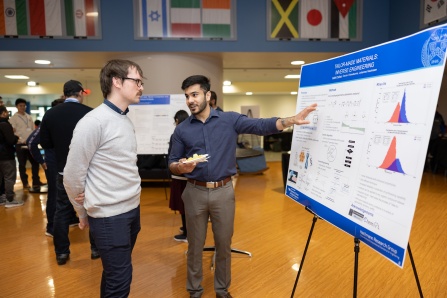
As part of IAD Days, CDSE students will be expected to participate in a poster session at the reception on Wednesday, April 17 from 3:00-4:00 pm. Poster abstracts should be submitted by Monday, April 8 at 5:00 pm.
Posters must be submitted by Monday, April 8 to ensure they are printed in time for IAD Days. IAD will cover the cost of poster printing. Students can submit both their poster files and abstracts via the link below.

If you have any questions about IAD Days, email us at ub-iad@buffalo.edu.