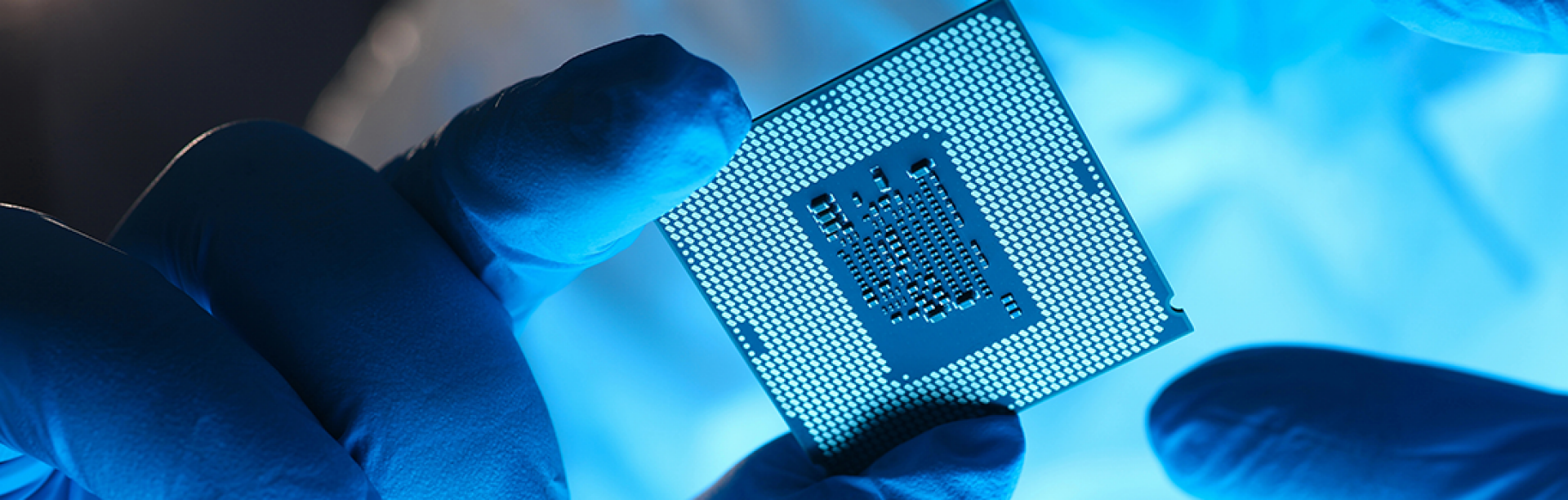
3rd Annual Workshop on Emerging Trends in Semiconductor Technology
Registration ends Wednesday, August 5
Admission is free, but registration is required.
Emerging Trends in Semiconductor Technology is hosted by the University at Buffalo’s Center for Advanced Semiconductor Technologies. This workshop brings together academic, industry and community leaders to focus on developing: Energy-efficient microelectronics to address the ever-increasing computing and communication requirements; Novel widegap semiconductors for electric vehicles and power grids; and Advanced photovoltaic (solar) technologies to meet the growing energy demands while achieving a net-zero carbon footprint.
The UB Center for Advanced Semiconductor Technologies fosters multi-disciplinary collaborations between researchers to address pressing needs of modern computing, green automotives and clean energy.
Financial support acknowledged from:








Day 1 — Tuesday, August 11, 2026
| Session | Time | Speaker |
|---|---|---|
| Registration and Continental Breakfast | 8:30 a.m. - 9:00 a.m. | |
| Session 1: Introduction and Keynote | 9:00 a.m. - 9:35 a.m. | Venu Govindaraju, Vice President for Research and Economic Develop, SUNY Distinguished Professor Kemper Lewis, Dean, School of Engineering and Applied Sciences Uttam Signisetti, Director Center for Advanced Semiconductor Technologies, Clifford C. Furnas Professor, Department of Electrical Engineering |
| Keynote | 9:35 a.m. - 10:20 a.m. | Professor Albert Z. Wang, University of California, Riverside |
| Coffee Break and Networking | 10:20 a.m. - 10:30 a.m. | |
| Session 2: Widebandgap Materials, Devices, Circuits | 10:30 a.m. - 12:30 p.m. | Fang Luo, Stony Brook University Industry Invited Talk, Krishendu Ghosh, Intel Coporation Jeff Salzmann, University at Buffalo, UB Cleanroom Tour |
| Session 2 | 10:30 a.m. - 11:00 a.m. | Fang Luo, Stony Brook University |
| Session 2 | 11:00 a.m. - 11:20 a.m. | Jung-Hun Seo, University at Buffalo |
| Session 2 | 11:20 a.m. - 11:40 a.m. | Baishaki Mazumder, University at Buffalo — From Atoms to Insights: AI-Enabled Microscopy for Next-Generation Semiconductor Technologies |
| Session 2 | 11:40 a.m. - 12:10 p.m. | Krishnendu Ghosh, Intel Corporation — Multi-Scale Carrier Transport Modeling in Angstrom-era Transistors |
| UB Facility tour | . | |
| Session 2 | 12:10 p.m. - 12:20 p.m. | Jeff Salzmann, University at Buffalo — UB Fabrication Facilities and Working at UB Cleanroom |
| Session 2 | 12:20 p.m. - 12:30 p.m. | UB Cleanroom Tour |
| Lunch and Networking | 12:30 p.m. - 1:50 p.m. | |
| Session 3: Integrated PV: Materials, devices and circuits | 2:00 p.m. - 3:20 p.m. | Zhaoning Song, University of Toledo Seth Hubbard, Rochester Institute of Technology Ian Sellers, University at Buffalo |
| Session 3 | 2:00 p.m. - 2:30 p.m. | Zhoaning Song, University of Toledo — Advances in Thin-Film Photovoltaics: From Chalcogenides and Perovskites to Tandems |
| Session 3 | 2:30 p.m. - 3:00 p.m. | Seth Hubbard, Rochester Institute of Technology |
| Session 3 | 3:00 p.m. - 3:20 p.m. | Ian Sellers, University at Buffalo |
| Coffee Break and Networking | 3:20 p.m. - 3:40 p.m. | |
| Student Posters | 3:40 p.m. - 5:00 p.m. |
Day 2 — Wednesday, August 12, 2026
| Session | Time | Speaker |
|---|---|---|
| Continental Breakfast | 8:30 a.m. - 9:00 a.m. | |
| Session 4: Microelectronics materials, devices and circuits | 9:00 a.m. - 10:30 a.m. | Qing Cao, University of Illinois Urbana-Champaign Jayasimha Atulasimha, Virginia Commonwealth University Vasili Perebeinos, University at Buffalo |
| Session 4 | 9:00 a.m. - 9:30 a.m. | Qing Cao, University of Illinois Urbana-Champaign — Monolithic 3D Integration of Complementary Single-Crystalline Silicon Transistors |
| Session 4 | 9:30 a.m. - 10:00 a.m. | Jayasimha Atulasimha, Virginia Commonwealth University — Quantum Control of Spin Quibits with Classical Nanomagnets |
| Session 4 | 10:00 a.m. - 10:30 a.m. | Vasili Perebinos, University at Buffalo — Simulation of Electrical, Opto-Electronic, and Thermal Properties in Low-Dimensional Semiconductor Devices |
| Coffee Break and Networking | 10:30 a.m. - 10:40 a.m. | |
| Session 5: Integrated PV: Materials, devices and circuits | 10:40 a.m. - 11: 50 a.m. | Bibhudutta Rout, University of North Texas Peihong Zhang, University at Buffalo David Tsai, University at Buffalo |
| Session 5 | 10:40 a.m. - 11:10 a.m. | Bibhudutta Rout, University of North Texas — Advancing Health, Sustainability, Semiconductor Innovation and Energy through Ion Beam Technologies |
| Session 5 | 11:10 a.m. - 11:30 a.m. | Peihong Zhang, University at Buffalo — Large-Scale Calculations of Quasiparticle and Excitonic Properties of 3D and 2D Solids |
| Session 5 | 11:30 a.m. - 11:50 a.m. | David Tsai, University at Buffalo |
| Lunch and Networking | 11:50 a.m. - 1:15 p.m. | |
| Session 6: Microelectronics materials, devices and circuits | 1:15 p.m. - 2:25 p.m. | Christopher Broyles, Los Alamos National Laboratory Huamin Li, University at Buffalo Changjiang Liu, University at Buffalo |
| Session 6 | 1:15 p.m. - 1:45 p.m. | Christopher Broyles, Los Alamos National Laboratory — Resistive Switching Mechanisms in Metal/Nb-Doped SrTiO3 Schottky Junctions |
| Session 6 | 1:45 p.m. - 2:05 p.m. | Huamin Li, University at Buffalo |
| Session 6 | 2:05 p.m. - 2:25 p.m. | Changjiang Liu, University at Buffalo — Emergent Superconducting Phenomena at Spin — Orbit Oxide Interfaces |
| Coffee Break and Networking | 2:25 p.m. - 2:35 p.m. | |
| Session 7: Widebandgap materials, devices, circuits | 2:40 p.m. - 3:50 p.m. | Rachel S. Goldman, University of Michigan Hari Nair, Cornell University Nicholas Mastronarde, Professor and Chair, Department of Electrical Engineering, University at Buffalo |
| Session 7 | 2:40 p.m. - 3:10 p.m. | Rachel S. Goldman, University of Michigan — Probing Scandium Incorpotation Mechanisms in ScAIN Alloys and Heterostructures |
| Session 7 | 3:10 p.m. - 3:40 p.m.` | Hari Nair, Cornell University |
| Session 7 | 3:40 p.m. - 3:50 p.m. | Nicholas Mastronarde, University at Buffalo, NNME announcement |
| Closing Remarks and Student Poster Awards | 4:20 p.m. - 4:30 p.m. |
Keynote Speaker

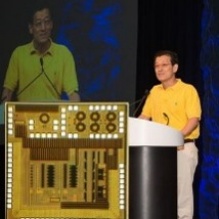
Albert Z Wang
Professor, Electrical and Computer Engineering Department; Director, Ubiquitous Communication by Light; Director, University of California System-wide Center for Ubiquitous Communication by Light; University of California, Riverside
Albert Wang is a Professor of Electrical and Computer Engineering at University of California, Riverside. His research covers semiconductor devices, AMX/RF ICs, design-for-reliability for ICs, 3D heterogeneous integration, emerging devices and circuits, and LED visible light communications. He published 2 books and 340+ peer-reviewed papers, and holds 16 U.S. patents. He was President of IEEE Electron Devices Society. He is the Editor-in-Chief for IEEE Electron Devices and a member of the IEEE Press Board. His other editorial board services include IEEE TCAS I, IEEE EDL, IEEE TCAS II, IEEE TED, IEEE JSSC, and IEEE TDMR. He has been IEEE Distinguished Lecturer for IEEE EDS, CASS and SSCS. He was Chair of IEEE EDS Fellow Evaluation Committee. His other professional services include the International Technology Roadmap for Semiconductor (ITRS) Committee, IEEE Heterogeneous Integration Roadmap (HIR) Committee, IEEE 5G Initiatives Committee, IEEE Smart Lighting Project Roadmap Committee and IEEE Fellow Committee. He was General Chair of IEEE Electron Devices Technology and Manufacturing (EDTM) Conference and IEEE Radio-Frequency Integrated Circuits (RFIC) Symposium. He was a Program Director of National Science Foundation, USA. He received IEEE J. J. Ebers Award, IEEE Lewis Terman Award and NSF CAREER Award. Wang is a Fellow of National Academy of Inventors, an IEEE Fellow and an AAAS Fellow.
Electrostatic discharge (ESD) remains a major reliability problem to integrated circuits (ICs), particularly at advanced technology nodes and for emerging hetero-integrated systems-on-integrated-chiplets (SoICs). The talk will cover ESD fundamentals, ESD Design Overhead Effects, ESD Design Window, ESD design prediction, low-parasitic ESD protection designs, holistic ESD-IC co-design methodologies, various CAD-based ESD protection design techniques, challenges of ESD protection design for RF ICs and high-throughput ICs beyond 10Gbps, full-chip ESD protection circuit physical design verification CAD algorithms, holistic ESD protection design for 3D SoIC chips featuring advanced m-packaging, emerging CDM ESD protection design challenges, and non-traditional above-IC ESD protection concepts. Perspectives for future ESD protection designs will be outlined. The discussion will be supported by real-world ESD protection design examples.
Opening Remarks

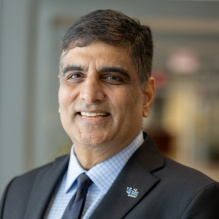
Venu Govindaraju
Vice President, Office of Research and Economic Development, University at Buffalo
Venu Govindaraju, VP for Research and Economic Development and SUNY Distinguished Professor, is also the founding director of the Center for Unified Biometrics and Sensors of Computer Science and Engineering at the State University of New York (SUNY) at Buffalo. He received his Bachelor’s degree with honors from the Indian Institute of Technology, Kharagpur in 1986, and his Ph.D. from SUNY Buffalo in 1992.
A recognized authority in the field of Pattern Recognition, Govindaraju has received peer honors such as the IAPR/ICDAR Outstanding Achievements (2015), Distinguished Alumnus Award from IIT Kharagpur (2014), the IEEE Technical Achievement Award (2010), MIT Global Indus Technovator Award (2004), and fellowships from the major professional societies such as AAAS, ACM, IAPR, IEEE, and the SPIE. He is a member of the National Academy of Inventors (2015).
Govindaraju is credited with major conceptual and practical advances in this area with six books and over 425 refereed publications. He has served on the editorial boards of several premier journals including the most prestigious IEEE Transactions on Pattern Analysis and Machine Intelligence and has been the Editor-in-Chief of IEEE Biometrics Council Compendium. Recently he served as the president of the IEEE Biometrics Council positioning it for consideration of a full fledged IEEE Technical Society.
Govindaraju has graduated 37 doctoral students as their major advisor and was recently awarded the University at Buffalo’s “Excellence in Graduate Student Mentoring Award (2017)”. He has given over a hundred invited talks, keynotes, plenaries and seminars, at prestigious venues including influential think tanks such as the Science and Technology Investment committee of the National Academy of Sciences.
Govindaraju has had active and continuous sponsorship from the National Science Foundation for the past 15 years (2002-17) and a career total of nearly $70M of sponsored funding as a Principal or Co-Principal Investigator from several federal and state agencies and industry. His annual research expenditures are consistently over $1.5M, making him a top performer at UB.
Govindaraju is the Chief Research Officer at UB with an annual operating budget of $35M and over 100 staff members reporting to the Office of the Vice President of Research and Economic Development. He sits on the President’s cabinet as well as the Provost’s cabinet and is responsible for managing UB’s research enterprise, including supporting scholarly excellence, creating collaborations, ensuring compliance in a regulatory environment, and oversees programs that contribute to regional job growth and a diversified economy in the Western New York region.

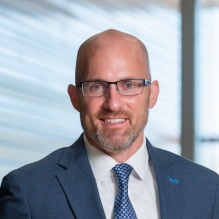
Kemper Lewis
Dean, School of Engineering and Applied Sciences, University at Buffalo
Kemper E. Lewis, PhD, MBA, and dean of UB’s School of Engineering and Applied Sciences, is a global leader in engineering design, system optimization and advanced manufacturing. Prior to being named dean, Lewis served as chair of UB's Department of Mechanical and Aerospace Engineering, where he was also the Moog Professor of Innovation.
Lewis is also the director of UB’s Community of Excellence in Sustainable Manufacturing and Advanced Robotic Technologies (SMART), an initiative that harnesses the strengths of faculty across the university to develop advanced manufacturing and design processes including autonomy, intelligence and materials technologies.
He is a Fellow of the American Society of Mechanical Engineers (ASME), and has served on the National Academies Panel on Benchmarking the Research Competitiveness of the United States in Mechanical Engineering. He has published over 200 refereed journal articles and conference proceedings and has been principal or co-principal investigator on grants totaling more than $33 million.
Active in the profession, Lewis chaired ASME’s Mechanical Engineering Department Head Executive Committee. He has received numerous awards in recognition of his teaching and research excellence from several professional societies, including ASME, the Society of Automotive Engineers, the American Society for Engineering Education, and the American Institute of Aeronautics and Astronautics.
Lewis joined UB in 1996. He earned a BS in mechanical engineering and a BA in mathematics from Duke University, his MS and PhD in mechanical engineering from Georgia Tech, and an MBA from UB.

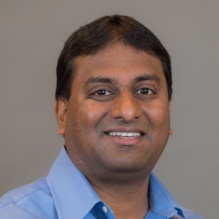
Uttam Singisetti
Clifford C. Furnas Professor, Department of Electrical Engineering, Director, Center for Advanced Semiconductor Technologies, University at Buffalo
Professor Singisetti's research group explores novel electronic devices for high speed circuits, low power logic, and next generation power electronics applications. Please explore more about the research, people and facilities in the group going through the side links, and feel free to contact us if you have any questions about the group.
Widebandgap materials, devices, circuits speakers

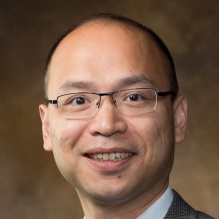
Fang Luo
Empire Innovation Associate Professor, Department of Electrical and Computer Engineering; Director, Spellman High Voltage Power Electronics Laboratory, Stony Brook University
Fang Luo is an Empire Innovation Associate Professor in the Department of Electrical and Computer Engineering and Director of the Spellman High Voltage Power Electronics Laboratory at Stony Brook University. His research focuses on power electronic converters and systems, power module packaging, and electromagnetic-interference modeling and mitigation in power electronics systems.

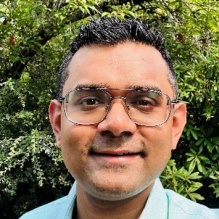
Krishnendu Ghosh
Software Research Scientist, Intel Corporation
Krishnendu Ghosh is a Software Research Scientist at Intel Corporation, where he develops next-generation semiconductor simulation tools for transistor research and development. He specializes in computational materials science, semiconductor device physics, and high-performance computing. At Intel, he has worked on developing advanced scientific software and algorithms that improve the robustness, scalability, and efficiency of large-scale semiconductor simulations. Prior to joining Intel, he conducted postdoctoral research at the University of Michigan, focusing on large-scale electronic structure calculations and finite-element-based density functional theory methods. Dr. Ghosh earned his PhD in Electrical Engineering from the University at Buffalo, where his research centered on electron transport in emerging semiconductor materials, including gallium oxide and two-dimensional materials. Dr. Ghosh has made significant contributions to the understanding of electron transport in β-Ga₂O₃, as well as to the development of scalable first principles based simulation tools for materials research. Through his work, he bridges fundamental physics, advanced computational methods, and practical semiconductor technology development, helping accelerate innovation in next-generation electronic devices.
Multi-Scale Carrier Transport Modeling in Angstrom-era Transistors
As transistor scaling advances into the angstrom era with the transition from planar and FinFET devices to gate-all-around RibbonFET architectures, accurate device modeling increasingly demands that microscopic and atomistic interactions be captured alongside macroscopic device behavior. With shrinking channel dimensions and gate dielectric thickness, carrier transport belongs in a quasi-ballistic regime where conventional drift-diffusion approaches, which rely on empirical models and lumped parameters such as mobility and saturation velocity, offer limited physical insight. This talk presents a multi-scale framework that bridges microscopic quantum physics to transistor-level simulation. At the fast, high-throughput end, an in-house drift-diffusion (DD) device simulator performs self-consistent electrostatics and diffusive transport for realistic device geometries. At the predictive end, a self-consistent linearized Boltzmann transport equation (L-BTE) solver combines a Schrodinger-Poisson cycle with confined band structure to detailed scattering rates to compute mobility directly from electronic structure and perturbative potentials. A generic scale-bridging methodology is introduced in which the L-BTE solver generates a functional mobility landscape which is captured through neural-networks in the DD simulator. These results demonstrate a pathway to embed microscopic transport physics into high-throughput device simulation for emerging RibbonFET technologies.

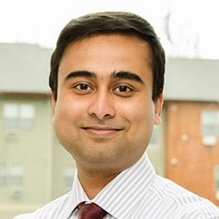
Hari Nair
Assistant Professor, Department of Materials Science and Engineering, Cornell Duffield College of Engineering
Hari Nair is an assistant professor whose research primarily focuses on metal-organic chemical vapor deposition (MOCVD) of ultra-wide bandgap semiconductors, specifically gallium oxide and AlN. These ultra-wide bandgap semiconductors are critical for developing next generation power electronics and radio-frequency applications. In his previous role as an assistant research professor for Cornell, Nair established MOCVD capabilities in his lab. MOCVD is the industry preferred synthesis technique for many of these emerging semiconductors due to its amenability to scaling up to large substrate dimensions.

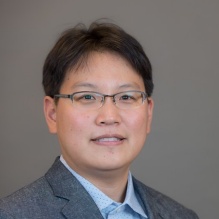
Jung-Hun Seo
Associate Professor, Department of Materials Design and Innovation, University at Buffalo
Jung-Hun Seo received his B.S. degree in Electrical Engineering from Korea University, Seoul, South Korea, in 2006. He received his MS and PhD degrees in Electrical and Computer Engineering from the University of Wisconsin–Madison in 2011 and 2014, respectively. In 2016, he joined the faculty of the University at Buffalo, SUNY, as an assistant professor in the Department of Materials Design and Innovation and was promoted to associate professor in 2022. His current research focuses on carbon materials and their micro-/nano-fabrication for device applications. He is the author or co-author of over 200 peer-reviewed technical papers and book chapters related to his research and holds more than 20 U.S. and international patents.


Jeffrey Salzmann
Assistant Professor of Research, Shared Instrumentation Laboratories, University at Buffalo
Assistant professor Salzmann's research focuses on microelectronics, MEMs and photolighography

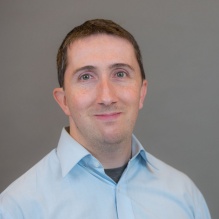
Nicholas Mastronarde
Professor, Chair, Department of Electrical Engineering
Mastronarde is a Professor in the Department of Electrical Engineering at the State University of New York at Buffalo. He received his PhD degree in Electrical Engineering at the University of California at Los Angeles (UCLA) in 2011 and his B.S. and M.S. degrees in Electrical Engineering from the University of California at Davis in 2005 (Highest Honors, Department Citation) and 2006, respectively. He has been the recipient of several awards and honors including a first year department fellowship through the Electrical Engineering department at UCLA, the Dissertation Year Fellowship through the Graduate Division at UCLA, and the Dimitris N. Chorafas Foundation Award for 2011.
In the summer of 2010, Mastronarde was a graduate intern at IBM Research Watson Lab in the Exploratory Stream Analytics group where he developed learning algorithms for discovering anomalies in massive volumes of streaming data. In the summer of 2007, Mastronarde was a graduate student intern at Intel Corporation in the Graphics Architecture Team where he developed and patented an algorithm enabling the selective use of fractional and bidirectional video motion estimation in an H.264/AVC encoder.
Mastronarde's research interests are in the areas of low power multimedia systems, resource allocation and scheduling in wireless networks and systems, dynamic power management, cross-layer design, Markov decision processes (MDPs), and reinforcement learning.

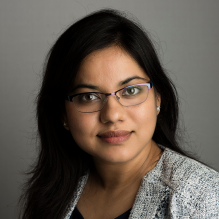
Baishakhi Mazumder
Associate Professor, Department of Material Design and Innovation, University at Buffalo
Professor Mazumder's research group focuses on understanding the atomic-level structural chemistry using atom probe tomography (APT). The material features the group probes include direct 3D visualization of atoms within the analyzed material structures, accurate stoichiometry, confident detection/quantification of impurity or trace elements, small precipitates within the buried hetero-structures and interfacial roughness/abruptness. The unique strength of the group involves employing machine learning (ML) on APT data to extract patterns and link it to known material features. This enables predicting different materials’ properties beyond the capabilities of conventional APT analysis. The rare combination of APT–ML in the group is helping the materials science community to understand and develop wide range of novel material systems including wide bandgap semiconductors, ceramics, quantum materials and many more.

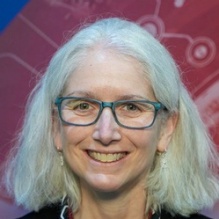
Rachel S. Goldman
Maria Goeppert Mayer Collegiate Professor, Materials Science and Engineering Department, College of Engineering; Professor of Materials Science and Engineering, Physics and Electrical Engineering and Computer Science, University of Michigan
Goldman's research group develops strategies for manipulating and identifying atoms in functional inorganic materials for high efficiency solar cells, long-wavelength light-emitters and detectors, high temperature electronics, spintronics, and quantum computing. Goldman's lab's emphasis is on understanding processing-structure-property correlations in semiconductor films, nanostructures, and heterostructures. Goldman and her team of researchers are primarily experimentalists using ultra-high vacuum techniques including molecular-beam epitaxy (“million buck evaporator”), scanning tunneling microscopy (STM), and both blanket and focused ion implantation. Golman's lab has developed computational efforts aimed to assist in our understanding of solute incorporation in alloys (Monte Carlo-Molecular Dynamics simulations of ion-solid interactions) and plasmon-enhanced light-emission from semiconductor nanocomposites (electromagnetic simulations of light-matter interactions)
Integrated PV: Materials, devices and circuits

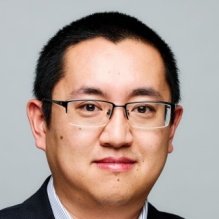
Zhaoning Song
Assistant Professor, Department of Physics and Astronomy; Faculty, Wright Center for Photovoltaics Innovation and Commercialization, University of Toledo
Zhaoning Song is an Assistant Professor in the Department of Physics and Astronomy at the University of Toledo and a faculty member of the Wright Center for Photovoltaics Innovation and Commercialization. His research focuses on thin-film photovoltaic and optoelectronic devices, with particular emphasis on perovskite photovoltaics, tandem solar cells, photodetectors, and photoelectrochemical cells. His broader interests include device physics and modeling, nanomaterial synthesis, thin-film optoelectronics, and techno-economic analysis of emerging photovoltaic technologies.

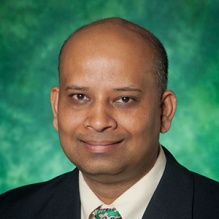
Bibhudutta Rout
Professor, Department of Physics, University of North Texas
Rout is actively pursuing research in several experimental areas involving condensed matter physics, materials science, nano-science and technology. His current research interests include materials analysis and modification using high energy focused ion beams; Growth and analysis of micro-nanostructures using UHV techniques involving MBE, E-beam, Ion beam.


Seth Hubbard
Professor and School Head, School of Physics and Astronomy; Member, NanoPower Research Laboratories, Rochester Institute of Technology; NanoPower Research Laboratories
Seth Hubbard is currently Professor and Head of the School of Physics and Astronomy. He also holds a courtesy appointment in the Microsystem Engineering PhD Program and is a member of the NanoPower Research Laboratory, serving as lab director from 2015-2025. Dr. Hubbard research involves epitaxial growth, fabrication and characterization of solar photovoltaic and optoelectronics devices. He has received over $20M in funded external research related to photovoltaic device development, has authored or co-authored over 200 journal and conference publications on electronic and photovoltaic devices and received an NSF CAREER Award as well as the RIT Trustee Scholarship Award. Dr. Hubbard serves as an Editor of the IEEE Journal of Photovoltaics and is actively involved in the organization of the IEEE Photovoltaics Specialists Conference. He has been the advisor to 6 post-doctoral fellows, 15 PhD graduates and over 30 MS students. Prof. Hubbard received his Ph.D. in Electrical Engineering from The University of Michigan and a B.S. in Physics from Drexel University.

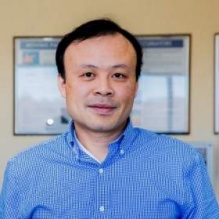
Peihong Zhang
Professor, Department of Physics, University at Buffalo
Peihong Zhang's research focuses on Ab initio calculations of electronic, structural, and magnetic properties of materials, Materials design from first principles, Nanostructured materials and their applications, High performance computing

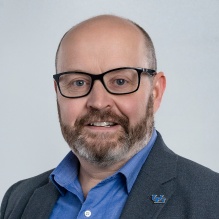
Ian Sellers
Professor, Department of Electrical Engineering, University at Buffalo
Professor Sellers research focuses on the development and investigation of novel quantum-engineered material and devices for next generation photovoltaics. Specific programs involve hot carrier dynamics in III-V and perovskite systems, defect formation and stability of thin-film CIGS and perovskites solar cells, as well as their suitability for deep space power applications.

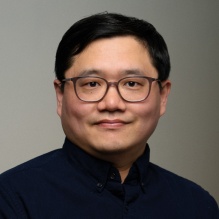
Dave (Hsinhan) Tsai
Assistant Professor, Department of Chemical and Biological Engineering, University at Buffalo
Dave H. Tsai is an assistant professor in the Department of Chemical and Biological Engineering at the University at Buffalo. His research focuses on functional hybrid materials, optoelectronics, opto-spintronics, clean energy, CO₂ capture and conversion, high-energy detector, crystal superlattice, operando characterization.
Microelectronics materials, devices and circuits

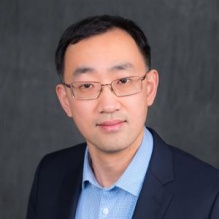
Qing Cao
Associate Professor of Materials Science and Engineering; Affiliate, Departments of Chemistry and Electrical Engineering, University of Illinois Urbana-Champaign
Cao received his BS degree in 2004 from Nanjing University, and his Ph.D. in 2009 from the University of Illinois at Urbana-Champaign. After working at IBM Thomas J. Watson Research Center as research scientist for 9 years, he returned to the University of Illinois as an Associate Professor of Materials Science and Engineering, and Affiliate of the Department of Chemistry and of the Department of Electrical Engineering.

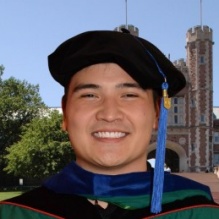
Christopher Broyles
Postdoctoral Researcher, Los Alamos National Laboratory
Dr. Broyles is interested in synthesis and characterization of (quantum) materials, superconductivity and strongly correlated topological systems. While a graduate researcher at Washington University, Broyles worked to understand the nature of low temperature quantum phases through electronic, thermal and magnetic properties.

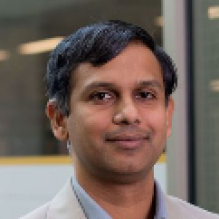
Jayasimha Atulasimha
Engineering Foundation Professor, Department of Mechanical and Nuclear Engineering, Virginia Commonwealth University
Jayasimha Atulasimha is a Qimonda Professor of Mechanical and Nuclear Engineering, with a courtesy appointment in Electrical and Computer Engineering at Virginia Commonwealth University. He has authored or coauthored approximately 80 journal publications on magnetostrictive materials, magnetization dynamics, spintronics, and nanomagnetic computing. His current research interests include nanomagnetism, spintronics, multiferroics, nanomagnetic memory, and neuromorphic computing devices. He is a Fellow of ASME, an IEEE Senior Member, and the current chair of the Technical Committee on Spintronics for the IEEE Nanotechnology Council.

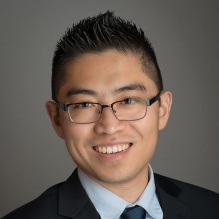
Huamin Li
Associate Professor, Department of Electrical Engineering, University at Buffalo
Huamin Li received his BS degree from the College of Physics and Electronics, Shandong Normal University, Jinan, China, in 2007, his MS degree from the College of Engineering, Sungkyunkwan University (SKKU), Suwon, Korea, in 2010, and his PhD degree in the Department of Nano Science and Technology, SKKU, Suwon, Korea, in 2013. His PhD research focused on 2D electronics and optoelectronics. Subsequently, he worked as a postdoctoral research associate in the Department of Electrical Engineering, University of Notre Dame. His postdoctoral work included the development of low-voltage and steep subthreshold swing (SS) components for beyond-CMOS electronic systems using low-dimensional materials. To date, his research results have been included in one book chapter (2013), published in Nature Communications (2015), Scientific Reports (2014), IEEE Transaction on Electron Devices (2009-2012) etc., presented in IEEE International Electron Devices Meeting (IEDM, 2009, 2011-2013), and filed five US and Korean patents with the collaboration of Samsung Electronics Co., Ltd. In 2012, he received Chinese Government Award for outstanding self-financed students abroad by China Scholarship Council.

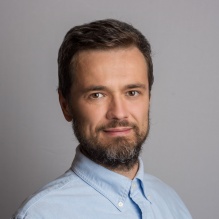
Vasili Perebeinos
Professor, Department of Electrical Engineering, University at Buffalo
Professor Perebeinos' research focuses on theory and modelling of electrical and optical properties of low dimensional materials such as carbon nanotubes, graphene, and other 2D materials.

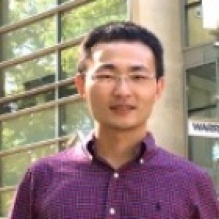
Changjiang Liu
Assistant Professor, Department of Physics, University at Buffalo
Changjiang Liu's research focuses on superconductivity, spintronics, synthesis of quantum materials.

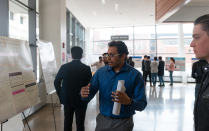

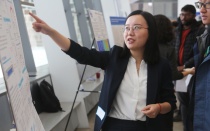
Submit a poster
Students are welcome to submit posters for display during the first day of the conference.
- Poster title
- Presenter name
- Presenter email address
Please send the poster title and a short abstract (≤ 120 words) to Prof. Hui Cao at huicao@buffalo.edu by Wednesday, August 5.
This year's poster session includes awards recognizing outstanding contributions.
Workshop general chair


Workshop committee members and session coordinators


Center for Advanced Semiconductor Technologies Director


School of Engineering and Applied Science Dean


There are several hotels near the University at Buffalo's North Campus. Please see the list below and contact the hotel directly for additional information.
| Hotel Name | Address | Phone Number |
|---|---|---|
| DoubleTree by Hilton | 10 Flint Road, Amherst, NY 14226 | 716-689-4414 |
| Hampton Inn Williamsville | 5455 Main St, Williamsville, NY 14221 | 716-632-0900 |
| Hampton Inn Buffalo Amherst | 1601 Amherst Manor Dr Buffalo, NY 14221 | 716-559-7010 |
| Hyatt Place | 5020 Main St, Amherst, NY 14226 | 716-839-4040 |
| Red Roof Inn | 42 Flint Road, Amherst, NY 14226 | 716-213-3246 |
| The Mosey | 5195 Main Street, Amherst, NY 14221 | 716-276-9600 |