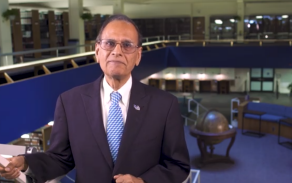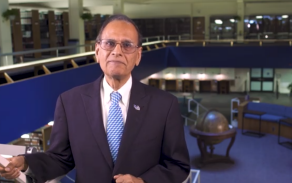




Andrew Talal, MD, presented his research at a gathering of 8,000
hepatologists and related health professionals from around the
world.
During a presidential plenary session at the Liver
Meeting, Talal discussed his research on hepatitis C virus
infection, one of the most common causes of liver disease and the
leading indication for liver transplantation in the United
States.
“A major limitation in our understanding of the
pathogenesis of the infection has been the difficulty in sampling
the liver,” explains Talal, professor of medicine.
His study addresses this issue by evaluating the relationship
between the virus’ behavior in the liver compared to blood
plasma.
Talal’s findings suggest new models by which the virus may
be replicating in the liver.
“For example,” he says, “they suggest that the
newly approved drug for hepatitis C—telaprevir—may
effectively decrease the level of the virus during the first few
days after starting therapy, but the body’s immune response
is later required to clear the virus.”
Alternatively, the level of virus replication in the liver may
differ in different parts of the liver.
“Differentiating between these two hypotheses will be the
study of future research and is important to understanding the
factors that contribute to the eradication of the virus after
antiviral therapy,” he says.
The Liver Meeting draws more than 8,000 hepatologists and health
professionals from around the world each year, offering a forum for
sharing and learning cutting-edge research and current practice
recommendations.