
Introduction
The comprehensive physical plan for UB’s campus centers is driven by an institutional strategic plan called UB 2020 that aspires to raise the University at Buffalo in the ranks of great American public research universities.
While it is the quality of our faculty and our students and the excellence of the teaching, research, and public service that defines the quality of the university, UB’s path to prominence also depends on our campus centers being great places in which to live and learn and work—beautiful, accessible, and sustainable.
In this plan, each campus will have a new identity and purpose in the larger life of the university:
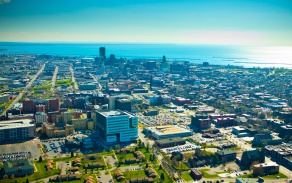
- Downtown as the campus for medical education, clinical care, health sciences research, and research and development;
- South Campus as a center of professional education in law, education, social work, executive education, and architecture and planning;
- North as the academic heart of the university for the College of Arts and Sciences, the core of the undergraduate experience at UB, and the School of Engineering and Applied Sciences.
The plan also addresses the ways people will get to our three campuses, how they will travel between them, and where they will park their vehicles when they get there.
It defines strategies for limiting our energy use, reducing our carbon footprint, and promoting sustainable practices.
It details a vision for creating a public realm that promotes the social and intellectual life of the university and for producing a “learning landscape” that supports the ways that students learn today.
Most of all, it aims to create places that the members of the UB family can truly love.
For some, it may seem overly ambitious to make such big plans during these economic hard times. But when the economy begins to grow again, UB will be prepared to grow, too. And with a clear vision and a wider array of means to finance the implementation of the plan, not just from State funds.
This is the draft plan—still open to change—but definitive enough to provoke a detailed critique. Let us know what you think—and please be specific.