Mihalko
to direct CAT
Appointment comes at time when CAT is making strides
By
ELLEN GOLDBAUM
Contributing Editor
William
M. Mihalko has been named executive director of the Center for Advanced
Technology (CAT), a partnership between UB and Roswell Park Cancer Institute,
by Provost Elizabeth D. Capaldi.
| |
 |
| |
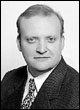
MIHALKO |
| |
|
Mihalko
is an associate professor in the Department of Orthopaedics in the School
of Medicine and Biomedical Sciences and research director in the Department
of Orthopaedic Surgery. Holding both medical and biomechanical-engineering
degrees, he serves as the head of arthroplasty at the Erie County Medical
Center and is on the medical staffs of Millard Fillmore hospitals, Buffalo
General Hospital and the Children's Hospital of Buffalo.
"We are
delighted to have someone of Dr. Mihalko's caliber to direct the CAT,"
Capaldi said in making the announcement.
"He is
a bioengineer with an active research and clinical program who will
provide superb leadership in evaluating and developing biodevices for
commercialization in Western New York."
Mihalko's
appointment comes at a time when the CAT—barely three-quarters
into its first official year—already is making strides in its main
mission: to provide funding to innovations in biopharmaceuticals and
in biomedical devices that are close to commercialization. Gov. George
E. Pataki announced creation of the CAT and $1 million in funding for
its first year of operation last May.
"Dr. Mihalko's
expertise in bioengineering represents an area we're very strong in,"
said Robert J. Genco, a vice provost and head of UB's Office of Science,
Technology and Economic Outreach (STOR). SUNY Distinguished Professor
and chair of the Department of Oral Biology in the School of Dental
Medicine, he previously was director of the CAT.
Genco noted
that a number of the projects that have received funding from the CAT
are in the area of medical devices, including some that are well on
their way toward prototypes—a reflection of the speed with which
things have moved at the center since its inception. He cited the example
of an esophageal catheter that is on its way to a prototype, and the
FP Technologies project, in which an ultraviolet-light system ordinarily
used to retain freshness in food is being adapted to reduce nosocomial
infections in hospital settings.
"We have
tried to be very responsive to the needs of both scientists and our
industrial partners in order to decrease the amount of time between
concept and the need for data, and the time it actually gets funded,
while retaining rigor in our scientific evaluation process," said Genco.
The CAT
already is embarking on its third round of application evaluation, with
funding awards anticipated to be made in early April.
"The CAT
is part of our Office of Science, Technology and Economic Outreach in
terms of providing research funding and it connects with all of the
other STOR units, such as the technology incubator and, of course, our
intellectual property division," he said.
"At the
same time, the CAT relates to the STAR (science, technology and academic
research) center and the Buffalo Center of Excellence in Bioinformatics
as a major technology-transfer division."
Projects
that were funded in the most recent round of CAT awards include a system
that allows for the capture and detection of potential bioterrorism
agents in air, a diagnostic system based on pharmacogenomics that may
be able to distinguish multiple sclerosis patients who will respond
to drug therapy from those who won't, and a diagnostic kit for distinguishing
between viral and bacterial forms of respiratory infections.
Genco said
the CAT's ultimate goal is to leverage its research into economic gains
and new jobs.
"That requires
not only excellent scientific and corporate partners," he added, "but
also an economic infrastructure in terms of venture capital, a legal
and business infrastructure to support startup businesses and a well-qualified
workforce, which we are already seeing develop with the funding of our
Sloan master's programs in bioinformatics and related areas."
Genco noted
that the support of legislators, the business community and all the
economic development organizations continues to be critical.
The CAT
received its original startup money in 1999 with support from assemblymen
Paul Tokasz and Robin Schimminger, and other members of the Western
New York delegation.
The planning
continued in 2000 with an additional allocation. Under normal circumstances,
the CAT would have to wait until 2004 to apply for funding during the
next round of competition.
But the
wait was shortened by three years when Pataki quickly embraced the idea
and came to Buffalo last May to officially announce it. The CAT also
was enthusiastically supported by Assembly Speaker Sheldon Silver, Assemblyman
Sam Hoyt and other members of the delegation, as well as Russell Bessette,
executive director of the New York State Office of Science, Technology
and Academic Research, under whose leadership the economic-development
potential of academic research has been highlighted.
After completing
his residency at the UB Department of Orthopaedic Surgery, Mihalko completed
an Adult Reconstructive Surgery Fellowship at the Missouri Bone and
Joint Center. He earned his medical degree, as well as a doctorate in
biomechanical engineering, from the Medical College of Virginia, Virginia
Commonwealth University.


